January Rate Cut Odds Rise to 60% After UK Retail Sales Disappoint

GBP/USD was on track for a fourth day of gains on Friday, until a disappointing retail sales report brought in the bears. Retail sales is the most important indicator of consumer spending, which covers the majority of all economic activity in a country.
The Office for National Statistics (ONS) reported that December UK retail sales fell by 0.6% when compared with the previous month, marking a record fifth consecutive month of no growth. The figure widely missed analyst expectations of a 0.6% increase. In the three months to December 2019, retail sales fell by 1.0% when compared with the previous three months, the largest decline since March of 2017.
The lackluster data adds further fuel to speculation that Bank of England policy makers could reduce interest rates later this month. Adding to the case for a rate cut, the ONS reported on Wednesday that inflation unexpectedly fell to a more than three-year low in December.
Recent comments from BOE officials have indicated a willingness to cut interest rates in the event of disappointing economic data. Last Thursday, BOE governor Mark Carney said that policy makers were prepared to take action if economic weakness persists. Speaking at a BOE event on inflation targeting, he stated: “With the relatively limited space to cut Bank Rate, if evidence builds that the weakness in activity could persist, risk management considerations would favour a relatively prompt response.” The CME BoEWatch Tool currently shows a 60% probability of a quarter point rate cut. The current target rate stands at 0.75%.
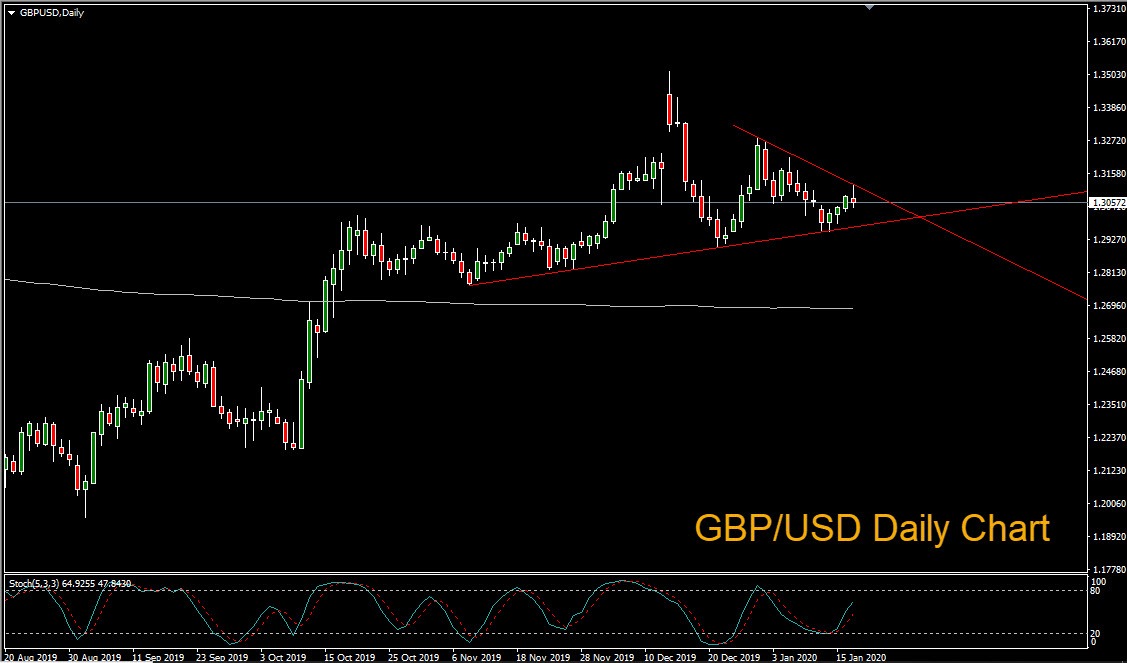
Looking at the GBP/USD daily chart we can see that price is contained within a pennant pattern. Technical traders will be on the lookout for breakouts both above and below the trendlines forming the pattern. Investors now turn their attention to the ECB monetary policy statement and press conference scheduled to take place next Thursday.
Author

Dan Blystone
TradersLog.com
Experience Dan Blystone began his career in the trading industry in 1998. He worked as an arb clerk on the floor of the Chicago Mercantile Exchange (CME), flashing orders into the currency futures pits.