Jackson Hole Reset and the G20 fracture: Five market implications traders should not ignore
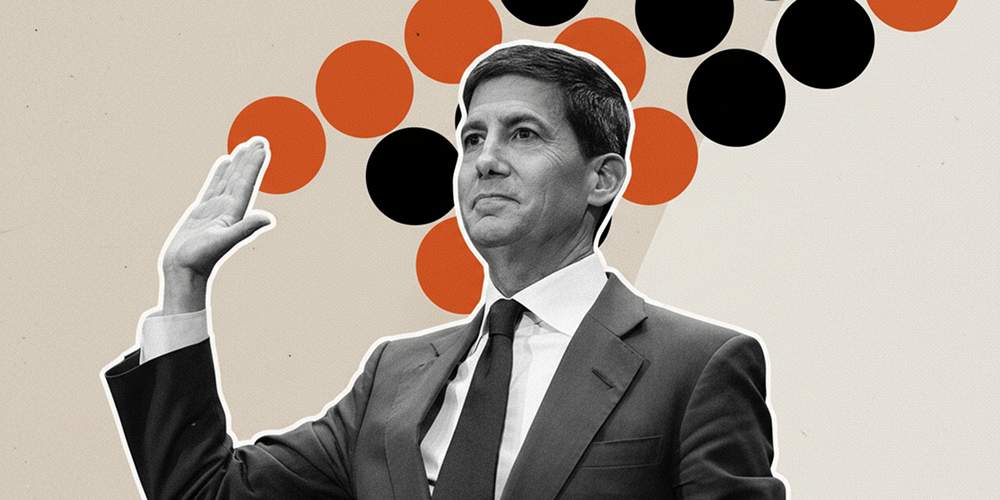
Warsh declared the end of forward guidance, China split the G20 19-to-1, and Bessent promised more financial sanctions before the week ends. The market implications are specific and immediate.
Two events defined the global macro landscape this week. At Jackson Hole on August 27-29, Federal Reserve Chairman Kevin Warsh delivered a structural reset in how the central bank communicates and operates. In Asheville, North Carolina, the G20 Finance Ministers meeting concluded September 1 without a joint communique, forced into a chair statement by China's singular refusal to endorse the US-led framework. Together, they reset the playbook for dollar, rates, oil, and cross-currency trades through at least the September 24 Xi-Trump summit. Here are the five implications that matter.
1. The Dollar repricing: Higher for longer just got more credible
Warsh's Jackson Hole speech removed the one tool traders have used to front-run Fed pivots: forward guidance. For 15 years, the dot plot, post-meeting statements, and pre-signalled rate paths gave sophisticated traders a reliable edge. Warsh called the practice "overstayed its welcome" and ended it. The Fed will now be judged by data outcomes, not communications.
The immediate implication for DXY: the dollar's valuation cannot be arbitraged against Fed signals anymore. Traders must price the actual data. Current data argues for dollar strength. PCE inflation sits at 3.7 percent on a 12-month basis, 4.1 percent on a 6-month basis. 54 percent of the PCE basket is still showing price increases above 3 percent. Markets price a 34 percent probability of a September 15-16 rate hike. That number will move sharply when August CPI and jobs data arrive the week before the meeting. Warsh gave no signal about direction. That uncertainty is itself a dollar-positive environment: when the central bank stops telegraphing, the market defaults to pricing risk premium into the reserve currency.
2. The yield curve: The 30-Year is the trade
The 30-year US Treasury yield recently hit a 19-year high before Bessent announced an expansion of the Treasury's long-term debt buyback program, providing partial relief. The tension between a Fed keeping rates elevated and a Treasury actively managing the long end of the curve is the defining fixed-income trade of Q3 2026.
Warsh's secular growth framing, his description of the current environment as driven by structural investment rather than cyclical stimulus, supports the view that long yields stay elevated. Business investment is growing at 9 percent year over year, with more than half attributable to AI infrastructure buildout. S&P 500 corporate profits are up more than 20 percent. Credit spreads are near historic lows. None of this is a falling-rate environment. The buyback program is a tactical tool, not a structural pivot. Position the 30-year accordingly.
3. Oil: The Hormuz premium is not going away
Brent crude swung from $69 per barrel on July 2 to $105 on July 23 within a single month. That is not volatility. That is a market with no reliable floor or ceiling because the supply question has not been resolved. 8.3 million barrels per day of Gulf output remain shut in as of August. The IEA forecasts global oil demand to decline by 1.6 million barrels per day for the full year, suppressed by the elevated price itself.
The G20 Asheville communique, specifically the chair statement since there was no communique, cited concern about continued disruptions to energy trade and called the free navigation through the Strait of Hormuz "essential to sustaining durable growth." That language is diplomatic acknowledgment that the G20 has no mechanism to reopen the strait. Oil volatility is structural, not episodic. The $69-$105 range is the trading range until the geopolitical variable changes. The EIA expects Brent near $85 for Q3. CBA projects $70-$100 through year-end. Trade the range, not the trend.
4. The September 24 Xi-Trump meeting: The binary event
The G20 ended with China as the sole dissenter in a 19-to-1 split, three weeks before Xi Jinping's scheduled summit with President Trump in Washington. Beijing formally blocked consensus at a G20 hosted by the United States. That is a deliberate posture signal, not an accident.
The September 24 meeting is the single most consequential binary event between now and year-end. China absorbs 90 percent of Iranian crude exports. Bessent has explicitly said all options are on the table for sanctioning Chinese buyers. If Xi agrees to reduce Chinese Iranian crude purchases as part of a broader trade framework, the Iran sanctions architecture becomes structurally coherent. Oil supply concerns ease. Dollar-yuan stabilizes. If Xi does not, Operation Economic Outcast continues with its structural gap, Bessent escalates sanctions, and Chinese retaliatory risk rises. The assets most sensitive to this binary: USD/CNH, Brent crude, and the EM currency complex. September 24 is the date to mark.
5. The Canada-US tariff inflation loop: A Fed complication
The US and Canada traded nearly $880 billion in goods and services in 2025. New Section 338 tariffs at 50 percent ad valorem on Canadian goods, effective August 19, apply even to USMCA-compliant products. Canada has responded with retaliatory measures. Both sides are now taxing a deeply integrated supply chain and passing the cost to consumers.
This creates a specific complication for rate traders. Tariff-driven price increases feed measured inflation. The Fed is fighting measured inflation. A central bank raising rates to combat tariff-driven price increases is tightening monetary policy in response to fiscal and trade policy decisions, not underlying demand. That distinction does not change the rate path in the near term, but it does change the terminal rate calculus. If tariff-driven inflation proves persistent and the Fed responds with further hikes, the growth cost compounds faster than a demand-driven tightening cycle would. Watch August CPI components for tariff pass-through. If goods inflation re-accelerates, the 34 percent September hike probability moves significantly higher. CAD/USD is the most direct expression of the trade tension: 50 percent tariffs on an $880 billion relationship do not produce a stable bilateral rate environment.
The calendar: What moves markets next
September 5: August US jobs report. First major data input for the September 15-16 FOMC decision.
September 10: August CPI. Watch goods components for tariff pass-through. This number, alongside jobs, determines whether the 34 percent hike probability rises or falls.
September 14-16: G20 Energy Ministerial, Houston. US framing of energy abundance versus transition. Watch for OPEC+ responses and oil market reaction.
September 15-16: FOMC meeting. The decision that resolves the current rate uncertainty.
September 24: Xi visits Washington. The binary event for USD/CNH, Brent, and Operation Economic Outcast.
October 15: G20 Finance Ministers, Bangkok. The post-FOMC, post-Xi-Trump reassessment of the global framework.
Warsh closed his Jackson Hole speech with a line from Chuck Yeager: "At the moment of truth, there are either reasons or results." The data between now and September 24 will determine which category this Fed cycle falls into. Position accordingly.
Author

Andrea Zanon
Confidente
Andrea Zanon has 20 years of professional experience as a disaster risk management, sustainability, and entrepreneurship specialist. Mr. Zanon has advised international institutions and countries across the Middle East and North Africa. Mr.
















