Is oil a value play, or a value trap?


Oil has been ranging in a consolidation zone from its recovery from its March lows. It has been up and down based on the fundamental news of the day. However, is Oil the value play of the year, or is it a value trap?
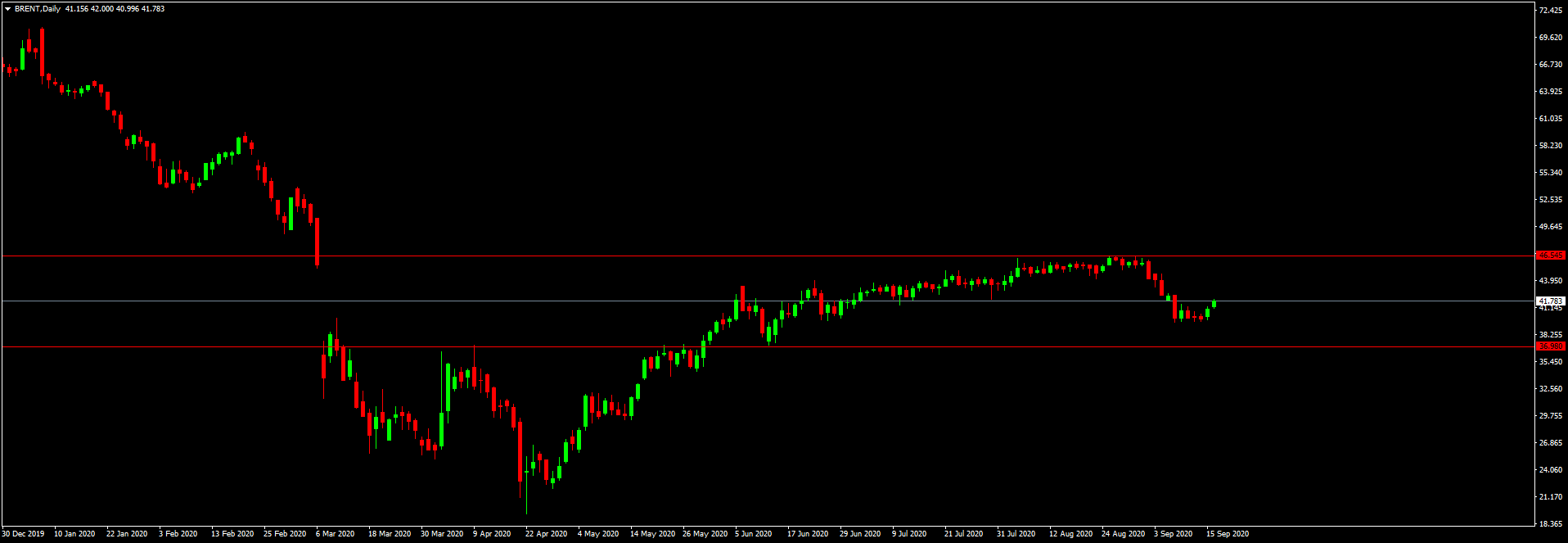
International Oil Brent Crude ranging
Whats a value play/trap?
A value play is usually associated with stocks trading at a lower price than what the company’s future performance may otherwise indicate. Common technical indicators that describe a value play are low price to book ratios, low cost to earnings ratios, etc. For example, traditionally, banks are a value play since it is quite cyclical, depending on the credit cycle. Banks struggle during low-interest rates; therefore, if we go by the mantra “buy low, sell high,” we can deduce banks stocks may be at their lows right now. And in the future, when interest rates rise, banks stocks will also increase.
A value trap is like a value play, with one exception: it’s a trap. You think the prices are cheap – however, the market is pricing it at that price because they’re correct (they usually are). This was the case in JCPenny’s stock. With Amazon making brick and mortar stores struggle, JCPenny was directly in the crosshairs. From 2012, it was a long and gruel burn till the Coronavirus finally sealed the deal.
The question is, is Oil more of a value play or a value trap?
Like banks, oil prices are based on one main factor – demand. In a long term sense, supply will slowly disappear. However, on the other side of the equation, demand is unknown. Will demand come back in the long run, or was the Coronavirus the end of peak oil demand? BP thinks so.
BP released its yearly Energy Outlook 2 days ago, and its message is simple: Oil consumption may never recover to pre-pandemic levels. They stated that “Oil demand will fall over the next 30 years,” says an increase in efficiency and road transport efficiency. They outlaid three scenarios – Business as usual, Rapid, and Net-Zero. BP’s rapid scenario, demand for liquid fuels will drop to 55 million barrels per day by 2050. For reference, last year’s oil demand was around 100 million barrels per day. It is important to note that none of them show growth in oil demand over the long term.
How can oil be a value play?
Remember, Oil is a spot asset, in which the price is directly affected by supply and demand. Therefore, demand for the black gold could go back to normal, ie, the “Business as Usual” case for BP. In theory, then, we should see $60 oil if it does go back. Brent Crude currently sits around $40. If it returns to $60, you are set to gain 50%. You can take two things for this:
-
If you believe oil demand will return back to normal, this may be a good bet to make. However, the timeline is quite uncertain
-
We’ve seen significant moves in the currency and equity markets recently. If there is another significant pullback, wouldn’t it be better to invest in equities rather than betting on the demand for Oil?
In the long term, BP predicts that Oil is a value trap. However, in the medium term, is this a sure-fire value play?
Author
Kyle Quindo
Blackbull Markets Limited
Kyle is a Research Analyst with BlackBull Markets in New Zealand. He writes articles on topical events and financial news, with a particular interest in commodities and long term investing.

















