Is Nikkei 225 a long-term investment option?
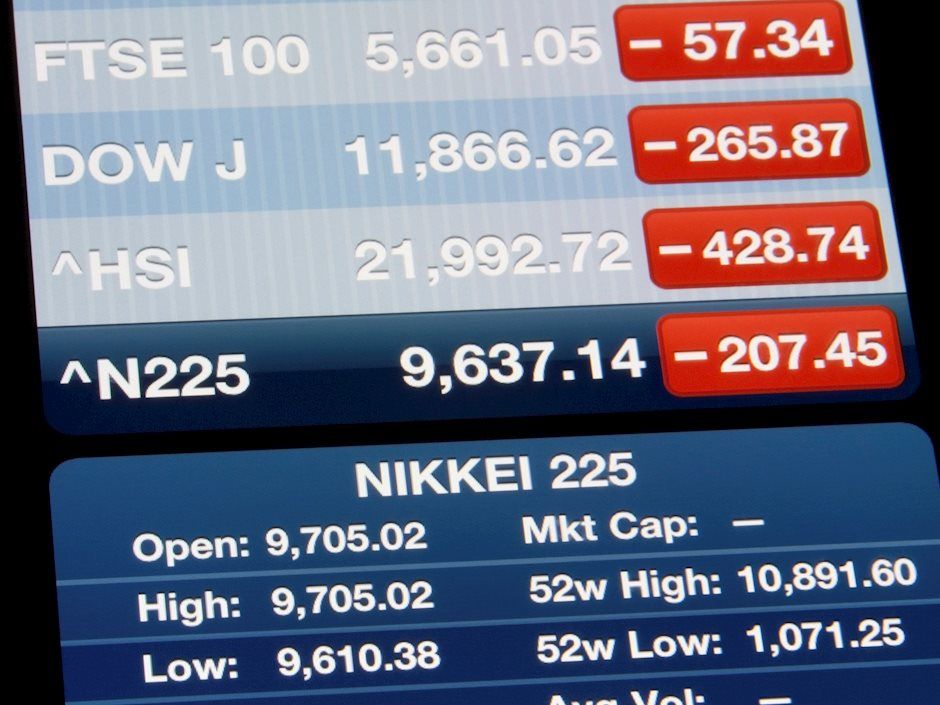

The inverse relationship between the Japanese Yen and Japan’s Nikkei index is a well know fact.
Though we should not take it for granted, still a lower Yen improves the competitiveness of the export-driven Japanese corporate sector - leads to more sales and earnings from overseas.
USD/JPY and Nikkei comparison - monthly chart
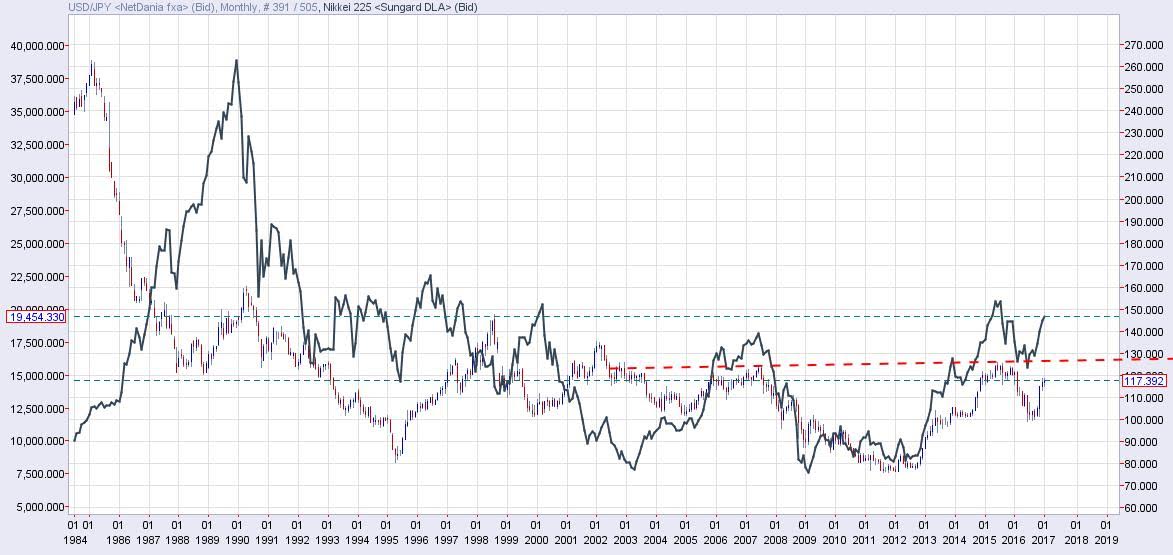
We can clearly see from the chart, that the direct relationship between USD/JPY and Nikkei (inverse relationship between Yen and Nikkei) is in place since early 1990.
Note how closely the Nikkei index is tracking the Dollar-Yen pair since late 2011.
Trumpflation is good for the Nikkei
The treasury yields could rise further in 2017 if Trump actually delivers on the promises he made during the Presidential campaign. This means further weakness in the Japanese Yen and a rise in the Japanese Yen.
Long-term bottom in USD/JPY
Monthly chart
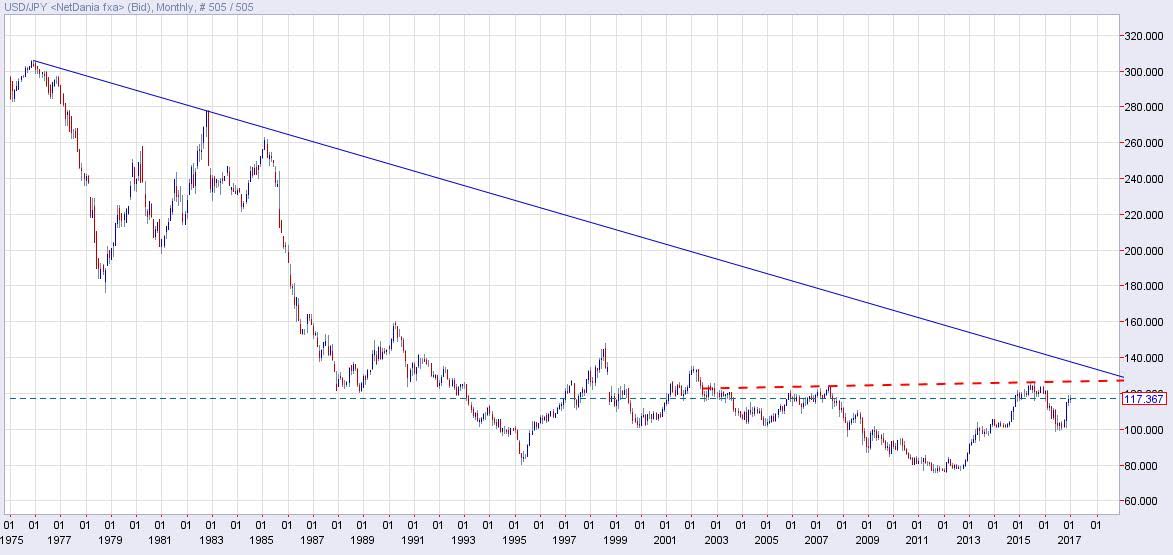
The pair is still in a long-term down trend. Take note of the falling trend line drawn from Dec 1975 high of 306.19 and Nov 1982 high.
However, what is more important is the fact that the spot is forming an inverse head and shoulder (bullish reversal pattern) at the bottom of the multi decade down trend.
On a larger scheme of things, the spot appears on track to test the inverse head and shoulder neckline level of 126.65.
Nikkei - Rounding bottom
Monthly chart
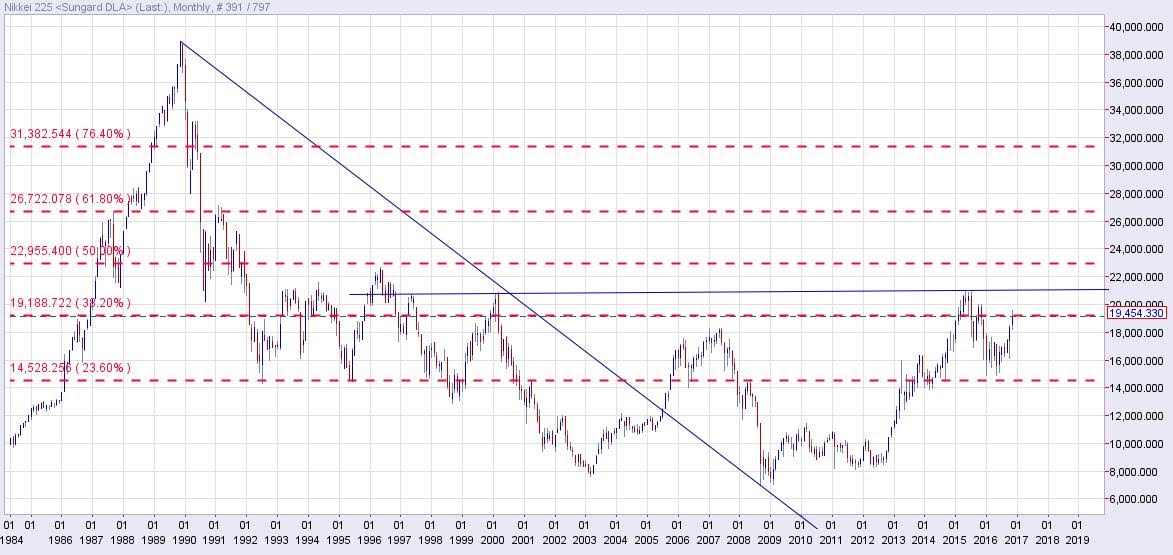
It should not come as a surprise that the Nikkei monthly chart shows a nice rounding bottom formation….Given the strong direct relationship between USD/JPY and Nikkei and an inverse head and shoulder pattern on the USD / JPY chart as discussed above.
The index looks set to test 21,000 levels in the short-run and may see an upside break if the Dollar-Yen pair sees a inverse head and shoulder breakout.
To conclude
-
Nikkei could outperform other major indices in 2017. The bullish outlook is at risk of a major sell-off in USD/JPY (rise in Yen), which as of now appears likely only if we have a ‘black swan’ event.
-
A break below 100.00 levels in USD/JPY would signal bullish invalidation in the Nikkei index.
Author
Omkar Godbole
FXStreet Contributor
Omkar Godbole, editor and analyst, joined FXStreet after four years as a research analyst at several Indian brokerage companies.