Iran pressure, China risk: Trump’s 25% tariff warning
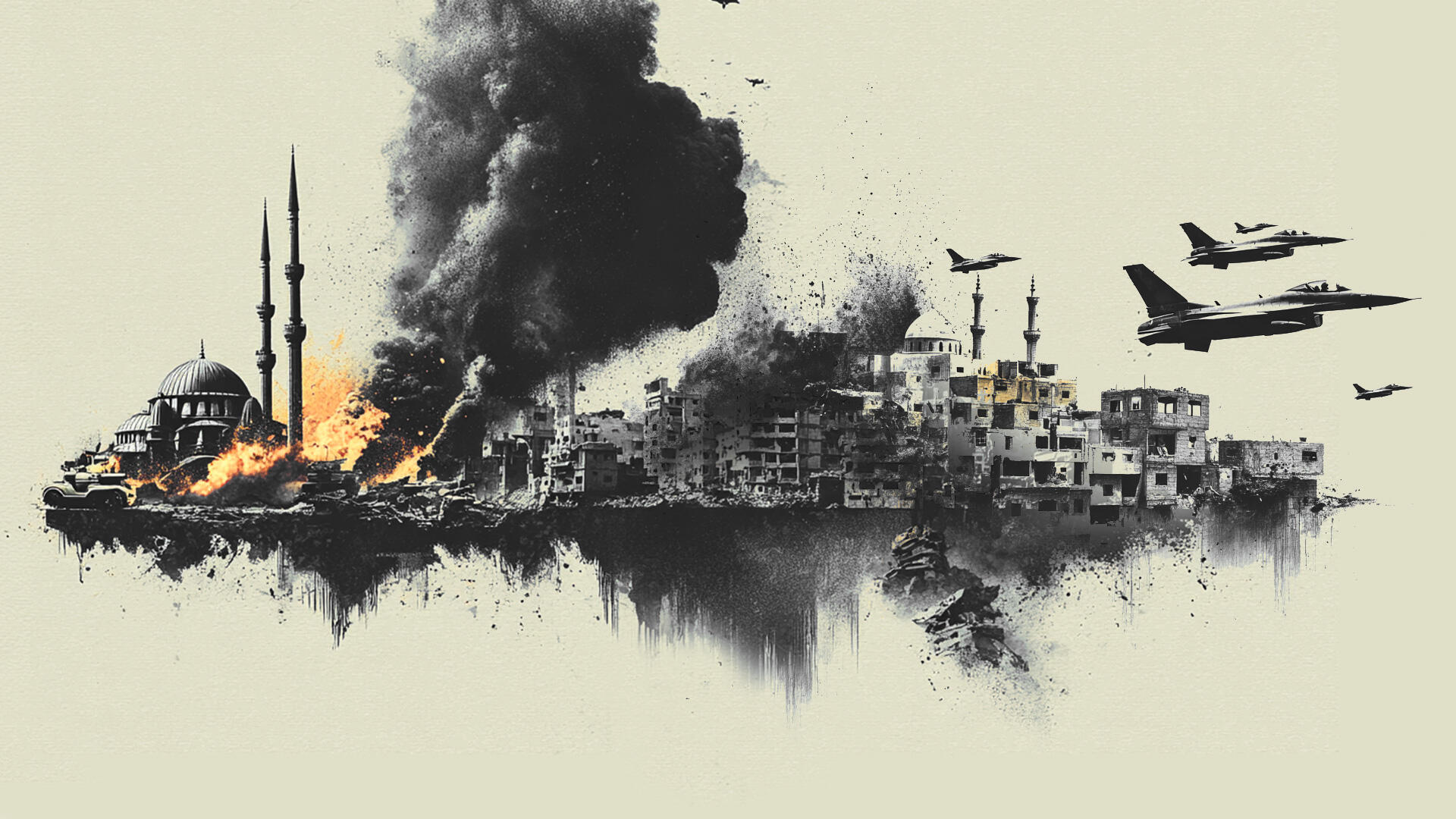
Donald Trump has announced a proposed 25% tariff on all U.S. trade with any country that continues doing business with Iran. While the headline reads like a universal trade wall, the more realistic transmission is selective enforcement plus deterrence as the threat is designed to make third countries self-restrict Iran-linked commerce because their U.S. exposure is vastly larger than their Iran exposure.
Iran’s domestic backdrop
This lands on Iran at an unusually fragile moment. Iran is facing a nationwide protest wave widely described by major international reporting as one of the most serious challenges to the Islamic Republic since 1979, met by lethal repression, mass arrests, and a near-total internet shutdown reported by internet-monitoring organizations to have pushed connectivity to around 1% of normal levels. Under those conditions, any policy that increases settlement friction and reduces usable FX inflows does not just move prices; it tightens the state’s financial bandwidth and raises political stakes.
Independent reporting and rights monitors have cited large death tolls and mass arrests, while the true scale remains difficult to confirm precisely because the blackout reduces documentation and independent access. Even when citizens attempt technical workarounds, the blackout raises the cost of organizing and increases the risk of unseen violence.
The tariff announcement: What was said
The proposal is straightforward in language: any country conducting business with Iran will face a 25% tariff on its trade with the United States. But operationally, it is defined by what is not specified: no thresholds for what counts as “doing business,” no sector exemptions, no timeline, and no published legal framework.
That ambiguity is not incidental. It creates maximum room for selective application, bargaining, and escalation without committing to full implementation. The policy can therefore function as a threat that reshapes behaviorو even if the actual tariff is applied unevenly.
Probability of practical enforcement
Full, indiscriminate enforcement is unlikely because the economic and administrative costs would be self-inflicted for the U.S. as well as politically difficult:
- Domestic inflation and supply-chain cost: Tariffs are paid by U.S. importers and typically pass through to consumer prices, especially when applied broadly across major suppliers.
- Asymmetry is already enough: Many countries cannot rationally jeopardize U.S. market access for comparatively smaller Iran-linked trade. The threat works even if applied selectively.
- Execution constraints: Blanket tariffs across all goods and partners require sustained regulatory coordination and invite legal and diplomatic retaliation risk.
The most plausible baseline is selective enforcement - targeting visible trade channels, politically weaker counterparties, and high-salience categories - while using the headline as a deterrent to trigger voluntary de-risking.
Iran’s key trade partners: Volumes and main goods
The numbers below are drawn from UN Comtrade / WITS (World Bank) for Iran trade and U.S. Census Bureau (2024) for U.S. imports.
Table 1 – Iran’s Major Export Destinations (2022, UN Comtrade/WITS)
Partner | Iran Exports (USD bn) | Main Iranian Export Goods |
China | 15.6 | Crude oil, petrochemicals |
UAE | 18.0 | Petrochemicals, metals, re-exports |
Turkey | 6.1 | Natural gas, petrochemicals |
India | 2.7 | Petrochemicals, fertilizers |
Germany | 1.9 | Chemicals, semi-manufactures |
Note: Sanctions imply under-reporting; actual flows may be higher via indirect channels.
US exposure: Why the threat works as deterrence
Table 2 – U.S. Imports from the Same Partners (2024, U.S. Census)
Partner | U.S. Imports (USD bn) |
China | 438.7 |
Germany | 160.4 |
India | 87.3 |
Turkey | 16.7 |
UAE | 7.4 |
The policy’s coercive geometry is obvious: for most partners, the U.S. trade relationship dwarfs Iran-linked flows. That imbalance is what makes deterrence credible even without universal enforcement.
The economic cost of a 25% tariff (If implemented but not probable)
Table 3 – Implied Annual Tariff Cost vs Iran Trade
Partner | Iran Exports (USD bn) | 25% Tariff on U.S. Imports (USD bn) | Tariff / Iran Trade Ratio |
Germany | 1.9 | 40.1 | 21× |
India | 2.7 | 21.8 | 8× |
China | 15.6 | 109.7 | 7× |
Turkey | 6.1 | 4.2 | 0.7× |
UAE | 18.0 | 1.9 | 0.1× |
Interpretation
Germany and India face a prohibitive deterrent: the implied tariff burden is many multiples of Iran-linked trade, making “de-risking” the rational response if enforcement is even moderately credible. China faces the largest absolute exposure and has counter-leverage, which points toward negotiation, retaliation risk, or reconfiguration rather than clean compliance. Turkey and the UAE show lower ratios, which suggests a different equilibrium: less incentive to stop flows outright and more incentive to reroute, re-document, and reduce visibility.
Strategic intent
This is not conventional trade policy; it behaves like a tariff-shaped version of secondary sanctions. The strategic objective is to raise the cost of Iran-linked commerce for third countries by tying their Iran exposure to their U.S. market access. In effect, it targets the commercial ecosystems that support the regime’s hard-currency conversion: shipping, insurance, intermediaries, re-export hubs, and politically connected trading networks.
If applied even selectively, the mechanism is straightforward: it discourages visible settlement channels, forces transactions into less efficient routes, and increases compliance and settlement friction, reducing the regime’s ability to translate exports into usable foreign currency. In theory, that can “open space” for protesters by weakening the regime’s economic capacity to fund patronage networks and sustain repression. In practice, the effect is morally and economically asymmetric because regimes often try to pass pain onto households. Still, the policy’s logic is to shrink the regime’s room to maneuver internationally at a moment of domestic vulnerability.
Impact on international financial markets
Energy markets
Iran’s relevance to oil is not just volume, it is the risk premium channel. When enforcement risk rises, Iranian barrels tend to trade at deeper discounts and via more fragile logistics. Even if physical supply does not immediately fall, the distribution of outcomes worsens: more scenarios where supply is delayed, rerouted inefficiently, or disrupted. That fattens geopolitical tails and can lift oil risk premia.
Directional bias: Oil prices higher via geopolitical premium, even before realized volume losses.
FX and global risk assets
A broad tariff threat increases uncertainty about trade costs, supply chains, and inflation persistence. In risk-off episodes, the U.S. dollar can strengthen through safe-haven and liquidity preference, while oil-importing emerging-market currencies tend to weaken under higher energy costs and capital outflow risk. Equities face a mild negative impulse through input-cost pressure and inflation uncertainty.
Impact on Iran’s FX market and inflation
FX channel (Primary transmission)
Even selective enforcement can reduce Iran’s usable FX inflows by discouraging visible settlement channels, increasing compliance costs, delaying payments, and forcing deeper discounting. The key point is not necessarily that exports vanish; it is that monetization becomes less efficient and more fragile.
Inflation channel (Persistent second-order effect)
A weaker currency raises import costs for intermediates and capital goods, pushing up production costs and feeding consumer inflation. In Iran’s structure, FX shocks tend to pass through quickly into prices, while disinflation is slow because expectations and pricing behavior adjust upward faster than downward.
Conclusion
Trump’s proposed 25% tariff threat is best understood as a deterrence weapon that exploits asymmetry. Most of Iran’s partners have far more to lose from restricted U.S. access than from reducing Iran-linked trade. Even without universal enforcement, the credible risk of selective application can push de-risking, rerouting, and higher settlement friction.
More broadly, because this arrives amid severe domestic unrest, lethal repression, and a near-total internet blackout, the policy is not merely an economic headline. Trump has already shown that tariffs are his powerful tool for shaping international trade behavior and forcing leverage in trade negotiations, it remains to be seen whether tariffs can deliver the same leverage in the realm of foreign policy against Islamic Republic as well.
Author

Ali Mortazavi
Errante
BEc, CMSA, Member of IFTA - International Federation of Technical Analysis, Associate Member of STA - Society of Technical Analysis (UK).

















