If only i'd been paid in (Silver) quarters!
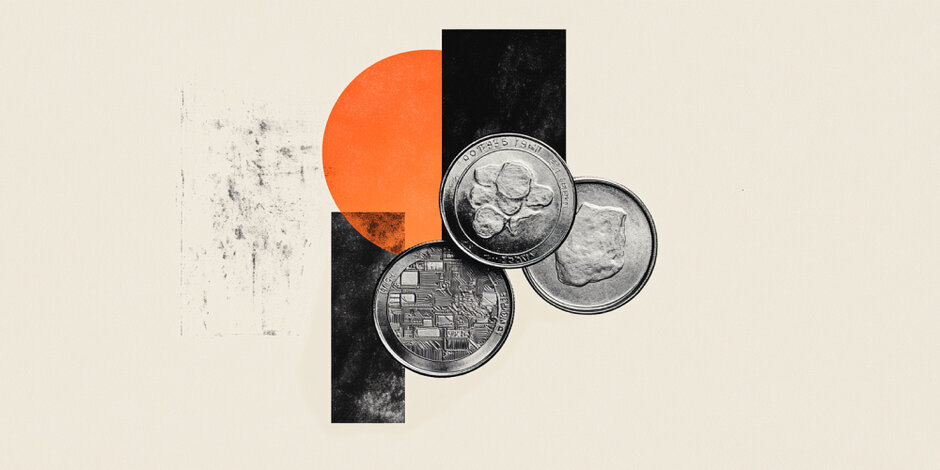

On a recent video about “junk silver,” somebody commented, “I saw someone in another comments section make a joke that if they were paid in quarters back in the 60s, they could be a millionaire now.”
There were a lot of laughing reactions and indignant responses mocking the guy. But is he wrong?
Let’s run the numbers.
Keep in mind that quarters minted before 1965 are 90 percent silver. The feds removed the silver from quarters (along with dimes and half dollars) after President Lyndon B. Johnson signed the Coinage Act of 1965. Coins minted in 1965 or later are mostly copper with faces made from the same alloy used in nickels.
In other words, quarters minted in 1964 or earlier were real money, and they’re worth a lot more than 25 cents.
Well, as of Oct. 9, the silver value in a “junk” quarter was $8.91.
It’s pretty clear we’re calling the wrong quarter “junk,” eh?
With this in mind, let’s calculate how much money somebody who earned an average wage in 1964 was paid in quarters.
The median family income in 1964 was $6,000. That may sound like a pittance compared to today, but when you inflation-adjust $6,000, it equals about $62,900 in 2025 dollars.
For simplicity of calculation, let’s assume that our intrepid employee earned $5,000 between 1960 and 1964. That means he would have 80,000 quarters. Given the melt value of those quarters today, if he held on to all of them, he would have $712,800.
So, not quite a million, but nothing to sneeze at.
Breaking it down a little further, it would take 112,360 90-percent silver quarters to equal $1 million at the current melt value. The value of those quarters would be $28,090 when calculated by their 25-cent face value. That means our 1960s worker would have needed to earn $7,022 per year between 1960 and 1964 for his silver quarters to make him a millionaire today. That equals $73,623 per year in 2025 dollars – certainly not an unreasonable salary for a professional.
Maybe those laugh emojis were unwarranted.
Of course, this assumes he kept all those quarters, which is unrealistic. The saving rate in 1964 was around 12 percent. That would be about $840 per year for our worker earning $7,020. If he saved the average, he would have 13,440 quarters today, with a melt value of $119,616.
Now consider this: if our worker had earned an average wage before 1960, he would have needed less than 10 years to accumulate enough quarters to be a millionaire today at the average saving rate.
What have they done to our money?
This thought experiment underscores how your government has devalued your money.
When Johnson signed the Coinage Act, he insisted that removing silver would have no impact on the value of U.S. coinage.
“[The] Treasury has a lot of silver on hand, and it can be, and it will be used to keep the price of silver in line with its value in our present silver coin,” he said.
Just a few years later, President Richard Nixon made a similar claim when he cut the final tie to the gold standard. He said, “Let me lay to rest the bugaboo of what is called devaluation,” and promised, “Your dollar will be worth just as much as it is today.”
Both men were lying.
When you disconnect money from anything of tangible value, it is going to quickly depreciate. It’s as certain as death and taxes.
And that’s exactly what happened.
This currency debasement is ongoing.
This is why you want to have real money – gold and silver. It will not be devalued by government action and can hold the value of your wealth over time – like those silver quarters.
By the way, pre-1964 quarters, dimes, and half dollars are one of the best ways to invest in silver right now with historically low premiums.
To receive free commentary and analysis on the gold and silver markets, click here to be added to the Money Metals news service.
To receive free commentary and analysis on the gold and silver markets, click here to be added to the Money Metals news service.
Author
Mike Maharrey
Money Metals Exchange
Mike Maharrey is a journalist and market analyst for MoneyMetals.com with over a decade of experience in precious metals. He holds a BS in accounting from the University of Kentucky and a BA in journalism from the University of South Florida.