Government shutdown: Deadline Déjà Vu

Summary
Federal fiscal year (FY) 2024 begins on October 1, and as of this writing none of the 12 annual appropriation bills have been enacted into law. As a result, in the absence of Congressional action, a government shutdown will begin on October 1.
During a government shutdown, unfunded federal agencies must discontinue non-essential functions. Essential services, such as those related to public safety or national security, continue to operate.
A government shutdown only impacts the 25% or so of federal spending that is characterized as discretionary. Mandatory spending, such as outlays for Social Security, Medicare and Medicaid, is not part of the annual appropriations process and thus generally continues unabated.
Earlier this year, bipartisan majorities in Congress passed the Fiscal Responsibility Act (FRA), which suspended the debt ceiling and set "topline" spending levels for defense and nondefense discretionary spending. The FRA stipulated roughly a 3% boost to defense discretionary spending and an 8% cut to nondefense discretionary spending for FY 2024, though our sense was that the latter number would be closer to flat after accounting for a number of adjustments and side agreements.
However, some more-conservative House Republicans are unhappy that the trajectory for discretionary spending was not reduced even more. Given that the Republican majority in the House of Representatives is a razor-thin four seats, Speaker of the House Kevin McCarthy has faced pressure to reduce discretionary spending below the levels agreed to in the FRA. This hurdle, alongside several others, have led to gridlock in the budget process.
There does not appear to be enough time to complete the annual appropriations process by October 1. As a result, a continuing resolution or a shutdown are the two most likely near-term outcomes. At this point, we view the chances of a shutdown starting on October 1 as more or less a coin flip.
Past government shutdowns are instructive for assessing the potential economic impact. The direct hit to economic growth in the 2013 and 2018-2019 government shutdowns was a relatively modest few tenths of a percentage point. Growth rebounded by a similar amount once the shutdown ended. That said, not all the lost economic activity was recovered in full, and the indirect hit to the economy is more difficult to measure yet should not be ignored.
A shutdown could delay influential economic data reports published by government agencies. Following the 16-day government shutdown in 2013, the Department of Labor's monthly Employment Situation and Consumer Price Index reports, among others, were delayed by about two weeks. Collection, processing and publication delays stretched into the following month as well.
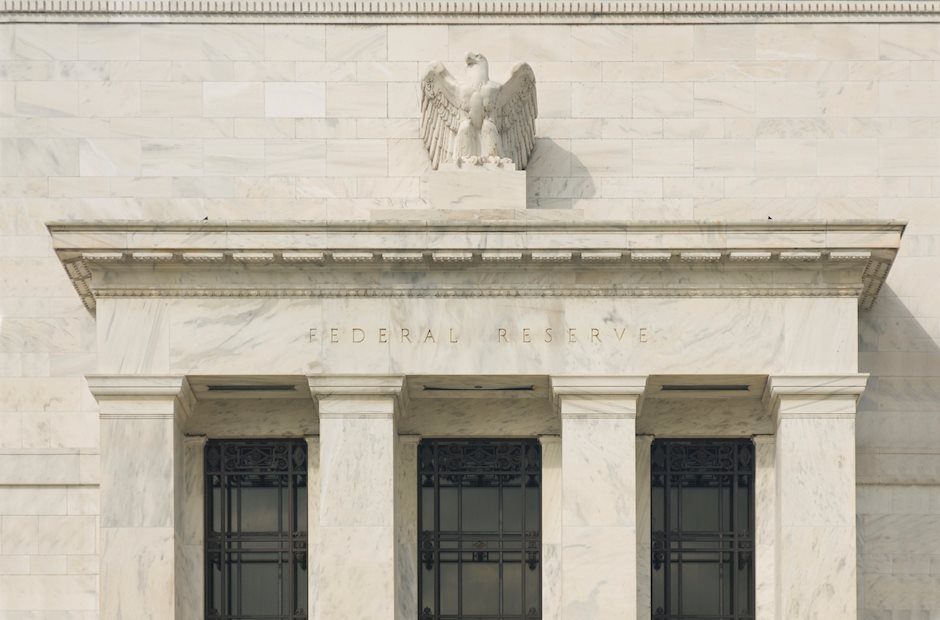
Determining the correct monetary policy setting in real-time is never easy, and it would be made all the more difficult by a lack of timely economic data. A government shutdown that leads to economic data blind-spots could raise the risk of a policy misstep by the Federal Reserve.
Author
Wells Fargo Research Team
Wells Fargo

















