Gold hits a one-year low below $4,000. Here's what the chart reveals

Gold (XAU/USD) falls below the psychological $4,000 level, hitting a one-year low. The precious metal has corrected more than 25% from its all-time high near $5,600 reached in January, as investors reassess the outlook for US monetary policy.
The latest decline came amid a particularly challenging environment for Gold. Persistent inflation in the United States (US) reinforces expectations of further Federal Reserve (Fed) interest rate hikes, while turbulence in technology stocks accelerates selling pressure. However, central bank purchases and demand from long-term investors suggest that the broader bullish fundamentals have not entirely disappeared.
Why is Gold falling despite geopolitical tensions?
The main factor weighing on Gold remains the shift in expectations surrounding the Federal Reserve's (Fed) monetary policy. On Thursday, the US Personal Consumption Expenditures (PCE) Price Index rose 0.5% in September, its largest monthly increase since March. Annual inflation reached 3.6%, while the core measure accelerated to 3.1%, remaining well above the Fed's 2% target. Meanwhile, US Gross Domestic Product (GDP) expanded at an annualized rate of 3.4% in the third quarter, exceeding expectations of 3.2% and accelerating from 2.2% in the previous quarter.
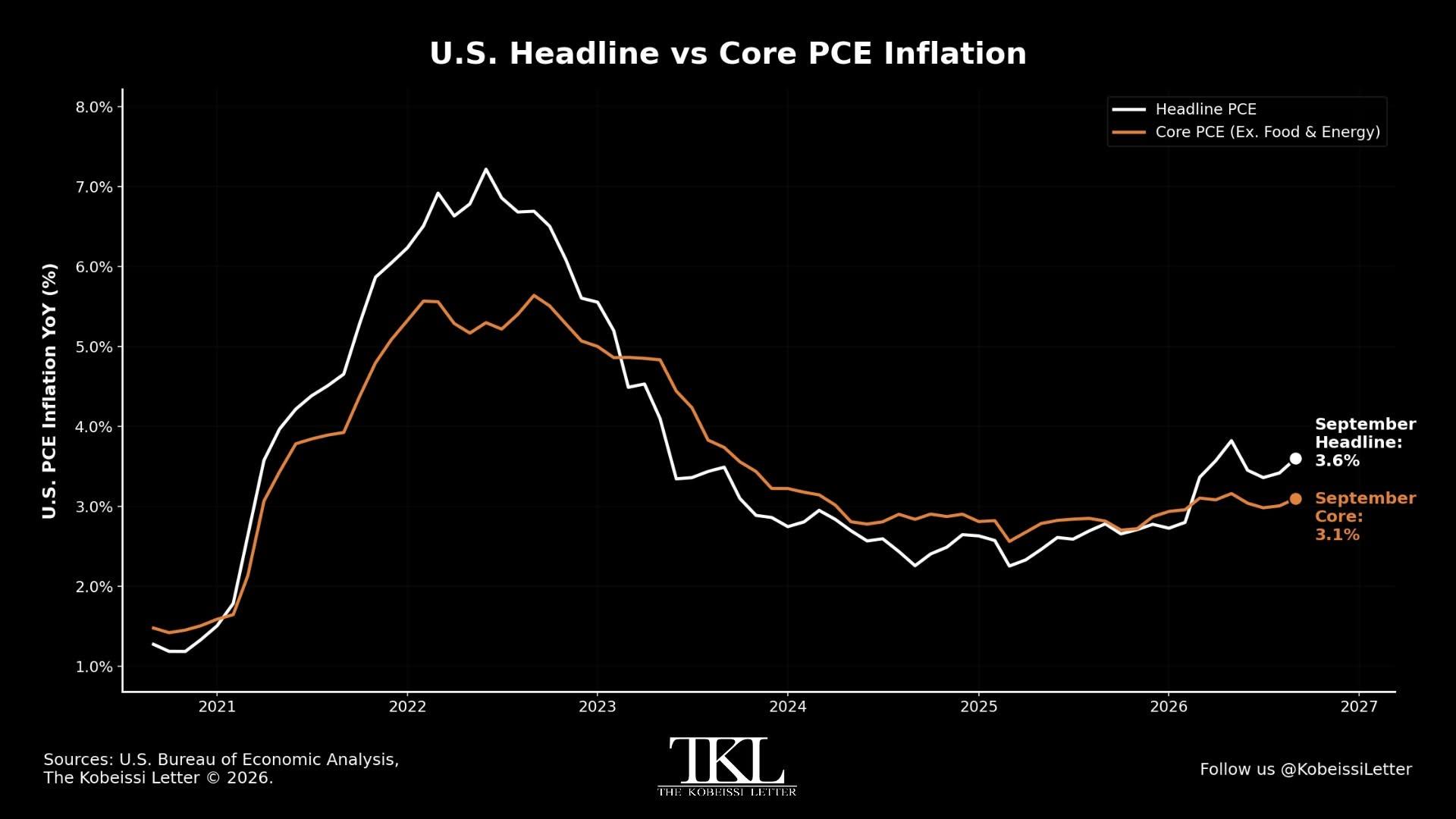
This combination of resilient economic growth and persistent inflation strengthens the case for additional monetary tightening. According to the CME FedWatch tool, markets currently assign approximately a 70% chance to a December rate hike, after the Fed kept its benchmark interest rate unchanged at 3.75%-4.00% on Wednesday. This outlook weighs on Gold, which offers no interest income, unlike government bonds.
Geopolitical tensions in the Middle East further complicate the situation. Rising Oil prices, driven by disruptions in the Strait of Hormuz and the risk of renewed military escalation, continue to fuel inflationary pressures. Gold therefore faces a paradox: geopolitical risks normally support its safe-haven appeal, but their inflationary consequences simultaneously reinforce expectations of higher interest rates.
Why is a weaker US Dollar no longer supporting Gold?
Another concerning signal emerges from Gold's reaction to financial conditions. The US Dollar (USD) retreats, while US Treasury yields also decline. Both developments would normally support the precious metal. Yet Gold continues to weaken. This divergence suggests that selling pressure is outweighing the factors traditionally supportive of bullion.
The correction in technology stocks provides another explanation. Concerns about the profitability of massive investments in artificial intelligence are prompting investors to reduce their exposure to risk across equity markets. Against this backdrop, some investors may be forced to liquidate Gold positions to cover losses elsewhere or raise cash.
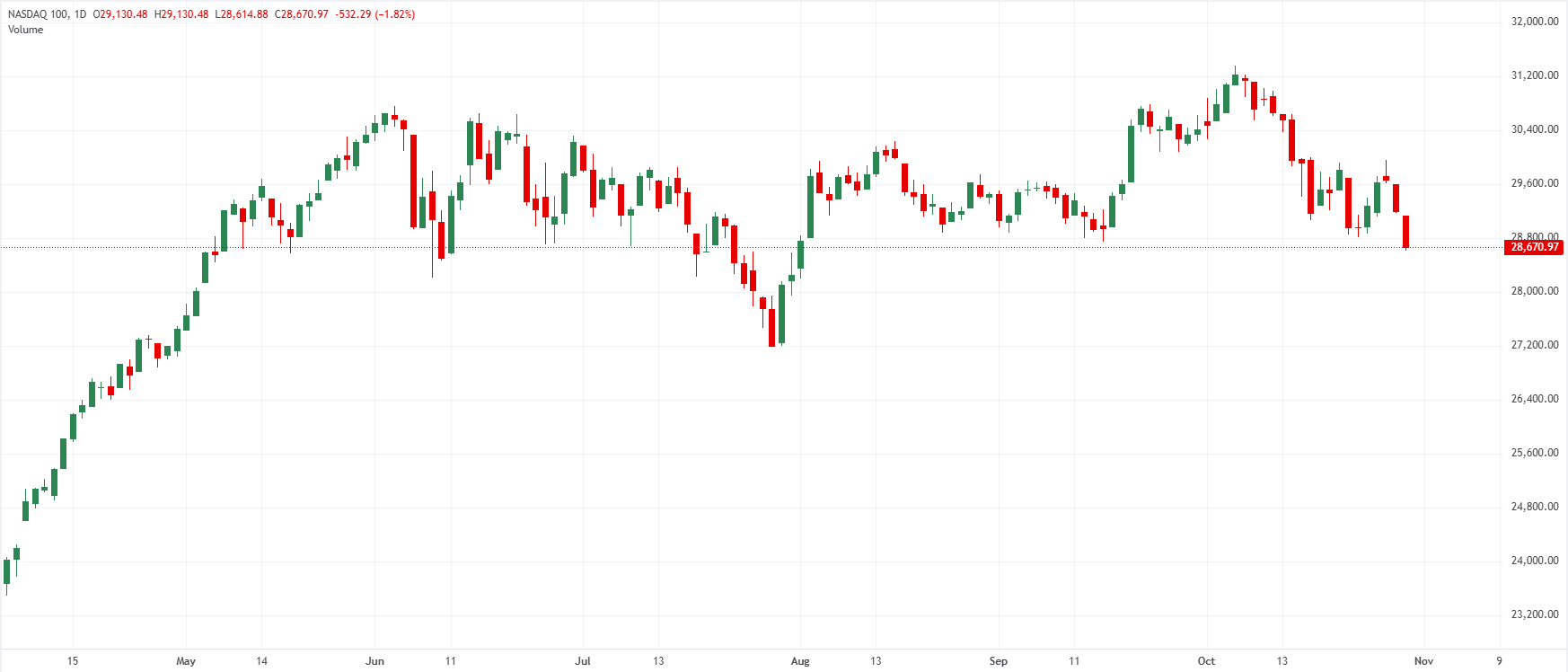
Saxo Bank analysts warn, in comments reported by The Wall Street Journal: “Heading into the weekend, traders will watch whether the US technology sector selloff extends into today’s session, potentially triggering broader deleveraging and liquidity-driven selling across markets, including precious metals.”
The risk is another wave of liquidations, even without a further deterioration in Gold's underlying fundamentals.
Could central banks trigger a Gold rebound?
Despite recent weakness, several factors continue to support Gold's medium- and long-term outlook. Central bank demand remains particularly important. According to Goldman Sachs, official institutions purchased approximately 79 tonnes of Gold in August, compared with a monthly average of just 17 tonnes before 2022. Investment flows also provide an encouraging signal. According to the World Gold Council (WGC), physically backed Gold Exchange-Traded Funds (ETFs) attracted $10 billion in September, bringing third-quarter inflows to a record $31 billion.
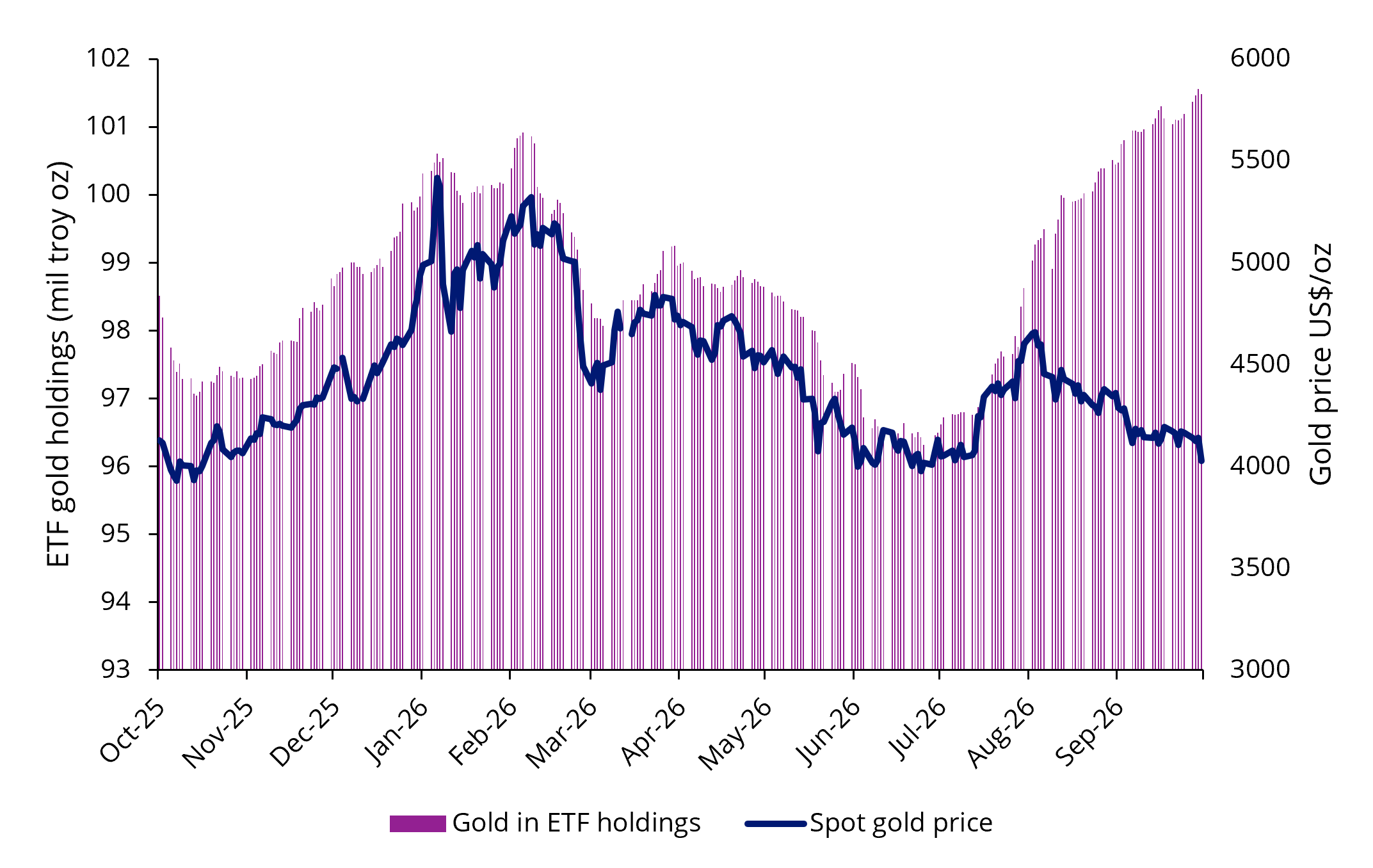
VanEck Australia Deputy Head of Investments Jamie Hannah highlights the divergence between prices and underlying demand: “The fact is that at US$4000/oz, there’s still a medium term outlook that it is a reasonable price for looking to put a defensive position within your portfolio.”
Purchases by emerging-market central banks, particularly China, also reflect efforts to diversify international reserves and reduce dependence on US Dollar-denominated assets. These structural flows could gradually absorb speculative selling and create the conditions for a recovery. However, their presence does not guarantee an immediate reversal. Another increase in US interest rates could continue to weigh on Gold despite this underlying demand.
Gold chart points to two possible scenarios
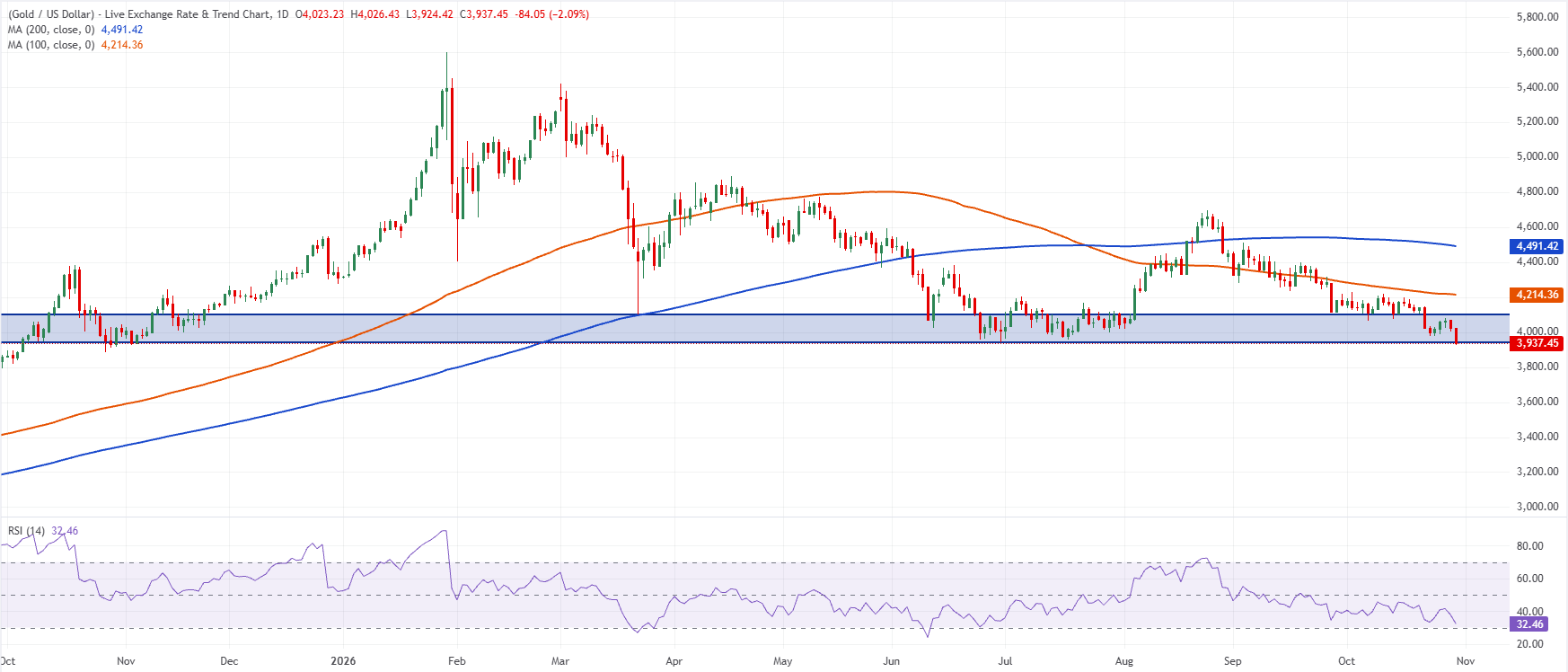
Gold's daily chart highlights the importance of the $4,100-$3,940 area, which has repeatedly provided a stabilization zone this year. The decline below $4,000 weakens this area, and a sustained break below $3,940 could intensify selling pressure and open the door to a deeper correction.
Conversely, a recovery above $4,000 would provide an initial sign of stabilization. A break above $4,100 would then strengthen the prospects for a more sustained rebound.
The bullish scenario also depends on monetary policy expectations. Slower inflation, signs of weakness in the US labor market or a decline in the probability of a December rate hike could restore Gold's appeal.
Upcoming US employment and inflation figures, as well as the November 3 midterm elections, could play an important role in shaping market sentiment.
Gold now stands at a crossroads. Speculative liquidations and expectations of tighter monetary policy favor further downside, while institutional purchases and structural demand provide the foundations for a potential rebound.
Whether the precious metal can sustainably reclaim the $4,100 level could determine if the current correction develops into another leg lower or becomes the starting point for a recovery.
Author

Ghiles Guezout
FXStreet
Ghiles Guezout is a Market Analyst with a strong background in stock market investments, trading, and cryptocurrencies. He combines fundamental and technical analysis skills to identify market opportunities.

















