|

Gold getting heavier

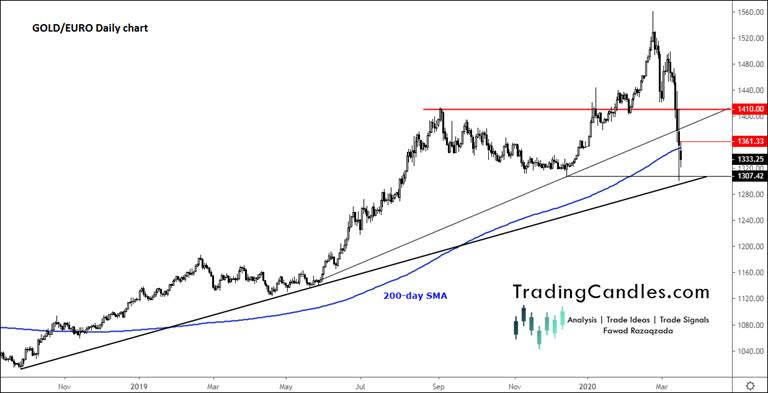
Some folks have attributed gold’s recent decline, in the face of collapsing equity prices and interest rates, to a stronger US dollar. This is not the case, as gold in euro terms have also fallen equally sharply. Investors are therefore abandoning the so-called safe-haven metal for other reasons, including because of concerns over physical demand as Covid-19 wreaks havoc on the global economy. It is not hard to imagine there might be some forced liquidation as leveraged portfolios with large long equity portions have or nearly gone bust. With the safe haven metal not responding in the way you would expect it to in times like now, I can’t help but feel more pain is on the way for gold bugs.

Here is gold in euro terms:
Gold

Source: TradingView and TradingCandles.com

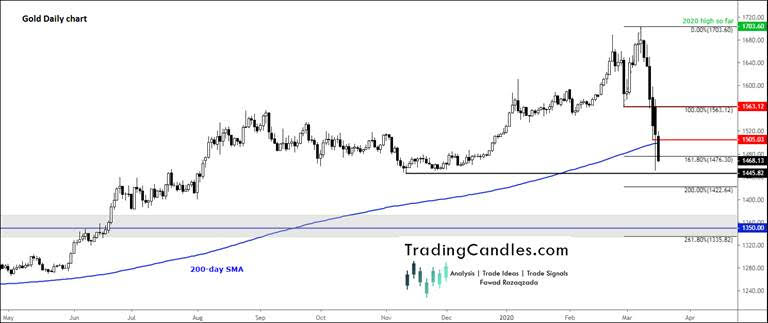
Gold in dollar terms, meanwhile is looking very weak from a technical point of view. A drop below the most recent low at $1445 (where lots of sell stops are presumably resting from trapped bulls) looks imminent. It is possible we see gold return to the long-term breakout level around $1350 in the coming days. However, if gold goes back above 1505 resistance first, then in that case, the technical outlook would brighten slightly. Here is a daily chart of gold with key levels to consider:
Gold

Source: TradingView and TradingCandles.com

Author

Fawad Razaqzada

Fawad Razaqzada

TradingCandles.com

Experience Fawad is an experienced analyst and economist having been involved in the financial markets since 2010 working for leading global FX, CFD and Spread Betting brokerages, most recently at FOREX.com and City Index.


More from Fawad Razaqzada
Share:

Editor's Picks

GBP/USD extends losses toward 1.3200 on persistent USD strength

GBP/USD loses further ground toward 1.3200 in the second half of the day on Tuesday. Political uncertainty in the United Kingdom weighs on the British Pound, alongside weak business PMI data for June. Meanwhile, the US Dollar capitalizes on the risk-off mood and hawkish Fed bets ahead of the US PMI release.

EUR/USD falls to fresh 12-month low below 1.1400

EUR/USD comes under renewed selling pressure in the second half of the day on Tuesda and trades at its lowest level since June 2025 below 1.1400. Mixed PMI data from Germany and the Eurozone makes it difficult for the Euro to find demand, while the risk-averse market atmosphere supports the USD, forcing the pair to stay on the back foot. Traders now await the US PMI data.

Gold drops to nearly two-week low, tests $4,100

Gold (XAU/USD) turns south following Monday's rebound and trades deep in the red near $4,100 on Tuesday. Despite positive signals from US-Iran peace talks, widespread skepticism remains toward a final deal and weighs on the precious metal. In the meantime, the USD gathers strength on hawkish Fed expectations and drags XAU/USD lower.

Dogecoin risks fresh yearly lows as bears tighten grip

Dogecoin (DOGE) remains under pressure, trading below $0.09 after failing to break above a key resistance zone, and losing more than 7% last week. Weakening institutional interest, declining social dominance and a rise in bearish derivatives positioning continue to weigh on DOGE. In addition, deteriorating momentum indicators suggest the meme coin risks a deeper correction.

US S&P Global PMI expected to show steady business growth in June

S&P Global will release the June flash Purchasing Managers' Indices for most major economies, with the United States data scheduled on Tuesday. These surveys of top private-sector executives are seen as an early indicator of the country’s economic health.

Regime change: Inside Kevin Warsh's first move to make the Fed unreadable on purpose

The rate did not move. That was the least interesting thing about Kevin Warsh's first meeting in charge of the Fed. The FOMC held its benchmark at 3.50%-3.75% for the fourth straight meeting, exactly as priced, and then the new chair used his first press conference to dismantle the machinery the market has leaned on for a decade.