Gold doesn't need a dovish Fed. It needs fiscal repression
Gold (XAU/USD) has stabilized roughly between $4,100 and $4,200 since the start of October after a sharp correction pushed the precious metal close to its lowest levels since August. Since reaching an all-time high near $5,600 in January, Gold has lost roughly a quarter of its value, weighed down by rising US Treasury yields and a stronger US Dollar (USD).
The question is no longer simply whether Gold has found a bottom, but what could trigger its next sustainable rally.
Why a dovish Fed is no longer enough
Gold's traditional relationship with monetary policy largely reflects its opportunity cost. Unlike government bonds, the precious metal pays no interest, making it less attractive when real yields rise. The yield on the 10-year US Treasury note has recently exceeded 5.20%, reaching its highest level since 2007. Real yields have also increased sharply, while the US Dollar has approached an 18-month high. These conditions remain unfavorable for Gold, even as expectations of further Federal Reserve (Fed) tightening diminish.
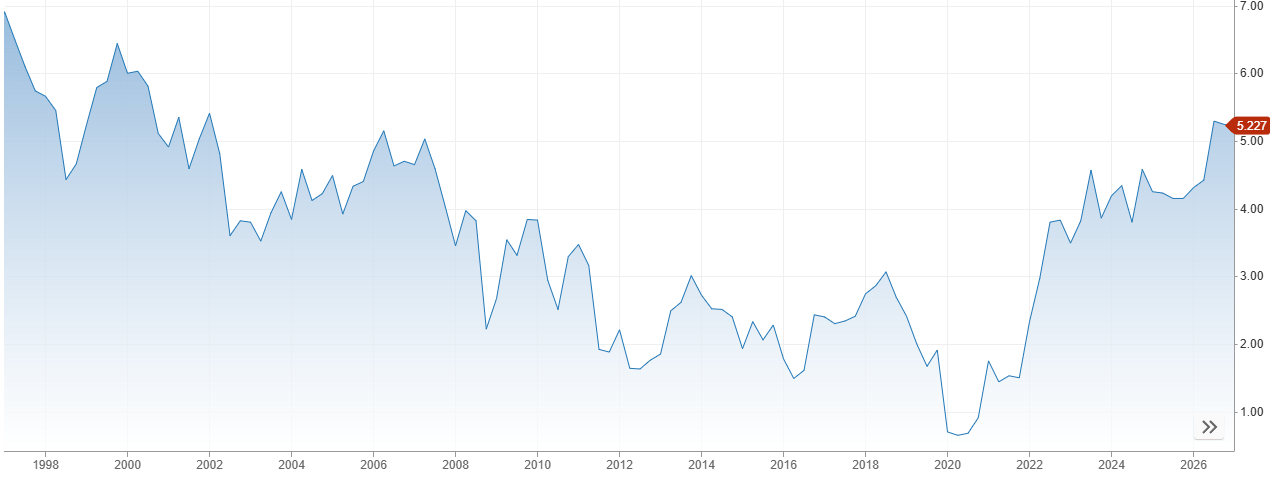
The problem is that the Fed directly controls short-term interest rates, not the entire yield curve. Longer-term yields also reflect inflation expectations, government borrowing requirements and the term premium investors demand for holding long-duration debt. Consequently, long-term yields can remain elevated even when markets anticipate a less restrictive central bank.
OCBC explains: "This reinforces our view that lower Fed hike risk alone may not be enough to drive the next leg higher in gold. A more sustained turnaround (lower) in long-end/real yields and the USD would be the cleaner catalysts for gold to recover."
Lower expectations of another interest rate hike have reduced immediate monetary pressure, but the bond market has not delivered the sustained decline in long-term yields needed to support a durable recovery in Gold prices.
The $40 trillion debt problem changes the equation
The US fiscal outlook is becoming increasingly important for both Treasury yields and Gold. According to US Treasury data, total federal debt now exceeds $40 trillion. Meanwhile, the Congressional Budget Office (CBO) projects that federal debt held by the public will increase from approximately 101% of Gross Domestic Product (GDP) in 2026 to 120% by 2036. Annual net interest costs are projected to rise from around $1 trillion to $2.1 trillion over the same period.
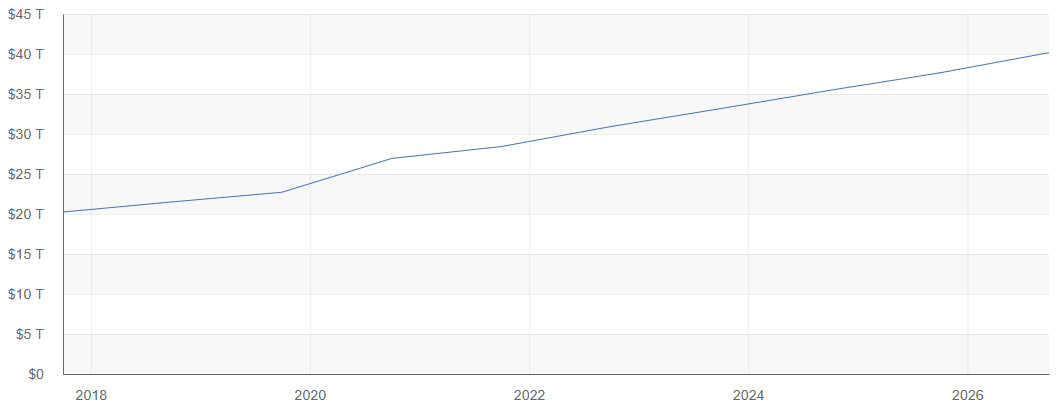
This creates a difficult policy trade-off. The Fed needs sufficiently restrictive monetary conditions to control inflation. Yet persistently elevated interest rates increase the cost of refinancing government debt, potentially worsening fiscal imbalances. Higher borrowing costs can therefore contribute to additional debt issuance, which may itself place further upward pressure on Treasury yields.
State Street Investment Management highlights another dimension of this problem. In a September study, the firm noted that foreign investors' share of marketable US Treasury securities declined from approximately 50% in 2010 to 31% in 2025. Over a longer period, the share of US Treasuries in foreign official reserves fell from around 30% in 2000 to 25% in 2025, while Gold's share increased from approximately 9% to nearly 22%. This shift suggests that some reserve managers are gradually diversifying away from US government debt. State Street also estimated that the 10-year Treasury term premium has reached approximately 0.8%, its highest level in more than a decade.
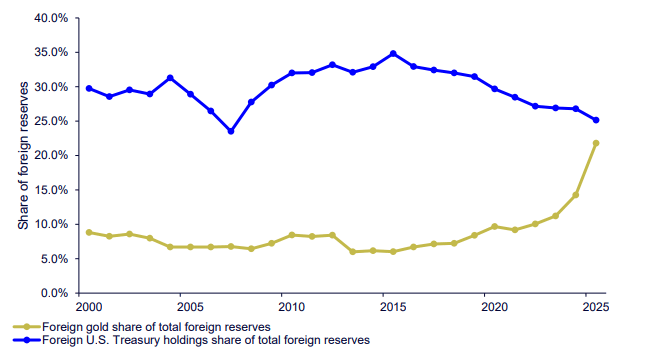
For Gold, the implications are complex. Higher Treasury yields generally support the US Dollar and increase the precious metal's opportunity cost. But if rising yields increasingly reflect concerns about fiscal sustainability rather than economic strength, investors may begin questioning the attractiveness of US government debt as a long-term store of value. That distinction could eventually work in Gold's favor.
Financial repression could be the real catalyst
Financial repression refers to policies designed to channel savings toward government financing while keeping borrowing costs below the levels that might otherwise prevail in free markets. Such policies can include persistently negative real interest rates, regulatory incentives to hold government bonds or interventions intended to contain long-term yields.
The underlying mechanism is straightforward: when nominal interest rates remain below inflation for an extended period, the real value of outstanding government debt declines. Bondholders effectively absorb part of that adjustment through a loss of purchasing power.
For Gold, this scenario could prove considerably more bullish than conventional monetary easing. When the Fed cuts rates because inflation is declining, lower yields reduce Gold's opportunity cost. But when policymakers deliberately contain borrowing costs while inflation remains elevated, real yields can become persistently negative, increasing demand for assets perceived as protection against currency debasement.
Bank of America (BofA) identifies this distinction: "Even though the US fiscal deficit is much discussed in the gold market, a higher term premia alone has usually not been bullish gold. As such, if fiscal policy does not become more orthodox, we believe an end to the hiking cycle, or even more powerful, a return to concern over fiscal repression would be the more significant drivers. If the Treasury intervened in the bond market, financed that by issuing short-term debt and the Fed then made sure that short-date rates remained low, this would in all likelihood reignite concerns over USD debasement - a very bullish scenario for gold."
The bank's argument is that rising term premiums alone are not enough to lift Gold. As long as yields increase freely, they continue to make bonds relatively attractive. The more significant turning point would come if policymakers sought to prevent borrowing costs from rising in line with fiscal and inflation risks. Such a shift could weaken confidence in the US Dollar's purchasing power and encourage investors to seek alternative stores of value.
Financial repression would not necessarily require explicit yield controls. It could emerge gradually through measures that favor government financing and suppress real returns. However, ordinary interventions to maintain bond market liquidity would not, by themselves, constitute financial repression. The defining feature would be a sustained policy that benefits government borrowers at the expense of savers' inflation-adjusted returns.
When rising Treasury yields become a warning signal
The idea that higher bond yields could eventually support Gold may appear contradictory. But persistently high yields also raise the federal government's financing costs, potentially increasing pressure on policymakers to stabilize the bond market. Investors could begin anticipating such intervention before it actually occurs. GivTrade, cited by The Wall Street Journal, captures this potential shift: "The turning point comes when investors stop asking how much a bond pays and start asking why it needs to pay so much."
This distinction is central to the structural bullish case. Elevated yields support the Dollar when they reflect economic strength and monetary credibility. But when they increasingly signal fiscal stress, they may eventually undermine confidence in the assets they are supposed to make attractive.
If policymakers subsequently seek to contain those yields, Gold could benefit from expectations of lower real returns and currency depreciation. This outcome is neither inevitable nor immediate. Rising real yields could continue to pressure Gold for some time, and the United States (US) may never adopt an explicit financial repression regime.
Nevertheless, the growing tension between debt-servicing costs and monetary policy objectives makes this possibility increasingly relevant.
What could trigger Gold's next rally?
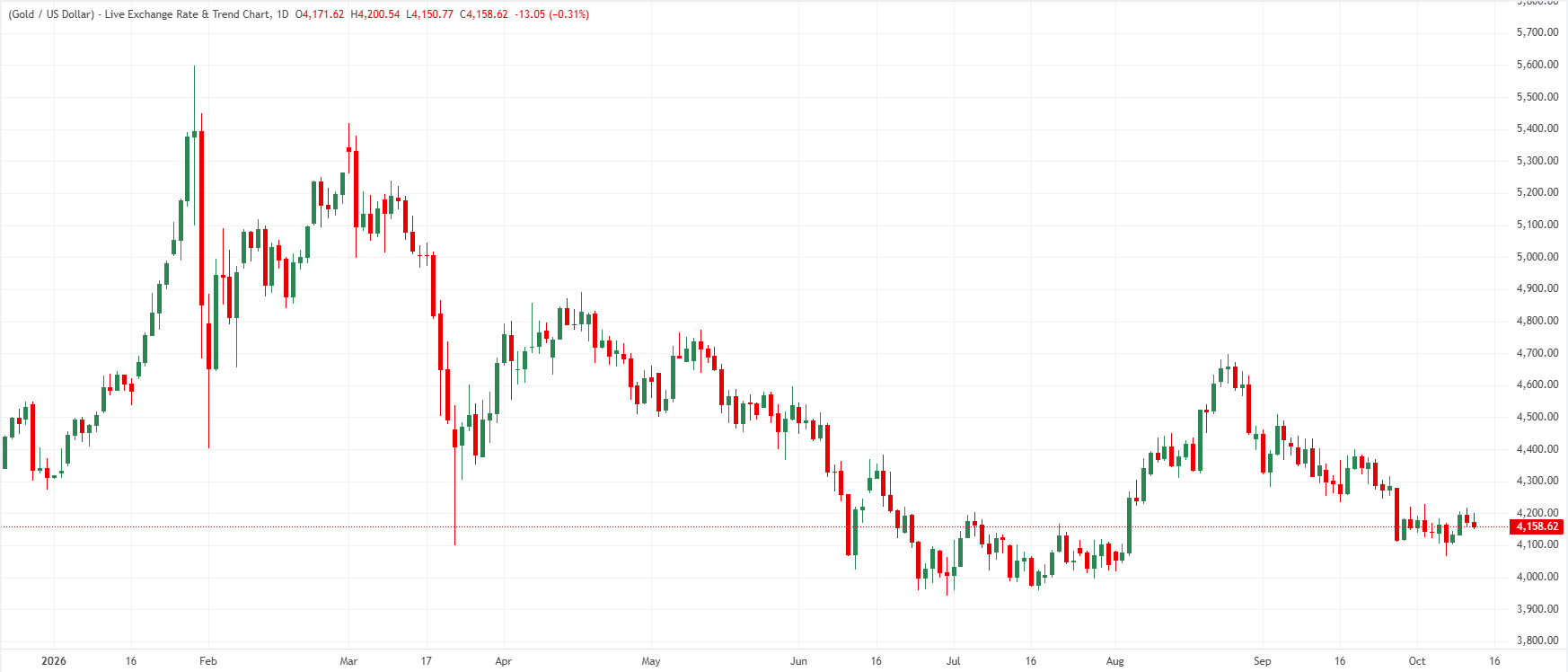
Three macroeconomic developments could shape Gold's next major move. The first would be a sustained decline in US inflation, allowing the Fed to adopt a less restrictive stance while pushing real yields and the Dollar lower. The upcoming September Consumer Price Index (CPI) report could provide an early indication of whether this scenario is becoming more likely.
The second would involve persistent inflation, potentially reinforced by energy market tensions linked to the conflict in the Middle East. This could keep monetary policy restrictive and Treasury yields elevated, maintaining pressure on Gold and potentially bringing the $4,000 level back into focus.
The third, more structural scenario would involve mounting pressure on US government financing. If long-term yields continue rising because of fiscal concerns, markets could begin anticipating greater Treasury intervention or policies designed to contain borrowing costs. Should these measures coincide with persistent inflation, expectations of financial repression could strengthen demand for Gold as protection against declining real returns and currency debasement. This third scenario could ultimately prove more powerful than a conventional Fed easing cycle.
For now, Gold remains caught between immediate monetary headwinds and longer-term fiscal concerns. A weaker US Dollar and lower real yields would provide the clearest near-term support, but the next major bull market may depend on a more fundamental change in how investors assess US government debt.
Gold's next sustained rally may not begin when the Fed finally cuts interest rates. It could begin when investors conclude that the United States can no longer afford to let Treasury yields rise indefinitely. And in that environment, Gold would not need a dovish Fed. It would need a market that starts pricing in financial repression.
Author

Ghiles Guezout
FXStreet
Ghiles Guezout is a Market Analyst with a strong background in stock market investments, trading, and cryptocurrencies. He combines fundamental and technical analysis skills to identify market opportunities.

















