German politics monitor: Traffic light is flashing green
-
Under the mantra ‘daring more progress’ the new government plans an ambitious investment offensive, but details are somewhat scare and financing remains the Achilles’ heel of the deal.
-
We expect Germany to maintain a clear pro-European stance, but see scope for a more critical foreign policy stance towards China, Russia and autocratic leaders in the EU. Daring more progress.
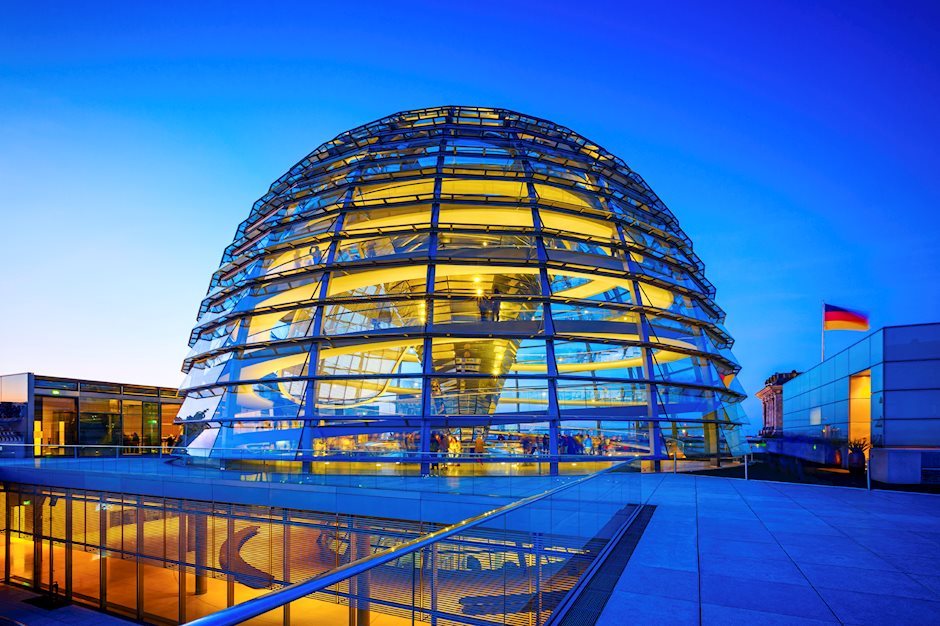

As a first in German history, a new ‘traffic-light’ coalition between the Social Democrats (SPD), Greens and the liberal FDP party has taken over the government in Germany. Combining political forces on the left (SPD, the Greens) and right (FDP), we see the ‘traffic-light’ trio as a centrist coalition that is united in its aim of breaking with the status-quo represented by the last grand coalitions.
Previous Finance Minister Olaf Scholz will succeed Angela Merkel as chancellor and we see him as a steady hand with a measured and consensus-based leadership style in the tradition of Merkel. While clearly less experienced than his predecessor on the European political scene, Scholz has gathered credibility among European leaders for his role in the OECD accord on global minimum corporate taxes. Whether he can fill the vacuum of a strong European leader that Merkel leaves, will only be seen over time and probably not before the next crisis hits. Liberal FDP leader Christian Lindner will likely take over as Finance Minister and although more fiscally conservative than Scholz, he has shown a willingness to compromise on fiscal matters during the coalition negotiations and highlighted Germany’s special responsibility in holding the Eurozone together and enable countries room to invest in their economies.
Under the mantra ‘daring more progress’ the coalition agreement sets out an ambitious investment offensive ranging from public sector digitalisation, broadband access to new technologies to achieve the Paris climate goals. In light of Germany’s dire investments needs we view this investment focus as positive for potential growth. Reducing investment barriers stemming from an opaque public administration are key in addressing implementation bottlenecks for infrastructure projects, that are particularly prevalent at the local government level were most construction investment is realized. Debt relief for highly indebted municipalities will be an important measure to boost fiscal multiplier effects, but could prove tricky to achieve in the absence of a broad consensus in parliament to make the necessary constitutional adjustments. Favourable depreciation rules for digital and green investments in 2022 and 2023 should also foster private investments, but usage could turn out lower than expected if supply bottlenecks and semiconductor shortages persist.
The coalition agreement also envisages aggressive action on climate, with the exit from coal advanced to 2030 (instead of 2038) and a target of at least 15mio electrical vehicles on Germany’s roads by 2030. Large scale adoption of renewable energy is a key focus, with the aim of renewables to account for 80% of electricity production by 2030, up from the current 65% target (and 45% share today).
Author
Danske Research Team
Danske Bank A/S
Research is part of Danske Bank Markets and operate as Danske Bank's research department. The department monitors financial markets and economic trends of relevance to Danske Bank Markets and its clients.