German Ifo index signals rough times ahead
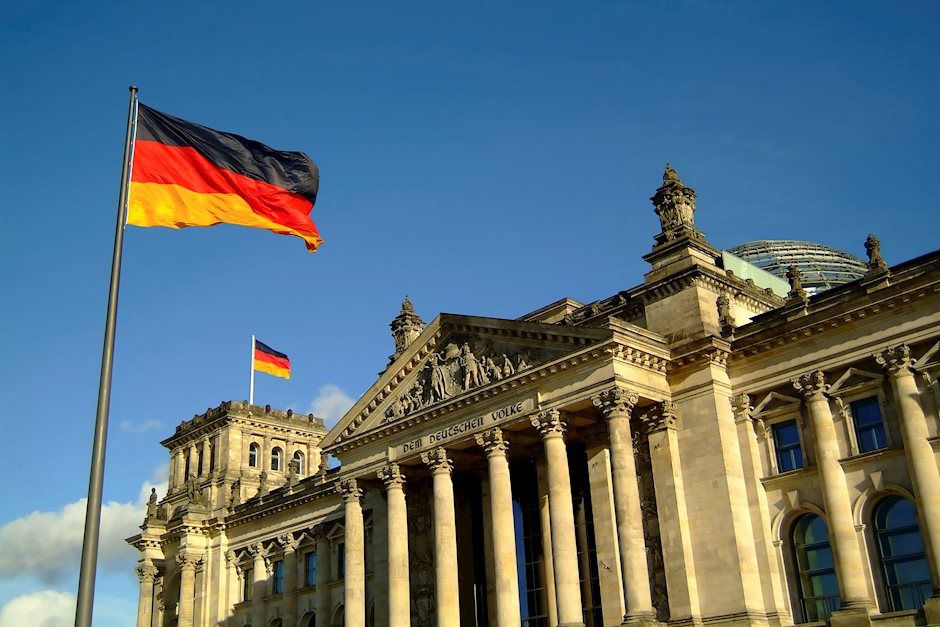

A weak Ifo index shows that German businesses have become more worried about the country’s growth outlook.
The only good thing about Germany's just-released Ifo index is that it is the final major macro indicator released this year. Time to take a breather and to end a year that will go down as the second consecutive year of economic stagnation. Even worse, on average, the German economy has been in stagnation since 2020 and is currently hardly any larger than at the start of the pandemic.
Let’s take a look at the details. Germany’s most prominent leading indicator, the Ifo index, came in at 84.7 in December from 85.6 in November. As expected and as experienced in the past, the Ifo index tends to capture short-term events with a certain delay. The results of the US elections and the collapse of the German government only seem to have reached German c-suites now. Interestingly, the current assessment component improved to 85.1 from 84.3 in November, while the expectations component dropped like a stone to 84.4 from 87.0 in November.
Near-term outlook looks anything but rosy
With today’s Ifo index, another disappointing year draws to a close. The second consecutive year of stagnation, the first time since the early 2000s, and finally a growing awareness that Germany is again the sick man of Europe. Well, at least the growth laggard of Europe. The country is stuck between cyclical and structural headwinds and is struggling to agree on a way out. The collapse of the government paired with a long series of negative news and announcements from iconic German corporates is just some of the fallout of this stagnation and the disagreement on the right policy prescription.
Looking ahead, the outcome of the US elections and the potential economic policies coming from Donald Trump's incoming administration, together with political and public finance woes in France, are the latest addition to Germany’s long list of economic risks. With 10% of German exports going to the US (of which the largest part is automotives), any US tariffs would hit an already suffering sector.
Even more important is the impact that tax cuts and deregulation in the US – combined with already low energy prices – would have on German competitiveness, which is clearly negative. German companies might step up investments in the US at the cost of investments in Germany. Add to this the recent surge in electricity prices and the related production stop in some industries, and it is hard to see the German economy not being caught in a winter recession. Unless Christmas shopping saved us all.
Elections should bring reforms and looser fiscal policy
Hope for the German economy comes from two sides: a more modest approach to the anticipated beggar-thy-neighbor policies in the US, and a surge in confidence and growth in Germany after the elections. Regarding the latter, the more optimistic scenario includes a new government that agrees on structural reforms, investments and looser fiscal policy. Whether looser fiscal policy also means a reform of the constitutional debt brake or just some workarounds via exemptions or special purpose vehicles depends on the outcome of the elections.
Given the growing consensus across most parties on the need for more investments, we see looser fiscal policies in Germany materialising, at the latest in 2026. Just to make up for the investment gap accumulated over the last decade, Germany would need additional investments of 1.5% GDP per year over the next 10 years. This is not all public investments, but the government will have to play an important role in providing public goods like infrastructure and education and to create incentives for private investments. Currently, the most likely outcome after the elections is at least an infrastructure investment fund.
At the same time, however, it is also becoming increasing clear that even in a best-case scenario with reforms and investments, any new government will not try to overhaul the old economic business model, but will rather try to rejuvenate the old one. Less red tape, some tax cuts to stimulate spending and investments, possibly attempts to lower energy costs and infrastructure investment – all of which feature in any European economist’s wish list for Christmas, and a growth booster for the economy.
Whether these measures will really be sufficient in competing against China and the US is a completely different question. What Germany would get is a refurbished model of its economy – clearly better than the old one with cracks, battery failures and very few gadgets, but also not a shiny, sprinkling new model that makes the competition speechless.
Read the original analysis: German Ifo index signals rough times ahead
Author
Carsten Brzeski
ING Economic and Financial Analysis
Carsten Brzeski is Chief Economist in Germany. He covers economic and political developments in Germany and the Eurozone, including the monetary policy of the ECB.