Geopolitics goes full metal: Trump pushes NATO into a new war economy era
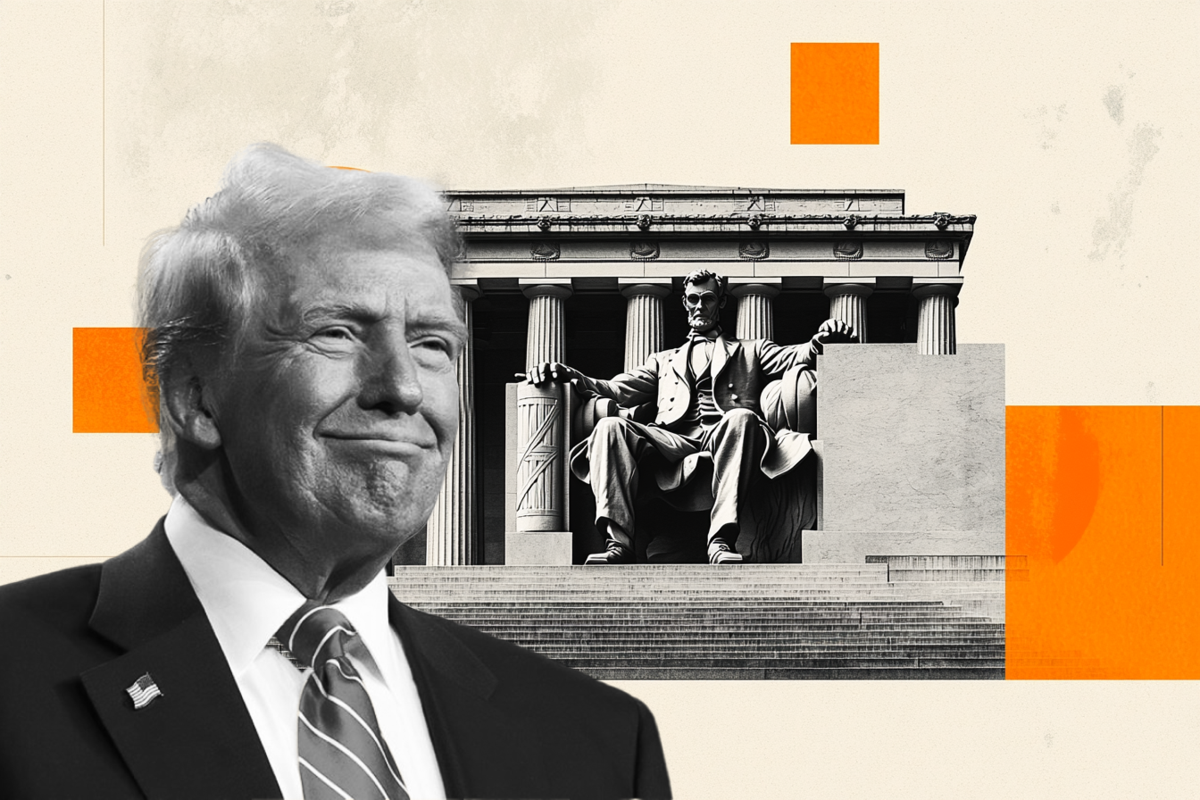

Trump’s NATO summit blitz isn’t about optics—it’s a high-stakes attempt to redraw the alliance’s financial architecture. While the Eurocrats still squabble over decimal points and defense committees, Trump is trying to rewrite the playbook entirely: 5% of GDP for defense, not the limp 2% that’s been NATO’s polite suggestion for a decade. If he pulls this off, it’s a paradigm shift. NATO won’t just be a security pact—it’ll be a procurement cartel with teeth.
This is Trump’s old playbook—pressure, posture, and pivot. But the difference now is urgency. The Middle East is simmering after U.S. stealth bombers lit up Iran’s nuclear sites over the weekend. Tehran jabbed back with a theatrical but strategically restrained strike, signalling this might not spiral just yet. But the market doesn’t trust “just yet.” With oil skating along its 200-day line and Middle East war risk still fresh in everyone's mind, Trump’s NATO pit stop doubles as a geopolitical recalibration.
He’s not just pushing for more tanks and fighter jets—he wants the whole military-industrial food chain scaled up. Think: rare earth minerals, domestic arsenals, sovereign chip supply lines. It’s re-shoring on steroids, pitched under the banner of NATO security. And that 5% isn’t just symbolic—it’s a reverse Marshall Plan for the defense sector. Industrial capacity becomes strategy. War risk becomes investment thesis.
But consensus is elusive. Spain’s opted out entirely. Macron and Frederiksen are squirming. And under the surface, a second front is brewing—Trump’s rumored pivot toward a scaled-back U.S. presence in Europe, repositioning forces east of Suez to sharpen America's Indo-Pacific blade. The message to Europe? Pay up, or we pack up.
Then there’s Greenland—the icy wildcard. Trump’s fixation on it isn’t a meme; it’s minerals and missiles in a rapidly militarizing Arctic. Russia and China have already set up camp. Trump sees Greenland not as land, but leverage.
The Russia sanctions theatre continues, too, with Europe pushing for bite while Trump offers bark. His G7 walk-back exposed the strategic schizophrenia: sanction costs versus strategic containment. He canceled on Zelenskyy but is still dangling diplomacy as the exit route for Ukraine. Peace by deal, not by deterrence.
This summit isn’t just a diplomatic checkpoint. It’s a test of whether Trump can turn NATO from a post-WWII relic into a 21st-century war economy alliance. The market implication? If 5% becomes baseline, defense stocks stop being cyclical—they become structural. And that changes everything.
Author
Stephen Innes
SPI Asset Management
With more than 25 years of experience, Stephen has a deep-seated knowledge of G10 and Asian currency markets as well as precious metal and oil markets.