GBP/USD Weekly Forecast: Volatility set to continue, eyes on UK bond market, inflation
- GBP/USD rebounded firmly from sub-1.1000 levels amid UK political headlines.
- Hotter-than-expected US inflation data failed to revive the dollar’s dominance.
- Pound’s fate hinges on the UK/ BOE policies in the inflation week ahead.

It was another dramatic week for GBP/USD, as speculations over the UK monetary and fiscal policies kept GBP bulls afloat despite red-hot US inflation and steeper Fed rate hike bets. Cable recovered swiftly from two-week lows of 1.0923 to settle the week roughly 400 pips higher before retracing a part of its weekly rally ahead of the weekend. Looking forward, all eyes will remain on the UK bond market action and fiscal policy announcements, which overshadow the UK inflation release.
What happened last week?
Despite the uncertainty over the UK monetary and fiscal policies, GBP/USD staged a solid comeback, tracking the Gilt yields higher amid a rout in the UK bond market. Although the pair saw a rough start to the week, extending the previous sell-off, as risk-aversion remained at full steam amid escalating geopolitical tensions between Russia and Ukraine over the Crimea bridge blasts. Media reports of Russia launching missile attacks on Kyiv and other cities in response to the bridge attack in Crimea over the weekend rattled markets, as they sought safety in the US dollar at the expense of the higher-yielding pound.
The downside, however, remains capped in cable, as the Bank of England (BOE) announced additional measures to support an orderly end of its purchase scheme on October 14. The pair continued to struggle with its recovery, even though the central bank announced on Tuesday that it intends to purchase index-linked Gilts. Mixed UK employment also capped the upside attempt, as the Claimant Count Change rose to 25.5K in September, offsetting the drop in the ILO Unemployment Rate to 3.5% in three months to August.
GBP sellers flexed their muscles and dragged the pair to the lowest level in two weeks near 1.0920 ahead of the UK GDP data on Wednesday, as investors reacted negatively to the overnight comments from the BOE Governor Andrew Bailey. Bailey warned pension fund managers and financial institutions that they have three days to readjust their positions before the emergency bond-buying programme ends on Friday. In a matter of time, GBP/USD changed its course and jumped towards 1.1100 after the Financial Times (FT) reported that the BOE signaled privately to bankers it may extend bond-buying. Following the report, the spot shrugged off the UK GDP contraction of 0.3% in August. However, GBP/USD lacked upside follow-through near 1.1150 after a BOE spokesperson reaffirmed that the programme would conclude by the end of the week.
Thursday saw buyers regaining the recovery momentum, as the sterling capitalized on speculations that PM Liz Truss may reconsider making changes to the mini-budget. UK Finance Minister Kwasi Kwarteng said in a BBC interview that he is focused on delivering on the mini-budget to get growth going again, per Reuters. Volatility was at its peak after hotter US Consumer Price Index (CPI) jacked up steeper Fed rate hike expectations and triggered a fresh US dollar rally. But GBP/USD stood resilient, as the risk sentiment turned higher on chatter over UK’s policy U-turn and fading hopes for a 100 bps Fed rate hike next month. US CPI rose by 8.2% YoY in September vs. 8.1% expected while the core figures jumped 6.6% on an annualized basis in the reported month vs. 6.5% estimates.
On the final day of the BOE’s bond buyback this week, GBP/USD lost its traction amid political drama and turned south, as the Gilt yields tumbled and the greenback jumped back on the bids. British Prime Minister Liz Truss sacked Kwasi Kwarteng and appointed former British Foreign Minister Jeremy Hunt as the new Finance Minister. Finally, Truss confirmed the U-turn on the mini-budget by announcing that they have decided to keep the corporation tax rise and added that this will act as a downpayment on the medium-term fiscal plan. Meanwhile, the 5-year Consumer Inflation Expectation component of the University of Michigan's Consumer Sentiment Survey rose to 2.9% in early October from 2.7% in September, providing a boost to the greenback and further weighing on the pair late Friday.
Busy week ahead
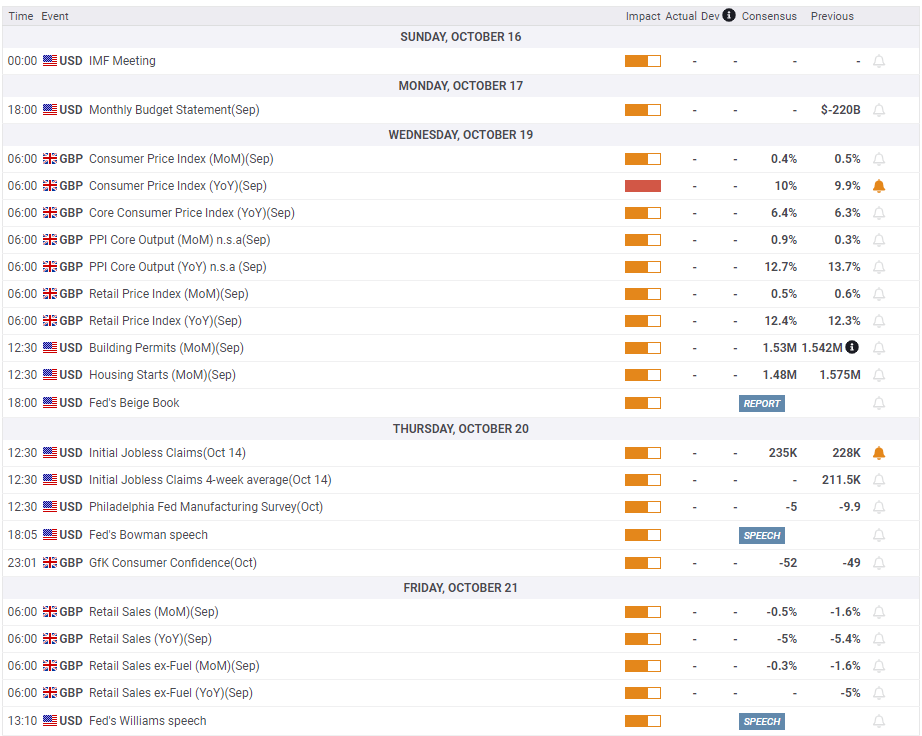
The week ahead is likely to be relatively calm data-wise but UK political headlines will likely keep GBP/USD trades on their toes. Reports around the BOE bond-buying programme as well as on the UK leadership will continue to entertain them. Markets will also scrutinize the speeches from the Fed officials throughout the week, in the wake of the hotter-than-expected US inflation data.
Monday is void of any top-tier macro news from both sides of the Atlantic while Tuesday will see China’s GDP and activity data, which could have a significant impact on risk sentiment and eventually on the high beta currency, the GBP. The US Industrial Production and Capacity Utilization data will be reported on Tuesday.
The UK CPI data will be published on Wednesday and could play a second fiddle to the UK/ BOE policy headlines. Still, it will be relevant for the central bank’s next policy move and cable’s trading incentives. In August, UK annualized inflation unexpectedly eased to 9.9% vs. 10.2% expected. Besides the UK data, investors will also look forward to the US housing data.
On Thursday, the US weekly Jobless Claims will drop in alongside the Philly Fed Manufacturing Index and Existing Home Sales, although it’s unlikely to have a major impact on the dollar valuations. The UK Retail Sales will be closely followed on Friday, in absence of critical economic data on the US docket.
GBP/USD technical outlook
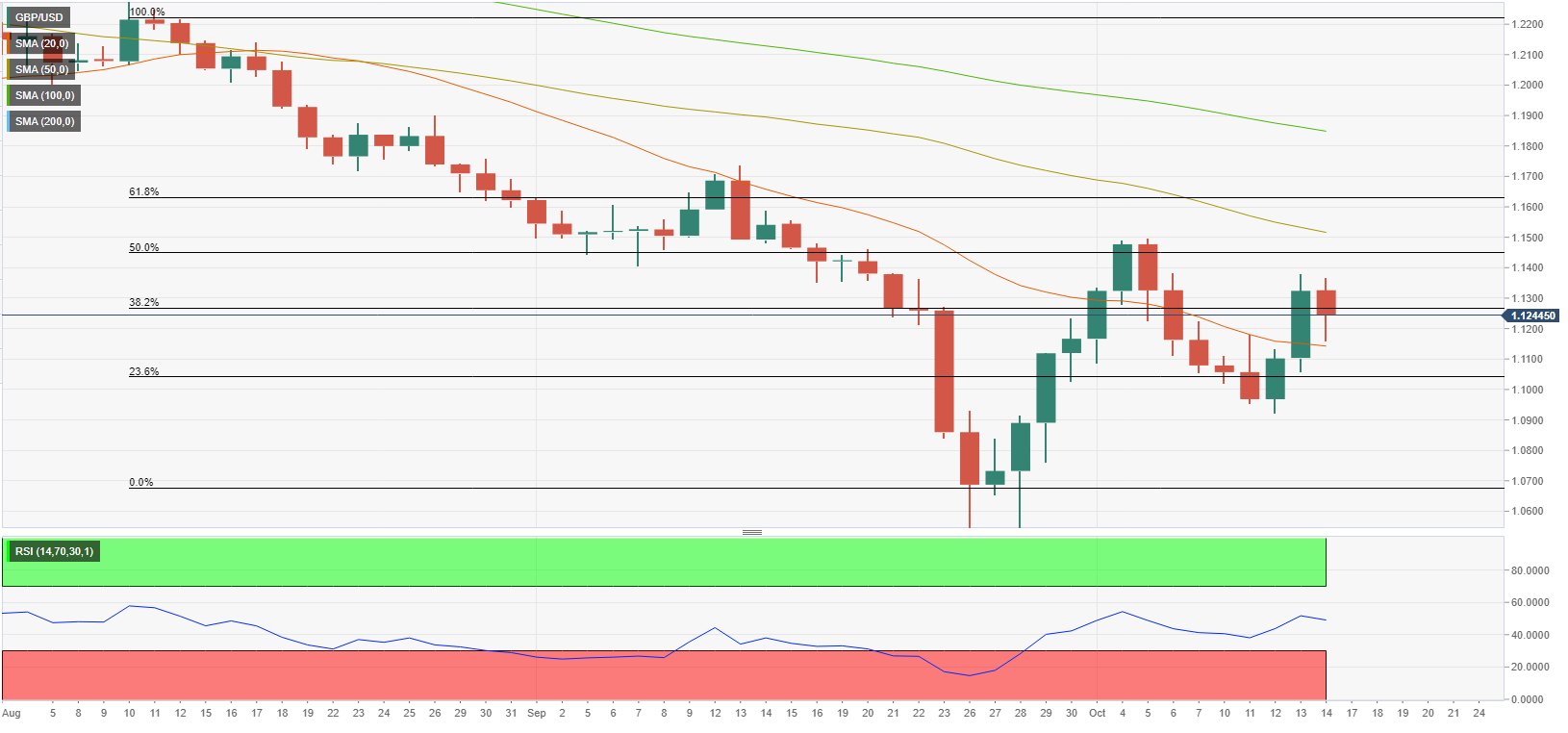
Despite Friday's decline, GBP/USD managed to hold above the 20-day SMA. Additionally, the Relative Strength Index (RSI) indicator on the daily chart retreated to 50, suggesting that the pair has lost its bullish momentum and turned neutral in the short term.
On the downside, 1.1050 (Fibonacci 23.6% retracement level of the latest downtrend) aligns as key support ahead of 1.1000 (psychological level, 20-day SMA) and 1.0900 (static level, psychological level). Resistances are located at 1.1300 (Fibonacci 38.2% retracement), 1.1460 (Fibonacci 50% retracement) and 1.1500 (psychological level, 50-day SMA).
GBP/USD sentiment poll
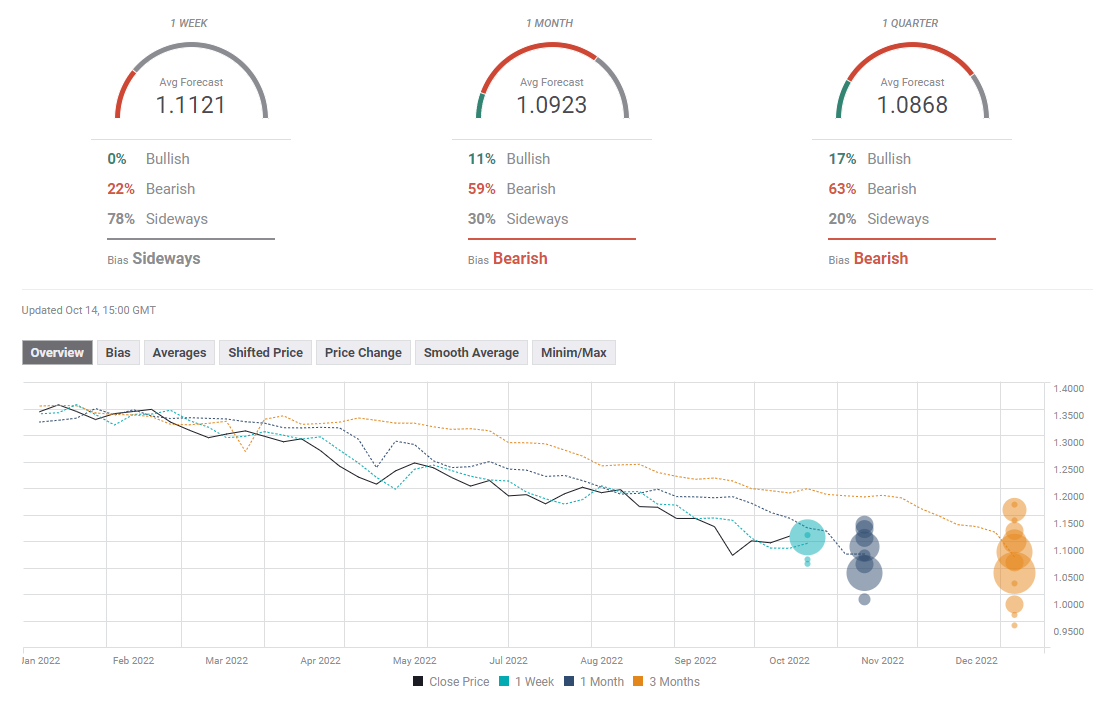
The majority of experts polled by FXStreet see GBP/USD staying neutral next week. The one-month outlook, however, points to a significant bearish shift with the average target sitting slightly above 1.0900.
Author

Dhwani Mehta
FXStreet
Residing in Mumbai (India), Dhwani is a Senior Analyst and Manager of the Asian session at FXStreet. She has over 10 years of experience in analyzing and covering the global financial markets, with specialization in Forex and commodities markets.