GBP/USD Weekly Forecast: Sterling has room to move lower as another Brexit fail nears
- The GBP/USD lost about 0.7% over the first week of February as the economic fundamentals in combination with Brexit uncertainty amounting weighed.
- The forward-looking indicators saw services activity slump at the brink of recession in January.
- The Bank of England held the monetary policy unchanged in line with the expectations while raising the warning about Brexit uncertainty negative effects, but Governor Carney opted for a calm tone that finally supported Sterling.
- The Bank of England lowered the UK growth forecast due to Brexit uncertainties as businesses are holding back the investment.
- The GBP/USD broke below key support zone of 1.3030-1.3000-1.2970 and it is expected to remain subdued over the second week of February as growth is seen faltering and Brexit deal is unlikely to be passed next week.
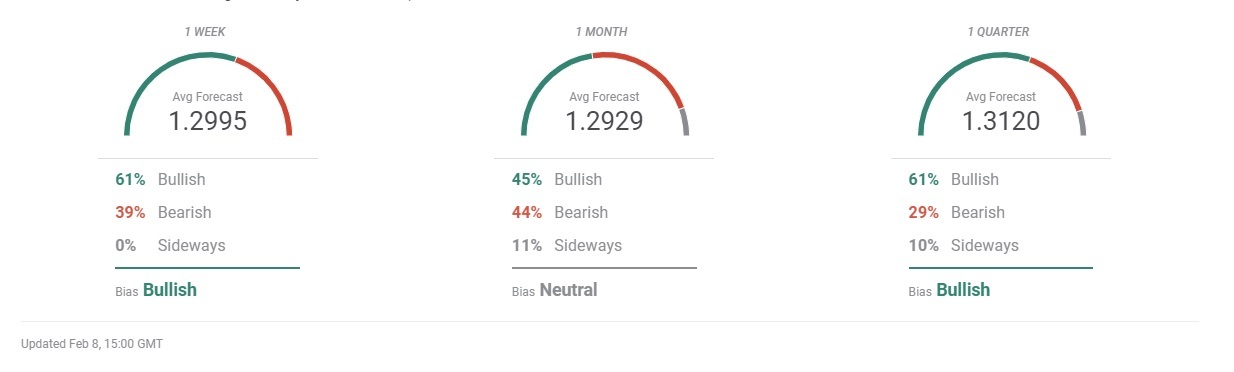
- The FXStreet Forecast Poll 1-month forecast turned neutral expecting probability of delayed Brexit may change the outlook going forward.

The GBP/USD slid about 0.7% to mid 1.2900s over the first week of February after the UK forward-looking indicators saw the economic activity slumping lower and the Brexit was going nowhere over the week. Reasons for the GBP/USD to slide lower are combined. The Brexit going nowhere, the deterioration in the economic indicators and the technical factors favoring the pullback on GBP/USD. The combination of the same factors is expected to prevail also during the upcoming week.
The UK Prime Minister Theresa May held a meeting with the European Union top officials on Thursday, but there was no progress in the loathed issue of the Irish border backstop. The UK Prime Minister Theresa May will reach her own deadline for finishing the Brexit agreement on February 14. The UK Prime Minister Theresa May and the European Commission President Juncker will meet again at the end of February, less than a month before the UK is scheduled to leave the EU. The EU leaders would have to get together to approve any changes to the deal, and the British and European parliaments would still have to vote on it. It is becoming clear that a postponement of the UK’s departure from the EU is inevitable.
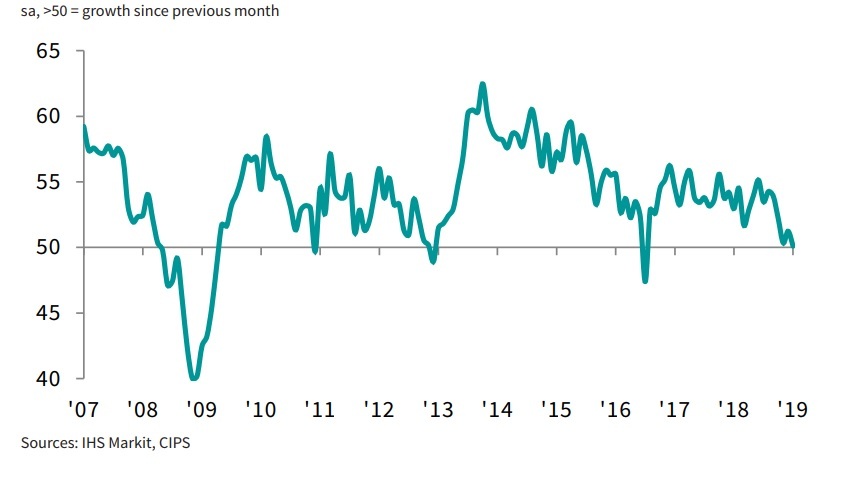
The set of January PMI data pointed to the general slowdown of the economic activity in the UK at the beginning of 2019 reflecting the Brexit uncertainty. The UK manufacturing PMI rose less than expected to reach 52.8 in January and construction PMI dropped to 50.6 in January from 52.8 in December.
The services PMI published on Tuesday also fell below the expectation standing at the brink of recession with a reading of 50.1 in January.
The deterioration in the UK economic activity combined with Brexit stalemate is weighed on Sterling that broke the major support lines at 1.3030-1.3000-1.2770.
The UK services PMI
The other factor weighing on the GBP/USD was the Bank of England cutting the growth forecast for the UK economy lower in the February release of its Inflation report last Thursday. While the initial currency reaction was Sterling negative with GBP/USD falling to last week’s low of, Sterling managed to recover by the end of the day to 1.2990.
Related reading:
- Like everyone else, the BoE is Brexit-dependent
- Bank of England lowers the growth forecast as Brexit uncertainty makes more damage
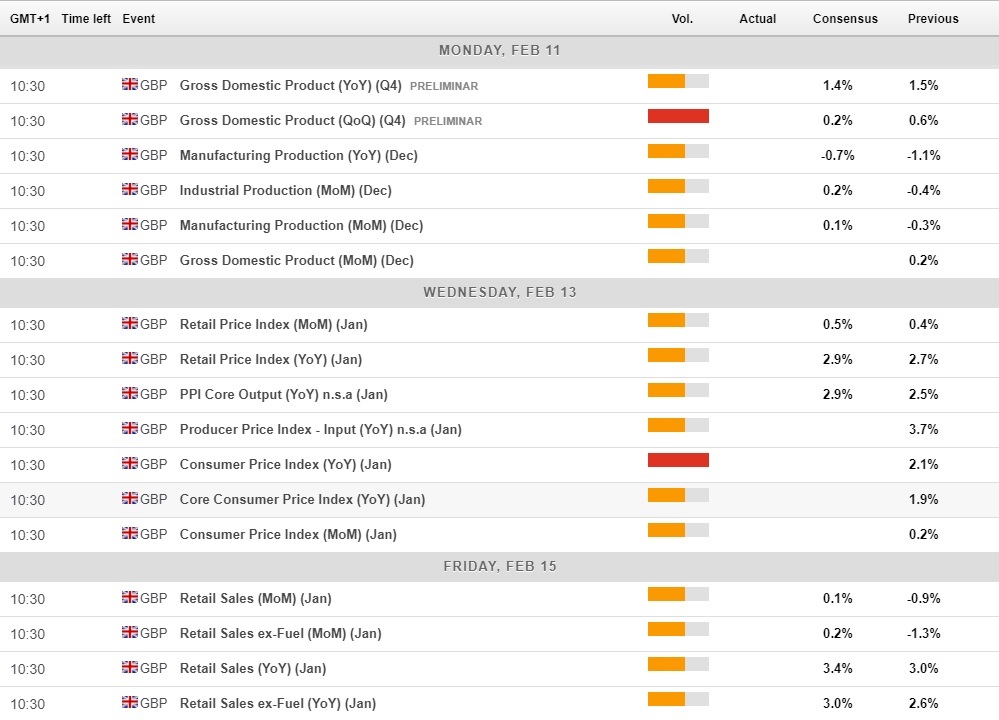
The UK economy is expected to report on the manufacturing, the fourth quarter GDP and the January inflation during the upcoming week with all figures painting the same picture of the general economic slowdown.
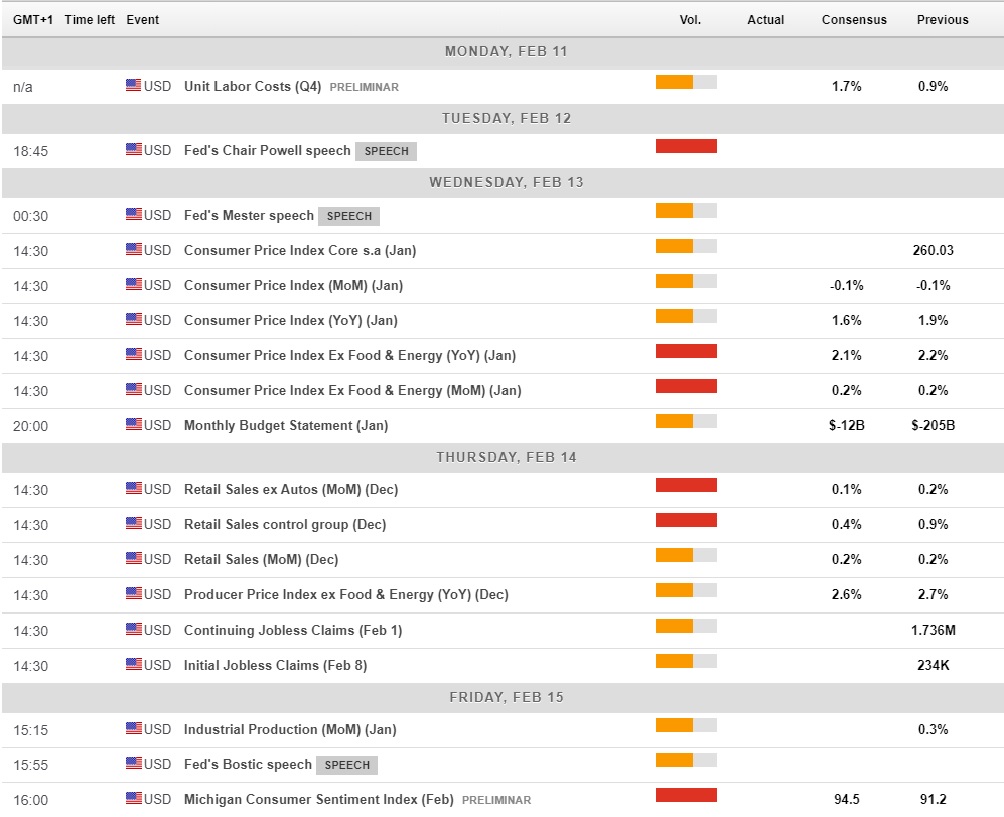
On the other hand, the US economic calendar will feature retail sales and inflation data while the US is fundamentally in a different position with the Fed officials praising the strength of the US economy.
Technical analysis
GBP/USD daily chart
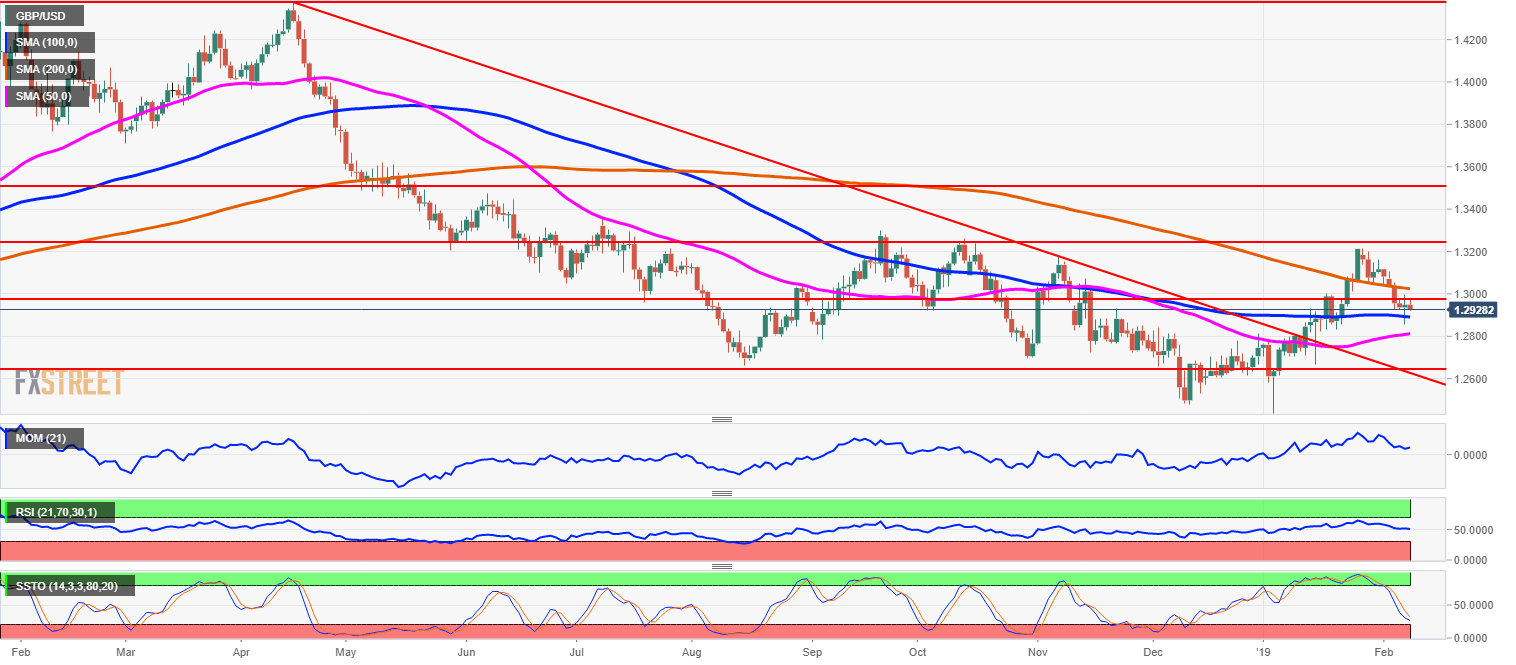
Technically the GBP/USD is moving within a corrective trend after breaking the psychologically important 1.3000 and 38.2% Fibonacci retracement line of 1.2970 on Tuesday.
The technical oscillators like the Relative Strength Index (RSI) and Slow Stochastics (SS) are both pointing lower with Slow Stochastics making a bearish crossover in the Overbought territory indicating future price declines towards 1.2900 level representing a 100-DMA on a daily chart and 1.2800 representing 50-DMA on a daily chart next. On the upside, the 1.2970-1.3000 levels are expected to hold as a resistance line.
Fed speakers in the first week of February 2019
Dallas Federal Reserve President Robert Kaplan and a non-voting member of the FOMC for 2019 said in a speech on February 5:
- “I believe it would be prudent for the Fed to exercise patience and refrain from taking further action on the federal funds rate until the economic outlook becomes somewhat clearer.”
- “It is my view that the structural forces of automation, technology-enabled disruption and globalization will continue to offset, at least in part, the cyclical pressures created by a historically tight labor market.”
- “I believe the Fed has the luxury of being patient over the next several months. Exercising patience will be critical if we are to achieve our dual-mandate objectives of maximum sustainable employment and price stability.”
The Federal Reserve Chairman Jerome Powell said in a speech on February 6:
- Powell did not comment on monetary policy or economic outlook in remarks prepared for delivery at a session with teachers.
- Powell said the US economy is in a good place at the moment.
Dallas Federal Reserve President Robert Kaplan and a non-voting member of the FOMC for 2019 said in a speech on February 7:
- “I believe it would be prudent for the Fed to exercise patience and refrain from taking further action on the federal funds rate until the economic outlook becomes somewhat clearer.”
- “It is my view that the structural forces of automation, technology-enabled disruption and globalization will continue to offset, at least in part, the cyclical pressures created by a historically tight labor market.”
- “I believe the Fed has the luxury of being patient over the next several months. Exercising patience will be critical if we are to achieve our dual-mandate objectives of maximum sustainable employment and price stability.”
The economic calendar in the upcoming week
The UK economic calendar February 11-15
The US economic calendar February 11-15
The FXStreet Forecast Poll
The FX Street Forecast Poll is expecting Sterling to appreciated to 1.2995 next week, with 61% bullish forecasts compared with 39% of bearish outlooks.
While the 1-month forecast is neutral expecting GBP/USD to remain at 1.2929, with 45-44% bullish-to-bearish forecasts and 11% sideways forecasts, the increased probability of delayed Brexit may change the outlook going forward.
The vast majority of the forecasters in the FX Street Forecast Poll is bullish over the 3-months horizon with GBP/USD expected at 1.3120 with 61%-29% of bullish-to bearish forecasts and 10% of sideways predictions.
Author

Mario Blascak, PhD
Independent Analyst
Dr. Mário Blaščák worked in professional finance and banking for 15 years before moving to journalism. While working for Austrian and German banks, he specialized in covering markets and macroeconomics.