GBP/USD Price Forecast: Seems vulnerable amid rising BoE rate cut bets, fiscal concerns
- GBP/USD snaps a four-day winning streak as weaker UK jobs data lifts BoE rate cut bets.
- The UK’s fiscal concerns further undermine the GBP and spot prices amid a USD uptick.
- Dovish Fed expectations could cap the USD upside and help limit losses for the major.
The GBP/USD pair attracts heavy intraday selling on Tuesday amid signs of a weakening UK jobs market and stalls a four-day-old recovery move from the vicinity of the 1.3000 psychological mark, or a seven-month low touched last week. The UK Office for National Statistics (ONS) reported that the ILO Unemployment Rate rose to 5.0% in the three months to September, higher than 4.9% expected and 4.8% in the previous reading. Moreover, the number of people claiming jobless benefits rose more-than-expected, by 29K in October, compared with a downwardly revised reading of 0.4K in the previous month.
Additional details showed that the growth in Average Earnings, excluding Bonus, slowed to 4.6% three months year-over-year (3M YoY) in September from 4.7% previously. Another measure of wage inflation, Average Earnings, including Bonus, rose by 4.8% in the same period, decelerating from 5.0% in the quarter through August and missing the estimate for a reading of 4.9%. This comes on top of softer UK inflation figures and backs the case for a Bank of England (BoE) interest rate cut next month. This, along with concerns about the UK's fiscal situation, exerts downward pressure on the British Pound (GBP).
The US Dollar (USD), on the other hand, draws support from a positive development towards reopening the US government and turns out to be another factor contributing to the GBP/USD pair's decline. The Senate late on Sunday reached a compromise and moved forward on a measure aimed at ending the longest US government shutdown in American history that began on October 1. The USD bulls, however, seem reluctant to place aggressive bets and opt to wait for the expected flood of delayed data to shed more light on growth amid rising fears about an economic fallout from the prolonged US government closure.
In fact, the University of Michigan's Survey showed last Friday that the US Consumer Sentiment Index fell to 50.3 in November, or the lowest level since June 2022, from the previous month's final reading of 53.6. Moreover, investors seem tilted towards a more dovish US Federal Reserve (Fed). According to the CME Group's FedWatch Tool, markets now see an over 60% chance of another rate cut by the Fed in December. This, in turn, might cap the USD and limit losses for the GBP/USD pair.
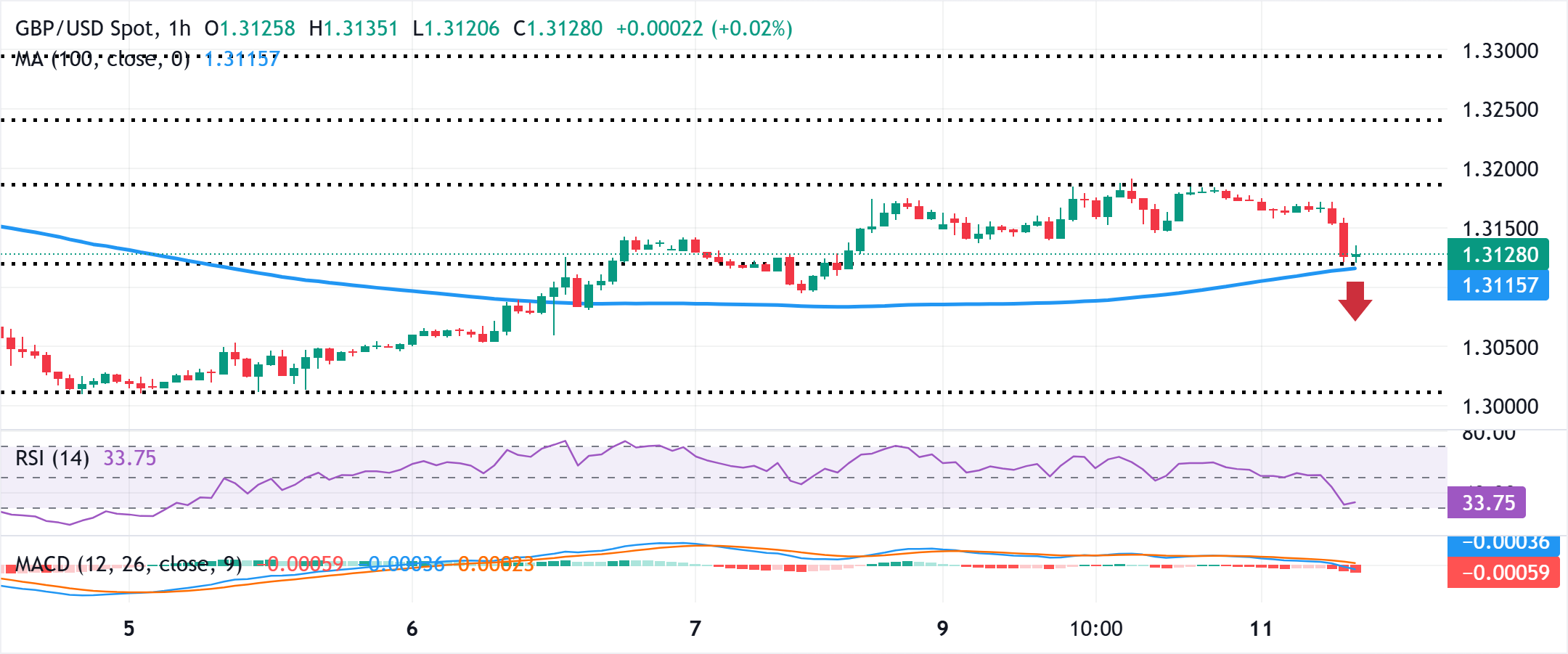
GBP/USD 1-hour chart
Technical Outlook
From a technical perspective, the intraday downfall finds some support near the 1.3120 confluence – comprising the 200-hour Simple Moving Average (SMA) and the 23.6% Fibonacci retracement level of the recent downfall from the October 17 peak. Against the backdrop of an intraday failure near the 38.2% Fibo. retracement level, a convincing break below the said support should pave the way for deeper losses amid bearish oscillators on hourly/daily charts. The GBP/USD pair might then weaken further below the 1.3100 mark, towards testing the 1.3060 intermediate support en route to the 1.3000 psychological mark.
On the flip side, the 38.2% Fibo. retracement level is pegged just ahead of the 1.3200 mark and should act as a key pivotal point. Some follow-through buying could trigger a short-covering move and lift the GBP/USD pair to the 1.3240 region, or the 50% retracement level. The subsequent move up could lift spot prices further towards the 61.8% Fibo. retracement level, around the 1.3300 round figure. A sustained strength beyond the latter would negate the near-term negative outlook and shift the bias in favor of bullish traders.
Author

Haresh Menghani
FXStreet
Haresh Menghani is a detail-oriented professional with 10+ years of extensive experience in analysing the global financial markets.

















