GBP/USD Price Forecast: Bears retain control near five-month low ahead of BoE on Thursday
- GBP/USD remains depressed as UK’s fiscal concerns and BoE rate hike bets undermine the GBP.
- The Fed’s hawkish tile keeps the USD near an over three-month top and also weigh on the pair.
- Traders might refrain from placing aggressive bets ahead of the key BoE decision on Thursday.

The GBP/USD pair struggles to gain any meaningful traction at the start of a new week amid mixed fundamental backdrop and remains within striking distance of its lowest level May 12, touched last Friday. Worries that a prolonged US government closure could affect economic performance keep a lid on the US Dollar's (USD) post-FOMC rally to a three-month high, which, in turn, is seen as a key factor acting as a tailwind for the currency pair. The US government shutdown enters Day 33 on Monday amid a deadlock in Congress on the Republican-backed funding bill. Trump again urged Republican senators to end the shutdown by abolishing the filibuster rule, an unprecedented move that GOP leaders have, so far, resisted.
However, the US Federal Reserve's (Fed) hawkish tilt helps limit a deeper USD pullback. This, along with concerns about the UK's fiscal situation, might hold back traders from placing aggressive bullish bets around the British Pound (GBP) and cap the GBP/USD pair. The Office for Budget Responsibility (OBR) is expected to lower its UK productivity forecast by approximately 0.3%, which could exacerbate the budget deficit by over £20 billion by 2030. Current UK government finances already reflect a £22 billion shortfall, putting pressure on Chancellor Rachel Reeves to increase taxes or borrow more in the November budget. Moreover, potential Bank of England (BoE) rate cuts this year should cap the GBP and the currency pair.
Traders now seem almost 70% chance that the BoE will lower borrowing costs in December. The bets were lifted following the release of softer inflation, jobs, and output data. However, with inflation still nearly double the BoE’s target, the central bank is expected to skip an interest-rate reduction later this week, on Thursday. Hence, investors will look for cues about the future rate-cut path, which will play a key role in influencing the near-term GBP price dynamics and provide some meaningful impetus to the GBP/USD pair. Nevertheless, the fundamental backdrop seems tilted in favor of bears and backs the case for an extension of the pair's recent downfall from the 1.3725 region, or a two-and-a-half-month low touched in September.
Heading into the key central bank event risk, Monday's US economic docket – featuring the release of the ISM Manufacturing PMI – and speeches from FOMC members could drive the USD demand. This, in turn, could produce short-term trading opportunities around the GBP/USD pair later during the North American session.
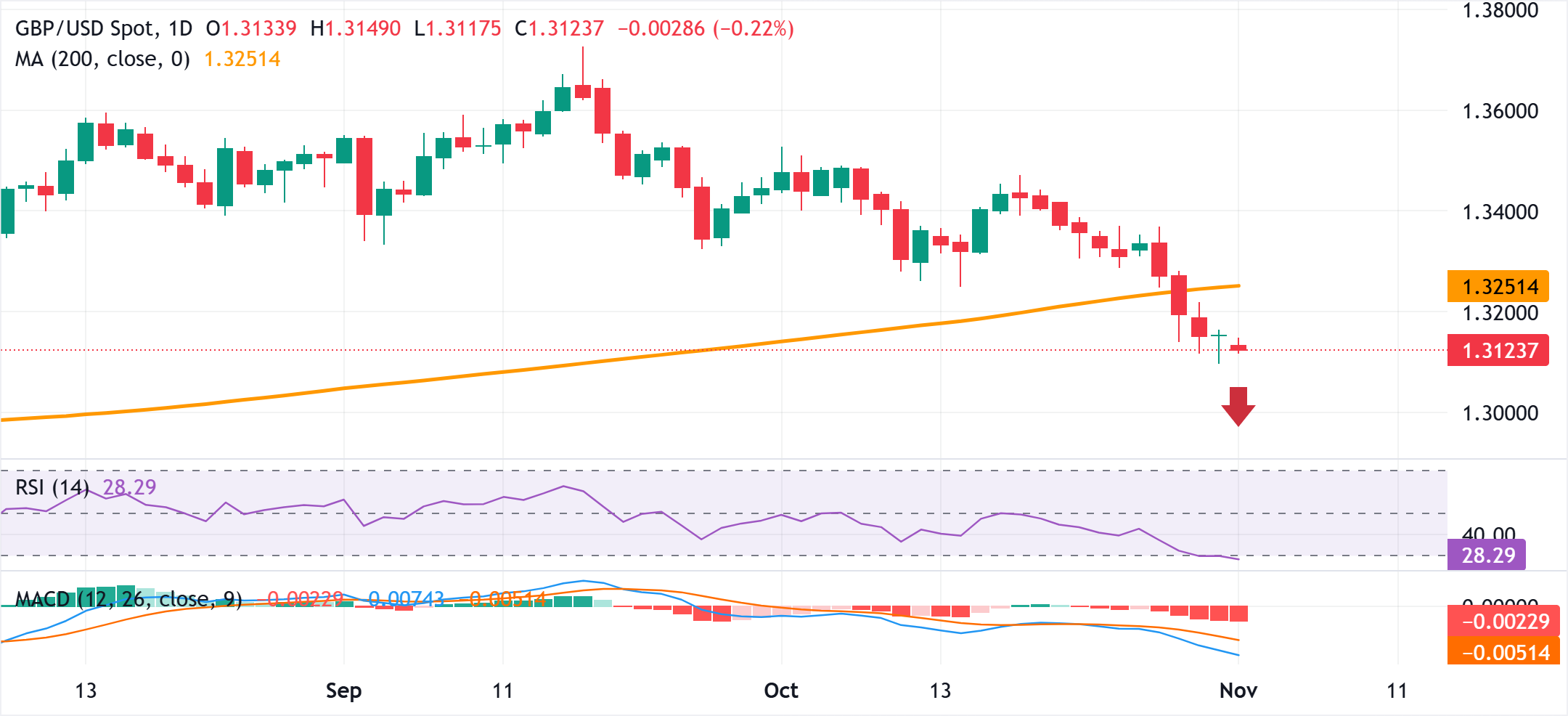
GBP/USD daily chart
Technical Outlook
Last week's breakdown below a technically significant 200-day Simple Moving Average (SMA) was seen as a key trigger for bearish traders. Moreover, the GBP/USD pair's inability to attract any meaningful buyers suggests that the downward trajectory might still be far from being over. A sustained break and acceptance below the 1.3100 round figure will reaffirm the negative outlook and drag spot prices further towards the 1.3065-1.3060 intermediate support en route to the 1.3000 psychological mark.
On the flip side, the daily swing high, around the 1.3145-1.3150 region, now seems to act as an immediate hurdle, above which a bout of short-covering could lift the GBP/USD pair to the 1.3200 round figure. Any further move up might still be seen as a selling opportunity and remain capped near the 200-day SMA breakpoint, around mid-1.3200s. The latter should act as a key pivotal point, which, if cleared decisively, could negate the near-term negative outlook and pave the way for additional gains.
Author

Haresh Menghani
FXStreet
Haresh Menghani is a detail-oriented professional with 10+ years of extensive experience in analysing the global financial markets.