|

GBP/USD Forecast: Pound Sterling remains on track to post weekly gains against US Dollar

  • GBP/USD clings to weekly gains at around 1.2550 on Friday.
  • BoE's Pill said that they can afford to ease off tight monetary policy.
  • The US economic docket will feature Manufacturing and Services PMI data ahead of the weekend.

GBP/USD holds steady at around 1.2550 on Friday after posting modest gains on Thursday. The pair's technical outlook suggests that the bullish bias remain intact heading into the weekend.

Upbeat PMI readings from the UK, which showed that the private sector moved back into the expansion territory in early November, helped Pound Sterling stay resilient against its rivals on Thursday. Nevertheless, thin trading conditions on Thanksgiving Day didn't allow GBP/USD to gather bullish momentum.

According to the Financial Times, Bank of England (BoE) Chief Economist Huw Pill said early Friday that the central bank could afford to ease off tight monetary policy. Pill, however, added that they had to resist the temptation to declare victory and move on from the battle against inflation. These comments failed to trigger a noticeable reaction in GBP/USD.

In the second half of the day, S&P Global will release Manufacturing and Services PMI data for the US. Positive surprises in these figures could help the USD hold its ground in the American session. Because bond and stock markets in the US will close early on Black Friday, the reaction to the US data could remain short-lived.

GBP/USD Technical Analysis
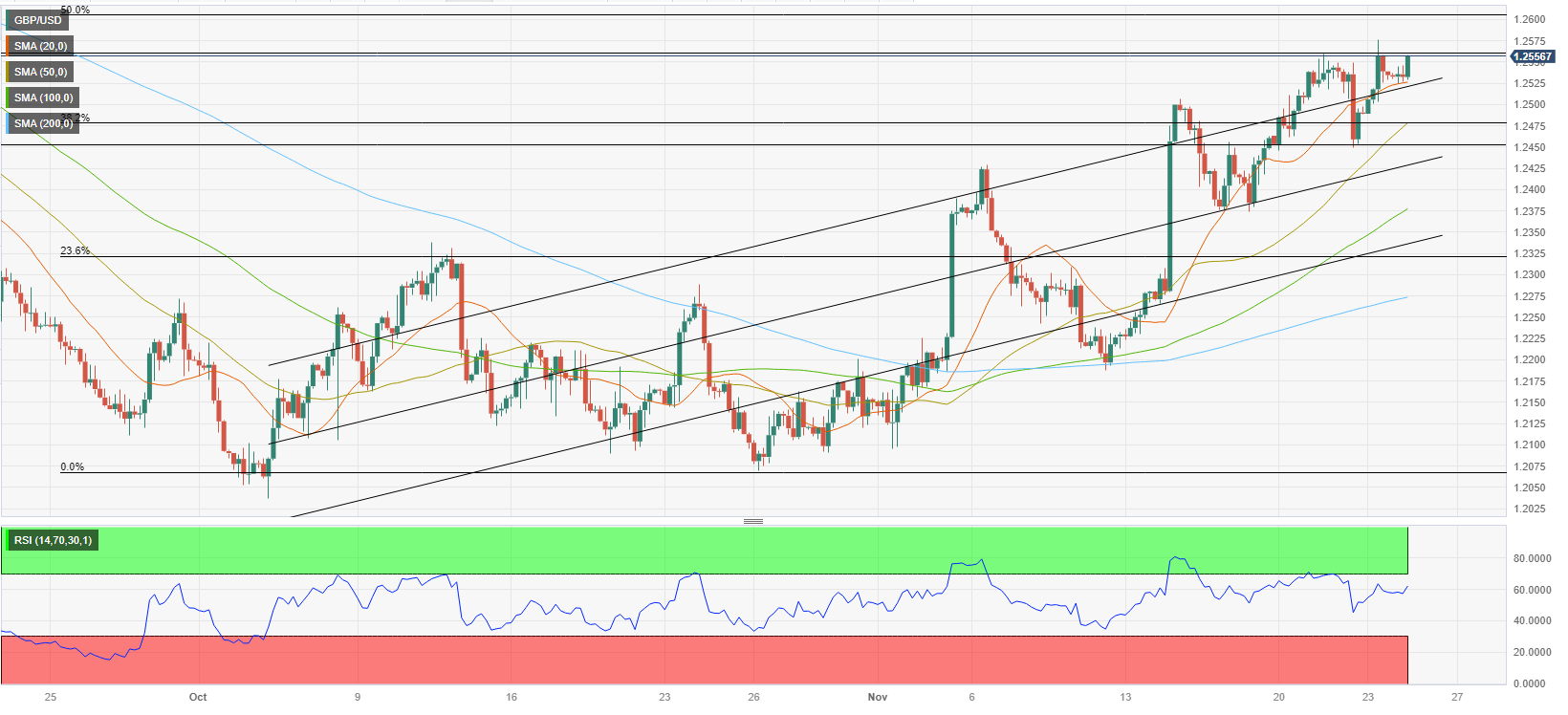
The Relative Strength Index (RSI) indicator on the 4-hour chart holds comfortably above 50 on Friday and GBP/USD continues to trade above the 20-period Simple Moving Average (SMA), reflecting the bullish bias in the short term.

1.2550 (static level) aligns as a pivot point. Once GBP/USD confirms that level as support, it could target 1.2600 (Fibonacci 50% retracement of the July-October downtrend) and 1.2670 (static level from August).

On the downside, 1.2525 (upper limit of the ascending regression channel) could be seen as first support before 1.2500 (psychological level) and 1.2450 (static level).

Author

Eren Sengezer

As an economist at heart, Eren Sengezer specializes in the assessment of the short-term and long-term impacts of macroeconomic data, central bank policies and political developments on financial assets.


More from Eren Sengezer
Share:

Editor's Picks

AUD/USD bulls seem hesitant below 0.7050 ahead of RBA on Tuesday

AUD/USD reverses an Asian session dip on Monday as renewed optimism over Iran diplomacy boosts investor confidence, keeping a lid on the safe-haven US Dollar and supporting the risk-sensitive Aussie. Spot prices, however, remain below the one-month high, touched last Thursday, as bulls wait for the crucial RBA decision before taking fresh positions.


USD/JPY climbs to 158.00 neighborhood as BoJ uncertainty weighs on the JPY

The USD/JPY pair gains some positive traction at the start of a new week, recovering further from Friday's post-Bank of Japan (BoJ) swing low to sub-157.00 levels. The momentum lifts spot prices to the 158.00 neighborhood during the Asian session and seems unaffected by fresh intervention warning from Japan's Finance Minister Satsuki Katayama.

Gold finds relief from Oil’s decline as traders await key US economic data

Gold retains a positive bias during American trading hours on Monday after sliding to a fresh yearly low of $3,870 on Friday and ending October down 6.87%. A pullback in Oil prices amid diplomatic efforts between the US and Iran supports the precious metal. However, the rebound lacks conviction as the fundamental backdrop continues to raise doubts over a sustained recovery.

Dogecoin risks deeper slide as whales diverge

Dogecoin hovers around $0.075 on Monday after falling for the fifth consecutive week since the end of September. Santiment data shows diverging whale activity, as large holders reduce their positions while smaller whale wallets accumulate tokens. Meanwhile, weakening on-chain metrics and a deteriorating technical outlook suggest that DOGE could remain vulnerable to further losses.

Why strong US growth could not stop the bond rally and AI selloff

The US economy grew at a 3.4% annual rate, yet Treasury yields fell and the Nasdaq ended October with its worst monthly performance since March 2025. The market is no longer rewarding capital expenditure simply because it supports growth. Investors are testing whether that expenditure can produce cash flow and returns above the cost of capital.


The 2% inflation target came from a throwaway remark. It now moves trillions
The Federal Reserve's 2% inflation goal grew out of an off-the-cuff remark by a New Zealand politician in 1988. Bond investors still price long-term US debt as if 2% holds, so a change in how the Fed measures inflation would move markets.