GBP/USD Forecast: Falling out of the channel has good reasons, and more may come
- GBP/USD has been on the back foot following the worried Fed decision.
- US GDP, jobless claims, and new UK coronavirus regulations are in play.
- Thursday's four-hour chart is showing the currency pair has dropped off the uptrend channel.

Ten days instead of seven – of self-isolation in case of showing coronavirus symptoms. That is likely to be the new announcement from the British government, and GBP/USD is also confined under 1.30.
The Federal Reserve's dovish decision triggered a false break above 1.30 – as expected – and the downfall is sending it below the uptrend channel.
What did the Fed do? The world's most powerful central bank left its policy unchanged but painted a gloomier picture of the economy. Jerome Powell, Chairman of the Federal Reserve, said that high-frequency data is softer since coronavirus cases increased from mid-June.
The dollar initially advanced as the bank reiterated its commitment to using all its tools, but fell short of hinting at specific measures. Powell stressed that the Fed has lending powers but spending ones – adding on pressure for politicians to get their act together.
See FOMC and Chairman Powell: Doing the Covid limbo
Federal unemployment benefits are set to expire shortly – at the end of July – with no extension or replacement agreed. Democrats and Republicans are tussling over the next relief package and recent statements suggest disagreements are substantial.
Consumption – already falling – could further suffer if those out of work have fewer dollars in their pockets. Updated jobless claims figures will likely show ongoing high numbers in both initial and continuing applications, potentially pushing the safe-haven dollar higher.
Markets are set to focus on the first release of second-quarter Gross Domestic Product – and a disaster is on the cards. While the world's largest economy bounced back in May and most of June, the collapse in activity in April has likely left a stark mark. Economists expect a historic contraction of 34.1% annualized.
See US Q2 GDP Preview: Are there any shocks left?
The range of economists estimates is broad and implies surprises may be substantial – potentially triggering high volatility. In general, a better than predicted figure could be shrugged off as more recent data is pointing lower. Moreover, the Fed's gloomy message is also hanging over investors' heads – reducing any enthusiasm.
Apart from the quarantine restrictions, nothing has materially changed in the UK – Brexit talks are stuck, relations with China remain tense, and the gradual recovery is fragile.
Overall, there is more room to the downside than to the upside in cable.
GBP/USD Technical Analysis
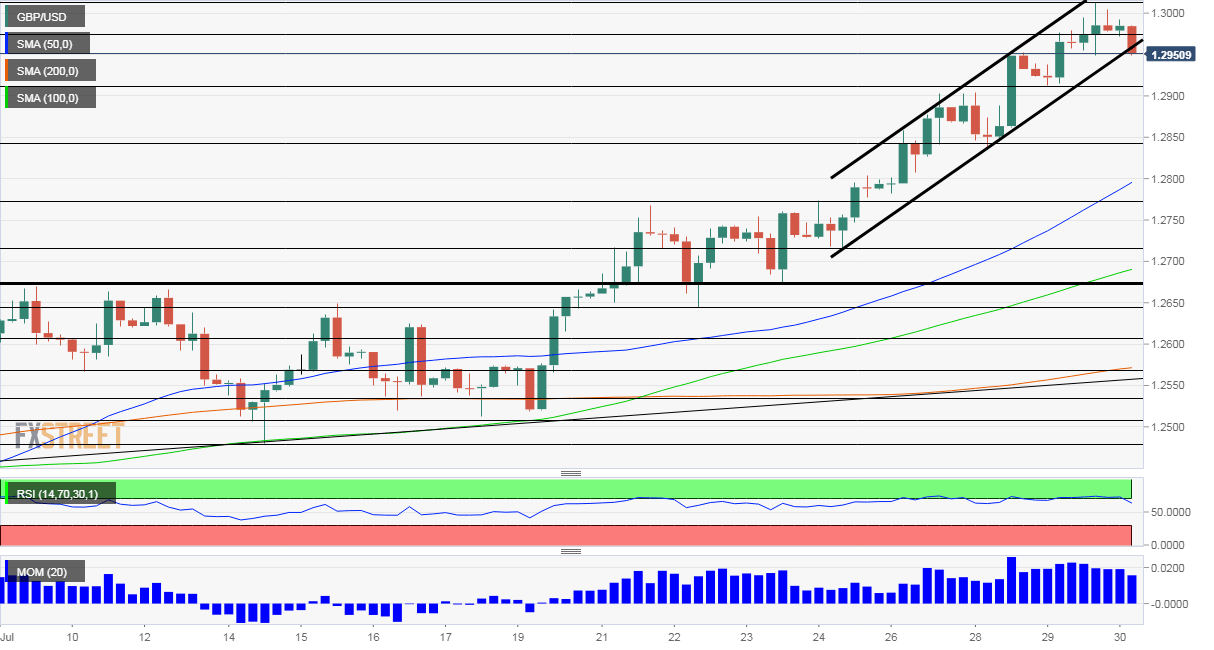
Pound/dollar has slipped off the uptrend channel that had accompanied in the past week – a bearish sign. While momentum on the four-hour chart remains positive, the Relative Strength Index is still close to 70 – potentially entering overbought conditions upon any small rise.
Support awaits at 1.2910 and 1.2845, both serving as stepping stones on the way up. The next line to watch is 1.2775, which separated ranges late last week.
Initial resistance is at 1.2975, which temporarily held sterling down on Thursday, and then the recent peak of 1.3010. Further above, 1.3070 and 1.3120 await GBP/USD.
Author

Yohay Elam
FXStreet
Yohay is in Forex since 2008 when he founded Forex Crunch, a blog crafted in his free time that turned into a fully-fledged currency website later sold to Finixio.
















