GBP/USD Forecast: Correction could deepen with a drop below 1.3520
- GBP/USD seems to have gone into consolidation mode on Monday.
- Dollar is holding its ground at the start of the week.
- GBP/USD could face renewed bearish pressure with a drop below 1.3520.

GBP/USD has started the new week in a calm manner after closing the previous week in the positive territory despite Friday's decline. The pair is having a difficult time making a decisive move in either direction early Monday but a drop below 1.3520 could attract sellers.
The heavy selling pressure surrounding the greenback seems to have dissipated following the impressive January jobs report from the US, which did not allow GBP/USD to regain its bullish momentum.
The US Bureau of Economic Analysis reported that Nonfarm Payrolls increased by 467,000, surpassing the market expectation of 150,000 by a wide margin. Moreover, the annual wage inflation rose to 5.7% from 5%, ramping up the 50 basis points March rate hike probability to 30% from 8%.
Reflecting the positive impact of the labour market data on the dollar, the US Dollar Index (DXY) snapped a five-day losing streak on Friday. The DXY is posting small gains above 95.50 in the European session.
Meanwhile, cautious remarks on the policy outlook from Bank of England Chief Economist Huw Pill weighed on the British pound as well. "We should not anticipate that rate hikes will be aggressive in the medium-term," Pill said.
The US economic docket won't be featuring any high-tier data releases on Monday but the upbeat market mood could limit the dollar's upside. The UK's FTSE 100 Index is rising 0.4% and the S&P 500 Futures are up modestly.
GBP/USD Technical Analysis
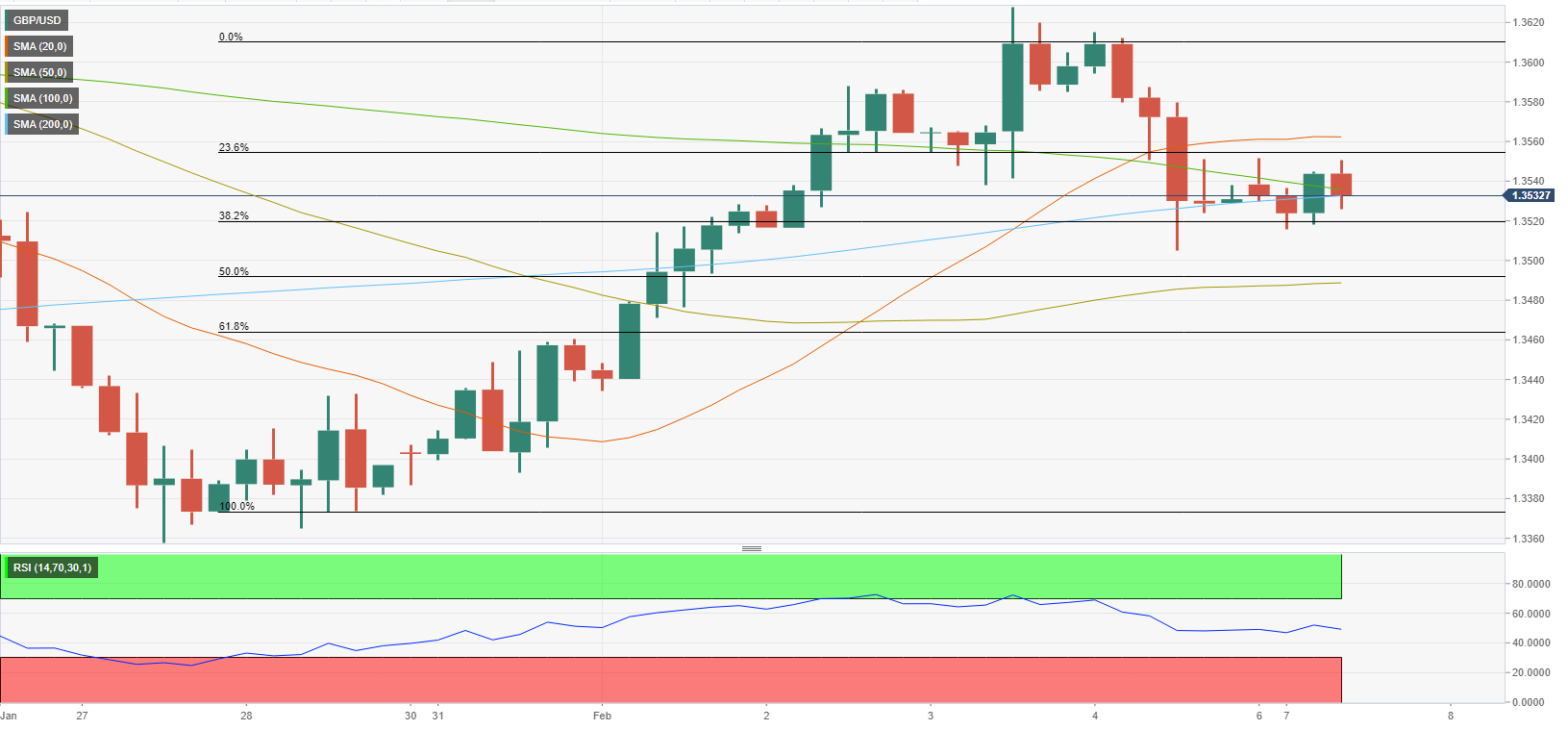
The Fibonacci 38.2% retracement level of the latest uptrend seems to have formed support at 1.3520. In case GBP/USD falls below that level and starts using it as resistance, 1.3500 (Fibonacci 50% retracement, 50-period SMA on the four-hour chart) aligns as the next bearish target before 1.3460 (Fibonacci 61.8% retracement).
On the upside, the initial hurdle is located at 1.3560 (Fibonacci 23.6% retracement) ahead of 1.3600 (psychological level) and 1.3630 (Feb. 3 high).
Author

Eren Sengezer
FXStreet
As an economist at heart, Eren Sengezer specializes in the assessment of the short-term and long-term impacts of macroeconomic data, central bank policies and political developments on financial assets.