GBP/USD at two-week low: Risk aversion takes hold

GBP/USD attempted to rebound from a two-week low of approximately 1.3485 on Thursday. Investors are moving away from riskier assets amid concerns about the economic impact of an energy shock triggered by a fresh escalation in the Middle East.
The market is digesting Prime Minister Andy Burnham’s address to the House of Commons. He reaffirmed the government’s commitment to fiscal discipline and reducing the debt burden. The Prime Minister also noted that bringing forward the budget submission date should help reduce speculation about future fiscal measures. Chancellor John Healy’s first major statement on the government’s programme is expected as early as next week.
Money markets continue to price in a 25-basis-point Bank of England rate hike before year-end. Those expectations have been reinforced by the recent acceleration in UK retail price inflation.
Additional pressure on GBP/USD is coming from a more hawkish stance by the Federal Reserve. Following Kevin Warsh’s hawkish comments and rising oil prices, the probability of a US rate hike in September is now estimated at approximately 66%, supporting the dollar.
Technical analysis
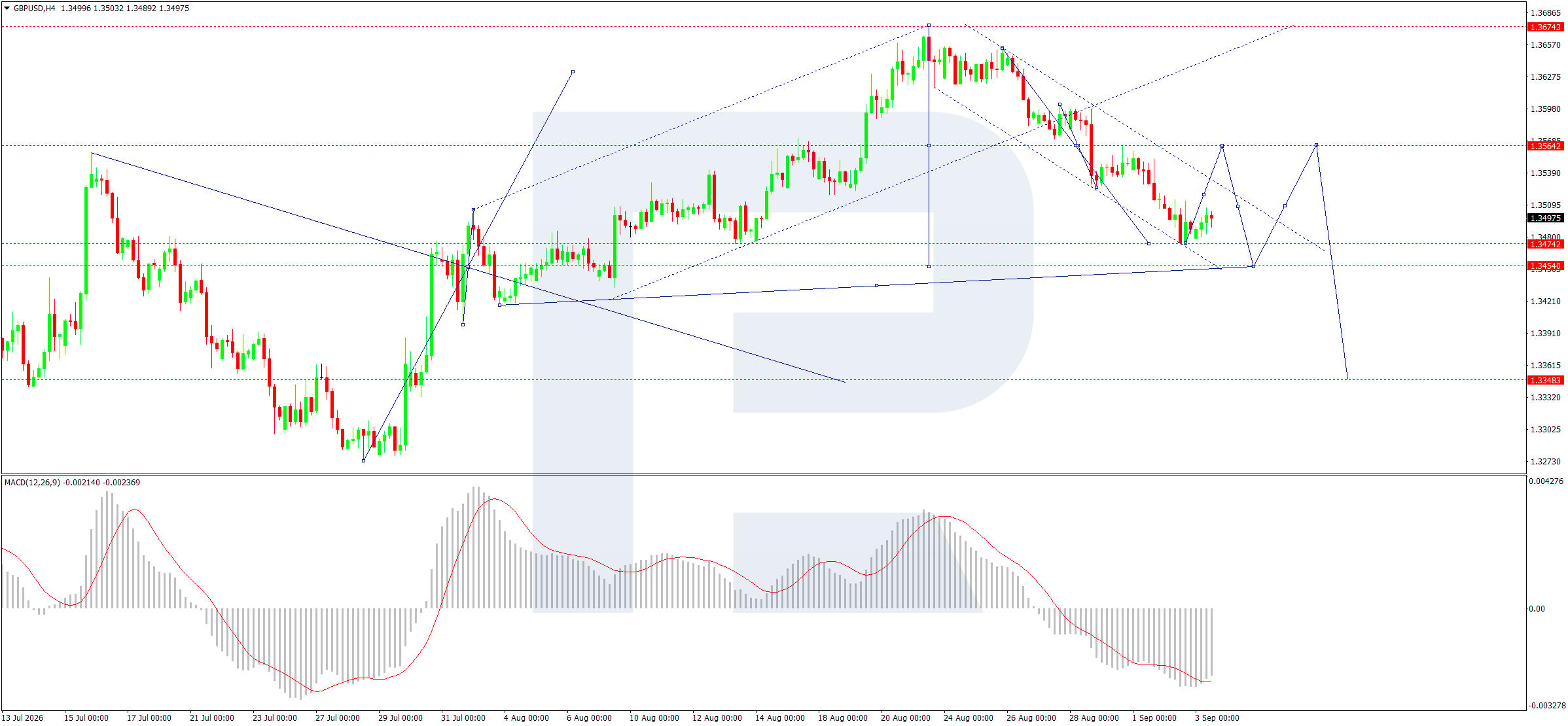
On the H4 GBP/USD chart, the market has nearly reached the local downside target at 1.3474 and is forming a narrow consolidation range above this level, currently extending up to 1.3510. A downside breakout would open the way for a further decline towards 1.3450. An upside breakout could lead to a correction towards 1.3520, followed by a resumption of the downtrend. The MACD indicator supports this scenario, with its signal line below zero and trending downward, indicating continued downside momentum.
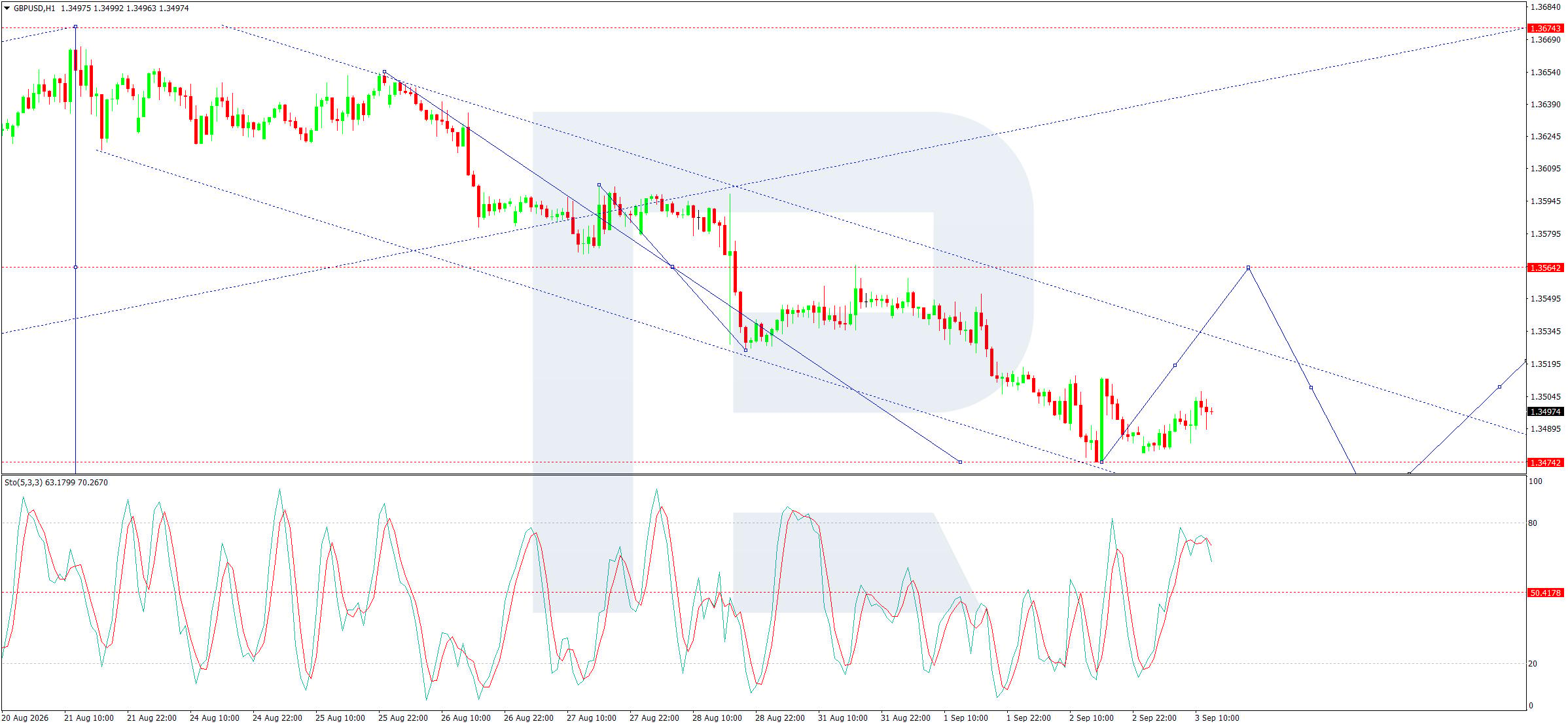
On the H1 chart, the market has formed a tight consolidation range around 1.3495, extending between 1.3478 and 1.3518. A move lower towards 1.3470 is expected, and a break below this level would open the way for a further decline to 1.3450. The Stochastic oscillator supports this scenario, with its signal line below 50 and trending downward towards 20, indicating continued short-term downside pressure.
Conclusion
GBP/USD is hovering near a two-week low as risk aversion prevails amid escalating Middle East tensions and a fresh energy shock. The pound has found limited support from Prime Minister Burnham’s reaffirmation of fiscal discipline, with markets awaiting Chancellor Healy’s statement on the government’s programme next week. Meanwhile, expectations of further Bank of England tightening, reinforced by rising inflation, continue to provide some underlying support. However, hawkish signals from the Federal Reserve and elevated oil prices have strengthened the dollar, putting further pressure on the pair. Technically, further downside towards 1.3450 appears likely, while a corrective move towards 1.3520 cannot be ruled out. The near-term direction will depend on US jobs data and geopolitical developments.
Author

RoboForex Analysis Department
RoboForex
RoboForex Analysis Department provides timely market insights, expert technical analysis, and actionable forecasts across forex, commodities, indices, and equities.
















