GBP/USD Analysis: Bears await break below 200-day SMA pivotal support, focus remains on US CPI
- GBP/USD drifts lower for the second successive day and drops to a fersh multi-month trough.
- Bets for an imminent BoE rate-hike pause undermine the GBP and exert pressure on the major.
- Hawkish Fed expectations act as a tailwind for the USD and also contribute to the offered tone.
- Investors now look to the crucial US CPI report to determine the next leg of a directional move.

The GBP/USD pair remains under some selling pressure for the second straight day on Wednesday and hits a fresh multi-month trough, around the 1.2440 area during the early European session. The British Pound (GBP) is undermined by the disappointing data, showing that the UK economy shrank at the quickest pace in seven months. The Office for National Statistics reported that Britain’s Gross Domestic Product (GDP) contracted more-than-expected, by 0.5% in July, suggesting that the UK economy is losing momentum in the wake of a sharp rise in borrowing costs and reviving recession fears. This comes on top of signs that the UK labour market is cooling and reaffirms speculations that the Bank of England (BoE) is nearing the end of its rate-hiking cycle.
Apart from this, the emergence of some US Dollar (USD) buying, bolstered by the prospects for further policy tightening by the Federal Reserve (Fed), contributes to the offered tone surrounding the GBP/USD pair. Market participants seem convinced that the US central bank will stick to its hawkish stance and the bets were reaffirmed by the upbeat US data released last week, which pointed to a resilient economy. Moreover, the recent rally in Crude Oil prices fuels inflation concerns and might force the Fed to keep interest rates higher for longer. The outlook, in turn, remains supportive of elevated US Treasury bond yields and assists the USD to regain some positive traction on Wednesday and hold just below its highest level since March touched last Friday.
The USD bulls, however, seem reluctant to place aggressive bets and prefer to wait on the sidelines ahead of the US consumer inflation figures, due for release later during the early North American session. The headline US CPI is expected to accelerate to the 3.6% YoY rate in August from the 3.2% rise recorded in the previous month. Meanwhile, the Core CPI, which excludes volatile food and energy prices, is forecasted to increase by a 4.3% YoY rate during the reported month, down from a 4.7% growth in July. A stronger print will reinforce expectations that another rate hike might still be needed to bring inflation down to the 2% target and trigger a fresh leg up for the USD, setting the stage for a further depreciating move for the GBP/USD pair.
Technical Outlook
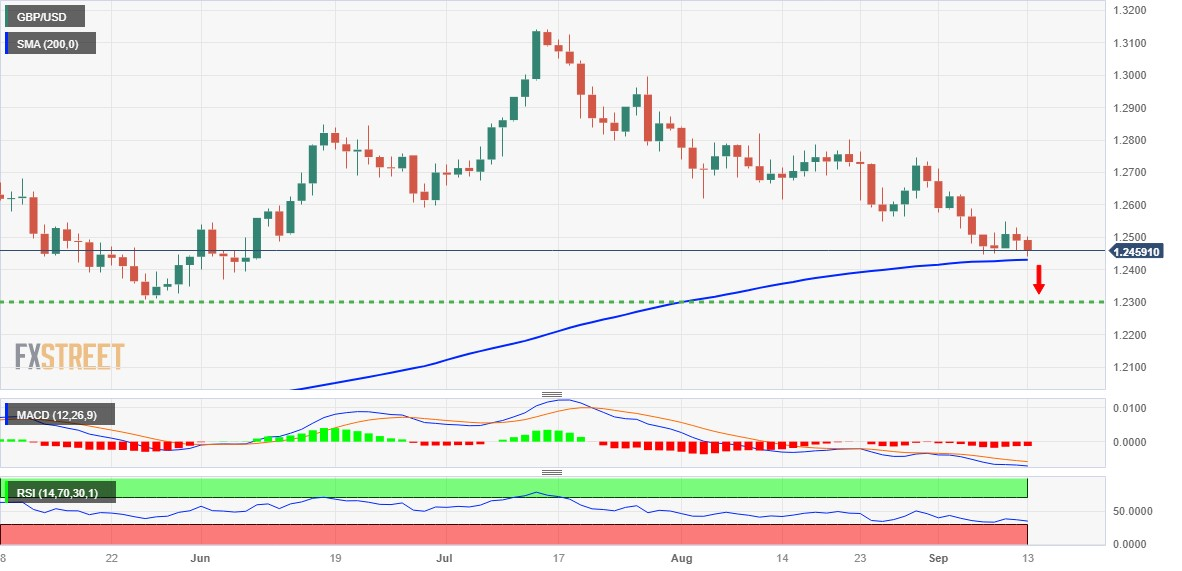
From a technical perspective, bearish traders might still wait for a sustained break and acceptance below the very important 200-day Simple Moving Average (SMA), currently around the 1.2425 region, before placing fresh bets. The BBP/USD pair might then turn vulnerable to weaken further below the 1.2400 mark and accelerate the fall towards the May monthly swing low, around the 1.2310-1.2300 area, en route to the 1.2280-1.2275 support zone.
On the flip side, attempted recovery might now confront stiff resistance near the 1.2500 psychological mark. Any subsequent move up could be seen as a selling opportunity and remain capped near the weekly high, around the 1.2545-1.2550 region touched on Monday. A sustained strength beyond, however, might push the GBP/USD pair to the 1.2600 mark en route to the 100-day SMA, currently near mid-1.2600s. The latter should act as a pivotal point, which if cleared decisively will suggest that the downtrend witnessed over the past two months or so has run its course and shift the bias in favour of bullish traders.
Author

Haresh Menghani
FXStreet
Haresh Menghani is a detail-oriented professional with 10+ years of extensive experience in analysing the global financial markets.