Full steam towards intractable stagflation
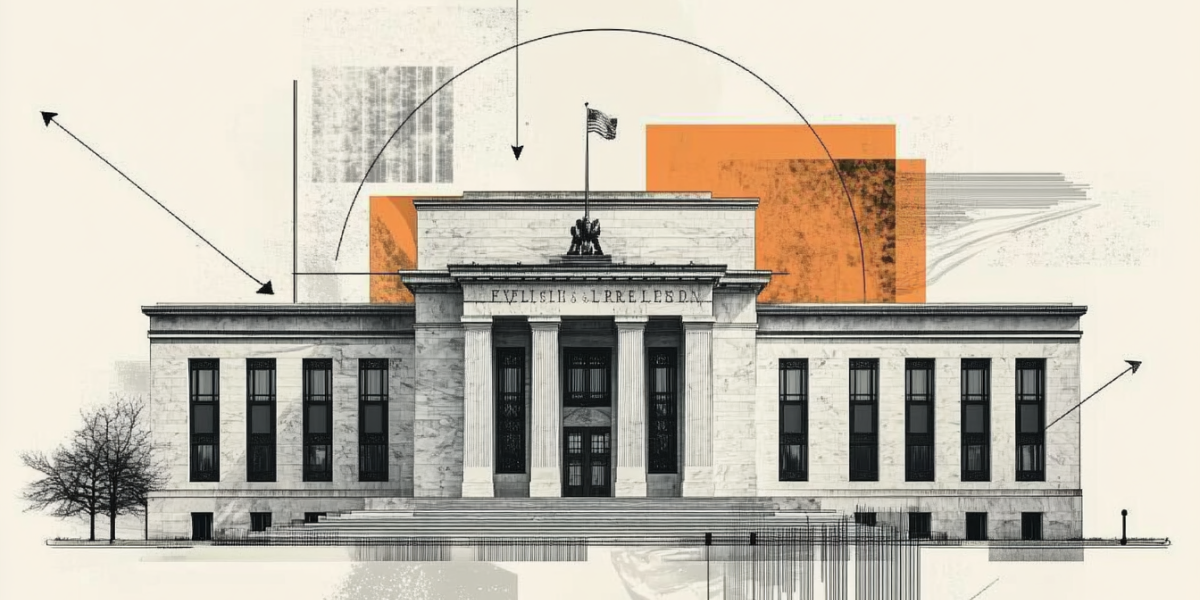

The Fed kicked off another unwarranted, disgusting, and dangerous rate-cutting cycle today with a 25bp cut and two more scheduled for the remainder of this year. But this new cycle should be the most devastating for the purchasing power of Americans in history.
Even though:
- The unemployment rate is an historically-low 4.3%.
- Q3 GDP growth is running at 3.3%.
- Financial conditions are extremely easy.
- Credit spreads are extremely tight.
- Inflation is 50% above target and has been above 2% for 52 months in a row.
- The home price/income ratio is at a record high.
- The TMC of equities as a percentage of GDP is at a record 218%.
- Inflation has already severely injured the middle class.
And yet, our central bank has begun a journey to render most Americans into penury.
The labor market economists at the Fed are fretting about a few bad employment numbers, and that is their excuse to begin printing even more money and artificially pushing interest rates lower.
Of course, there is no doubt that the labor market is weakening. For example:
- The Job Openings and Labor Turnover report showed around 7.18 million listings in July. This is one of the lowest readings on job opening levels since the pandemic.
- The August ADP report showed an anemic increase of just 54k new jobs, down sharply from the 104k in July.
- Then we have the August Non-farm Payroll report showing there were only 22k jobs created! The last three months averaged just 29k jobs.
- Finally, we have the benchmark labor revisions from the BLS released recently. There were an incredible 911k less jobs than originally reported during the period of April 2024 through March 2025! The worst ever payroll revision in the 26 years of this series.
But despite the slowing labor market, we find inflation rates rising. Headline CPI for August increased by 2.9% y/y, up from 2.7% in July.
However, what Powell refuses to understand is that the weak labor market has more to do with the supply of labor being cut off due to immigration reforms, rather than being indicative of an economy that is falling off a cliff. What is most crucial to understand is that even if GDP growth was contracting, recessions--which involve falling asset prices and rising unemployment rates--are a natural and healthy part of the business cycle. They are necessary to remediate economic imbalances. But by trying to prevent all economic tremors from occurring, our government is setting us up for a cataclysmic financial earthquake.
The condition we have now is a classic case of stagflation—anemic GDP growth with rising prices. But thanks to the efforts of our Fed, we are putting the conditions in place for a situation where the economy suffers from protracted and intractable stagflation.
If you had any questions about whether it was the full employment or stable price mandate that takes precedence at the Fed, we got our answer at the September FOMC meeting. The Fed cares much more about full employment.
The overly financialized U.S. economy is indeed showing the early signs of faltering. But I say so what? We must allow this cathartic cleansing to occur. Wall Street must decrease while Main Street increases. A strong middle class is the only pathway for a viable and healthy USA.
The Fed has forced investors way out along the risk curve
Tricolor Holdings, a used car seller and subprime auto lender, filed to liquidate in Chapter 7 bankruptcy last week. The company made more than $1 billion worth of auto loans last year, according to a report from Kroll Bond Rating Agency. Tricolor funded the loans it made by packaging them into asset-backed securities that it sold to bond investors. Tricolor has sold almost $2 billion worth of such securities since 2022, many of which remain outstanding, according to data compiled by Bloomberg.
Auto loan debt is not the only type of credit that is under pressure. Seriously delinquent credit card debt has now increased to the highest level in the past 14 years.
Mortgage loans are also in danger. FHA secure loans with a 3.5% down payment have replaced NINJA loans. The dollar amount of FHA loans was $3.7 billion leading into the GFC; now it is $40 billion! As of the first quarter of 2025, the total dollar amount of seriously delinquent mortgages in the U.S. was approximately $110 billion, according to Lending Tree. While the underwriting standards have greatly improved since 2007, that does not mean the odds of another housing crisis are low. Investors own between 20 and 30% of all U.S. single-family homes. Therefore, the supply of homes for sale can increase both quickly and sharply. It is a very dangerous setup due to the record-low affordability of real estate.
There is a record $18.4 trillion in consumer debt. And we now see rising default rates on auto and student loans; the latter's default rate is at a 21-year high.
Then we have the $1.7 trillion Private Credit market, which really didn't even exist 15 years ago. Private credit consists of non-bank loans made to companies that cannot tap traditional bank lending or the corporate bond market. Therefore, they generally have a greater risk with much less liquidity. The total U.S. corporate bond market now has a record $11.4 trillion outstanding, with $1.8 trillion in junk debt.
By the way, if you thought tariffs were paying down the U.S. debt, listen to this: The budget deficit for August came in at $345 billion. It was the largest monthly deficit for all this year and the 2nd largest August deficit on record. The budget deficit for fiscal 2025 just reached $2 trillion with one month left in the fiscal year. Therefore, we are light years away from paying down one dime of the $37 trillion National Debt and instead still piling on more than two trillion a year onto that debt dung heap, with the size of annual deficits guaranteed to increase from the current onerous level.
There is no mystery how we got here. By artificially forcing interest rates down and monetizing both private and public debt, the Fed has encouraged an exorbitant amount of debt to be incurred, which pushed asset prices into the thermosphere. Hence, we no longer have a free-market economy. Rather, we have one that is massively financialized and totally politicized.
But, this rate-cutting cycle is different than all others before because it has begun with acute inflation and insolvency issues already in place. If it does indeed turn out to be the start of a significant rate-cutting cycle, then intractable stagflation will become the salient risk.
Holding a fixed percentage of bonds and closet indexing the S&P 500 in your portfolio just will not work during recessions and stagflations. Having a process that can profit during all macroeconomic conditions is the only winning strategy.
Author
Michael Pento
Pento Portfolio Strategies
Mr. Michael Pento is the President of Pento Portfolio Strategies and serves as Senior Market Analyst for Baltimore-based research firm Agora Financial. Pento Portfolio Strategies provides strategic advice and research for institutional clients.

















