FOMC makes no changes to rates, but two members dissent
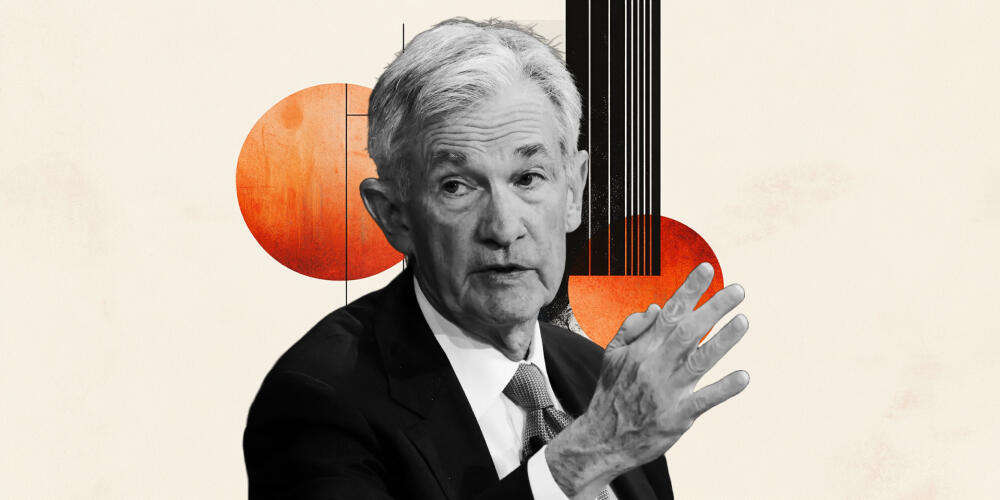
“Economy is not performing as if the moderately restrictive policy is holding it back,” Powell said.
The Federal Open Market Committee (FOMC) made no changes to the federal funds rate on Wednesday, keeping it in the 4.25% to 4.50% range, where it has been since December.
However, two members of the committee, Michelle Bowman and Christopher Waller, voted against their colleagues. They both wanted to lower the rate by 25 basis points to 4.00% to 4.25%.
The dissenting votes are notable as the FOMC has historically voted in lockstep. Single dissenting votes are rare, but two no votes are almost unheard of. That last time there were two dissenting votes on an FOMC decision was more than 30 years ago in 1993, according to Kiplinger’s.
It should be also noted that Adriana Kugler was absent and did not vote at all. Chair Jerome Powell, Vice Chair John Williams, Michael Barr, Susan Collins, Lisa Cook, Austan Goolsbee, Philip Jefferson, Alberto Musalem, and Jeffrey Schmid all voted to keep rates the same.
Elevated inflation and economic uncertainty
In its statement, the FOMC said economic growth moderated in the first half of the year, citing swings in net exports. Further, Fed officials said unemployment remains low and job market conditions are solid. On the other side of the Fed’s dual mandate, inflation remains somewhat elevated, as does uncertainty about the economic outlook.
“In support of its goals, the committee decided to maintain the target range for the federal funds rate at 4.25 percent to 4.50 percent. In considering the extent and timing of additional adjustments to the target range for the federal funds rate, the Committee will carefully assess incoming data, the evolving outlook, and the balance of risks,” the statement read.
It added that the committee would be prepared to adjust the stance of monetary policy if risks emerge that impede the attainment of those goals.
“The Committee’s assessments will take into account a wide range of information, including readings on labor market conditions, inflation pressures and inflation expectations, and financial and international developments,” the statement added.
“Quite a good meeting”
In his press conference that followed the release of the FOMC statement, Powell said the effects on inflation from changes in government policy remain uncertain. But he acknowledged that there is “a reasonable base case that the effects could be short-lived.” However, they could also have longer term effects on inflation, which is why the committee is being cautious.
Powell also identified the Fed’s stance as “moderately restrictive,” adding that “it seems to me and almost the entire committee that the economy is not performing as if the moderately restrictive policy is holding it back.”
Just today, the second quarter GDP was released and showed 3.0% growth in Q2 and 1.2% growth in the first half of the year.
Powell would not make any comment on whether or not the committee was poised to lower rates in September, saying that any decision will be based on incoming data.
The Fed chair was also asked if the recent trade deals brought more certainty with regard to tariffs. Powell stated that it is a “very dynamic time for these trade negotiations” but the effects will take time and there are “many uncertainties left to resolve.”
Finally, on the two dissenting votes, Powell said that everyone laid out a clear explanation of their thinking. “This was quite a good meeting all around the table,” he said.
Author

Jacob Wolinsky
ValueWalk
Jacob Wolinsky is the founder of ValueWalk, a popular investment site. Prior to founding ValueWalk, Jacob worked as an equity analyst for value research firm and as a freelance writer. He lives in Passaic New Jersey with his wife and four children.