Focus on US Election: Fed on hold this year

Next US rate hike still on hold
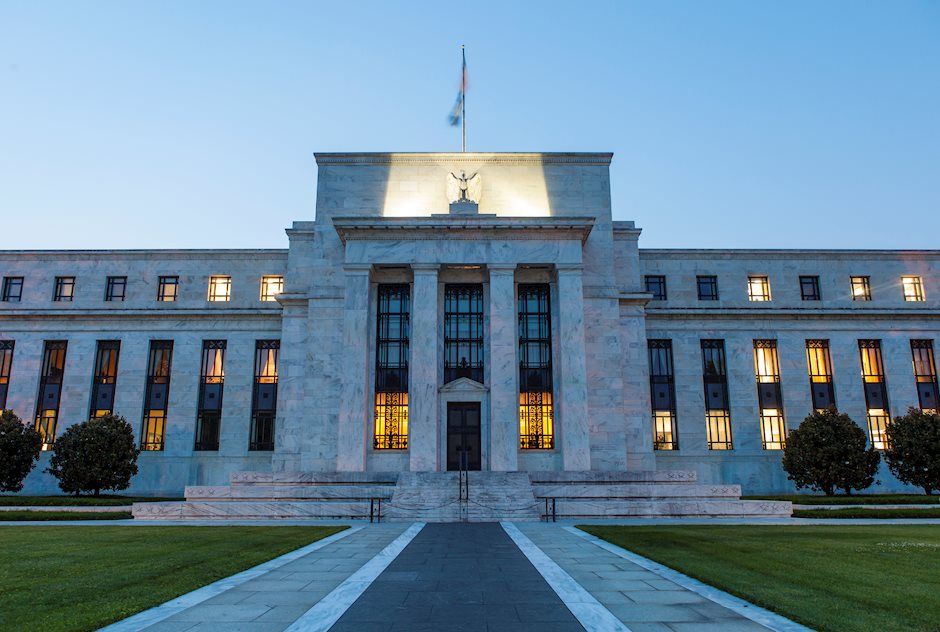
The Federal Reserve again failed to agree on raising interest rates at its September meeting. A majority of FOMC members preferred to allow room for the economy to grow further by holding the Fed funds target rate unchanged at around 0.375%. However, the FOMC does expect to hike rates once this year. In contrast, we expect the Fed to once again get cold feet when decision-time arrives, and we do not foresee a rate hike materialising until next summer. The financial markets are pricing roughly a 50% probability of a hike before the end of the year. An unchanged Fed funds target rate in September came as no great surprise to FX markets, with EUR/USD continuing to trade close to 1.12.
Japan experiments in pursuit of inflation target
The Bank of Japan (BoJ) wants to appear determined to achieve its proclaimed goal of lifting inflation in the Japanese economy to 2%. In September, the BoJ therefore decided to add yet another dimension to its range of policy instruments, introducing a target for the yield on 10Y government bonds. The BoJ already set short rates and will continue to have a partial target for its asset purchases. Moreover, the BoJ has underlined that its accommodative stance will continue until inflation is stable and above 2%. However, the BoJ risks unduly complicating matters in its eagerness to demonstrate determination. The market’s view was also quite clear, as the JPY strengthened in the hours following the central bank’s announcement.
ECB keeps policy unchanged in September
At the September meeting, the ECB kept all policy rates unchanged whilst signalling that it still intends to end its QE purchases in March 2017. This was a disappointment to the market where many participants had expected further policy easing. Despite the September decision to keep the QE purchase horizon unchanged, we expect the ECB will extend purchases by six months at the meeting in December due to lack of any upward trend in the underlying price pressure.
OPEC unlikely to lift oil prices sustainably
Oil continues to trade below USD50/bl, which is causing particular pain for the major oil producers, such as those in the Middle East. OPEC and Russia are therefore once more trying to revive negotiations aimed at stabilising the oil market and lifting prices. The thrust of the talks is again to agree a production freeze at current levels. However, while the idea may look promising on paper, it would maintain OPEC production close-to status quo, so we doubt it would have any long-lasting effect on oil prices.
Interest rate hedging
- We expect global yields to stay low in coming months, with the ECB’s increased QE purchases and the Fed on hold until next summer.
- We continue to recommend being moderately overweight EUR duration, given the historically low interest-rate levels and with long yields set to trend up in the longer term.
The ECB disappointed the market in September
The ECB disappointed the market at its September meeting. Many market participants had expected further policy easing in the form of new interest rate cuts or an extension/expansion of QE. The ECB delivered none of the above and, if anything, was slightly more optimistic about the effects of its current policy programme. The ECB did, however, acknowledge a need to change the rules governing the instruments it can buy as part of its asset purchase programme. The issue has now been handed over to a committee, which is unlikely to present its recommendations until December.
The ECB’s wait-and-see stance, combined with Fed members’ rather hawkish rhetoric and a Bank of Japan (BoJ) apparently also hesitant to ease policy further, prompted a rise in global yields and a steepening of yield curves in September. However, the increase has been partially reversed by recent events, with the BoJ now focused on stabilising the 10Y yield around current levels (roughly 0%) and risk appetite coming under pressure.
We do not seem to be facing an extended period of higher yields
The rise in global yields hit mainly the long end of the yield curve and the question is now: do we face an extended period of higher yields?
The past three years have witnessed two periods of rising global yields. In 2013, yields rose on the Fed announcing a tapering of its asset purchase programme. In spring 2015, German 10Y yields increased by almost one percentage point – ostensibly due to a combination of the market concluding that the ECB’s QE was more than fully priced and bad positioning in the fixed income market. The latter should be viewed in light of the ‘risk capacity’ of banks now being much lower than before. Hence, major market movements could be reinforced in either direction, as there is no one to take the opposite position.
The future intentions of global central banks remain unclear and the market may well have been wrong-footed once again. Hence, we cannot rule out a repeat performance of the yield increases in spring 2015, when very few market participants had expected German 10Y yields to rise almost one percentage point within six weeks. However, our overall expectation is that global central banks will continue their expansionary monetary policies.
We do not expect the Fed to raise interest rates this year – especially in light of the recent weak numbers for the US economy. Given the still very low level of inflation, we also expect the ECB to extend its comprehensive QE programme to run throughout 2017 and not just until March. Furthermore, we believe global bond investors will take advantage of even minor yield rises to increase their positions and duration. While it may sound odd to many investors, a German 10Y yield in positive territory is a ‘good deal’.
We generally maintain our forecast of long EUR yields being range-bound over the coming three to six months with a slight downside risk on a 3M horizon. However, we still see yields rising slightly on a 12M horizon as the Fed, despite everything, begins to raise rates and the market can begin to price the ECB ending its asset purchases by the end of 2017.
EUR curve hedging recommendation
In our view, the downward pressure on EUR yields is coming to an end. Hence, we keep our general recommendation of modestly overweighting duration on the EUR curve since current interest-rate levels are historically attractive and we continue to expect long yields to trend slightly higher on a 12M horizon. As such, we recommend that borrowers take advantage of current low interest-rate levels or any fall in interest rates during the next couple of months to increase the proportion of fixed-rate debt in debt portfolios. We continue to see most value at the long end of the EUR yield curve, i.e. from 10 years and beyond. As our forecast for EUR money market rates is broadly in line with forward curves, we recommend hedging with spot starting.
USD curve hedging recommendation
We still recommend having a relatively high hedge ratio on USD liabilities and locking in rate exposure at all maturities from 2Y and beyond and we maintain our liability duration recommendation just below maximum.
Author
Danske Research Team
Danske Bank A/S
Research is part of Danske Bank Markets and operate as Danske Bank's research department. The department monitors financial markets and economic trends of relevance to Danske Bank Markets and its clients.

















