Focus: Important hints at next week’s ECB meeting
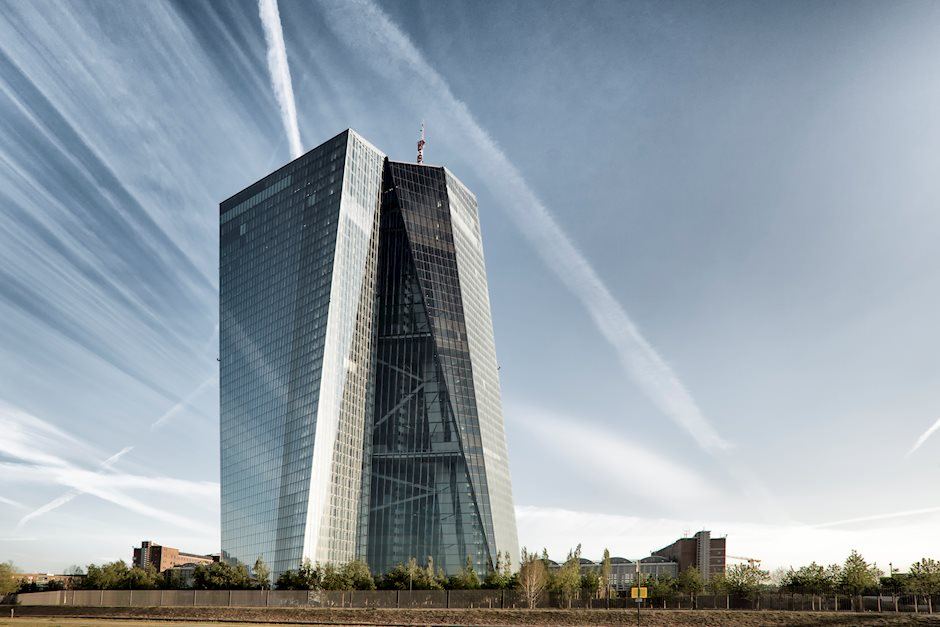

How much will ECB commit itself next week?
Both M. Draghi (ECB) and J. Powell (US Fed) recently stressed that the price stability and inflation targets are "symmetrical" - a small word that makes a big difference. Inflation values would then have to be above 2% for a certain time in the future so that a 2% price stability or inflation target can be achieved "symmetrically", since inflation rates have remained below 2% for some time. This would probably dampen short-term interest rate expectations for a longer period of time, so that inflation rates above 2% can be achieved in the longer term.
The ECB has a mandate to keep prices stable in the medium term. To date, the Governing Council has given the following quantitative definitions: 1998: Price stability is the annual increase in the Euro Area HICP (inflation) of less than 2%. In 2003, the price stability target was changed to "...below but close to 2%". Should the ECB in the near future change its target to the wording "symmetrically at 2%", this would be a significant change in direction.
It is therefore unlikely that the Governing Council will adopt such a wording by next week already. However, we expect the central bank to open up more room for maneuver and change its forward guidance with regard to short-term interest rate developments. Instead of indicating that interest rates should remain at the "current" level, the ECB could use the phrase "at an appropriate level." This would prepare the markets for the possibility of interest rate cuts.
The announcement of interest rate cuts or net asset purchases would not make sense until September at the earliest, when the ECB economists' new assessments of the economic environment and inflation forecasts are available. In the Eurozone, inflation is still a long way from its target. According to the ECB, it should be 1.3% this year and rise to 1.6% by 2021, and would thus remain well below the medium-term price stability target for the foreseeable future. In particular, domestic price pressure (core inflation) is still too low, although short-term interest rates are already in negative territory and excess liquidity from securities purchases and TLTROs to the banking sector is substantial (~1,800bn).
Market expectations for interest rate cuts have risen significantly since the meeting at the beginning of June. Accordingly, the probability that the ECB will lower interest rates at the September meeting is currently around 87%. 53% of market participants expect the deposit rate to be lowered by -0.1% and 34% by -0.2% from the current level of -0.4%.
Author
Erste Bank Research Team
Erste Bank
At Erste Group we greatly value transparency. Our Investor Relations team strives to provide comprehensive information with frequent updates to ensure that the details on these pages are always current.

















