Federal Reserve Preview: Powell to persevere and raise rates, US Dollar set to (temporarily) rise
- Economists are unsure if the US Federal Reserve will continue raising rates amid the banking crisis.
- By following the ECB and hiking, Fed Chair Powell would convey confidence.
- A hike is not entirely in the price and may trigger a temporary boost to the US Dollar.
- The Fed's dot plot and Chair Powell's soothing words may reverse the initial reaction.

"Nothing to see here, move along" – that is how I expect the Federal Reserve to act in the wake of the banking crisis, raising rates to fight inflation as if the world hasn't changed. Nevertheless, any increase to borrowing costs will likely only temporarily lift the US Dollar, creating a potential trading opportunity.
Here is the preview for the all-important Fed decision on March 21 at 18:00 GMT.
Three reasons for raising rates
1) Conveying a message of confidence:
The Federal Reserve is the world's most powerful central bank, and it is involved in regulation of banks, in addition to setting monetary policy. It was heavily involved in the takeover by the Federal Deposit Insurance Corporation (FDIC) of Silicon Valley Bank (SVB). The efforts to shore up First Republic, another regional banks, also included Fed officials. The central bank knows what is going on in banks.
On the one hand, the crisis could cause banks to tighten their lending conditions, cooling the economy and lowering inflation – doing the Fed's work. That implies a lower need for raising interest rates.
On the other hand, by reacting to the turmoil with a freeze on increasing borrowing costs, some would suspect that the Fed knows something all else do not – adding to panic. By following the plan, Federal Reserve Chair Jerome Powell and his colleagues would be conveying a message of confidence.
The Fed aims for financial stability, so raising rates would contribute to such calm by means of message. It would also contribute to price stability.
2) The Fed is already loosening policy via the Discount Window
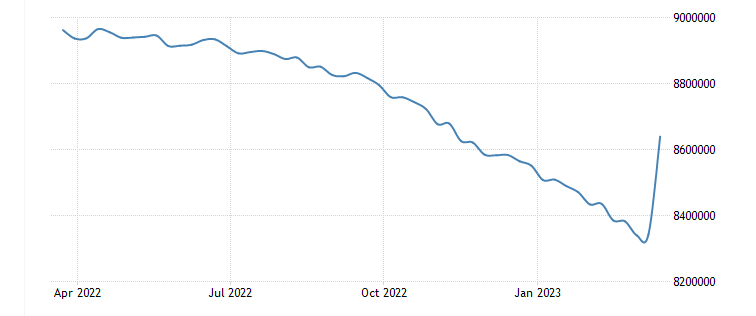
Over the past few weeks, the Fed's balance sheet ballooned by roughly $300 billion. Commercial banks tapped into the Fed's Discount Window and other tools to gain much-needed liquidity. This expansion contrasts the central bank's process of squeezing its balance sheet by refraining from reinvesting proceeds from maturing bonds.
Bounce in the balance sheet:
Source: FXStreet
In other words, the Fed's tightening process includes withdrawing money from markets, and its actions in the wake of the banking crisis have already reversed some of this process. This loosening is another reason to balance it by raising rates.
3) Inflation is still too high
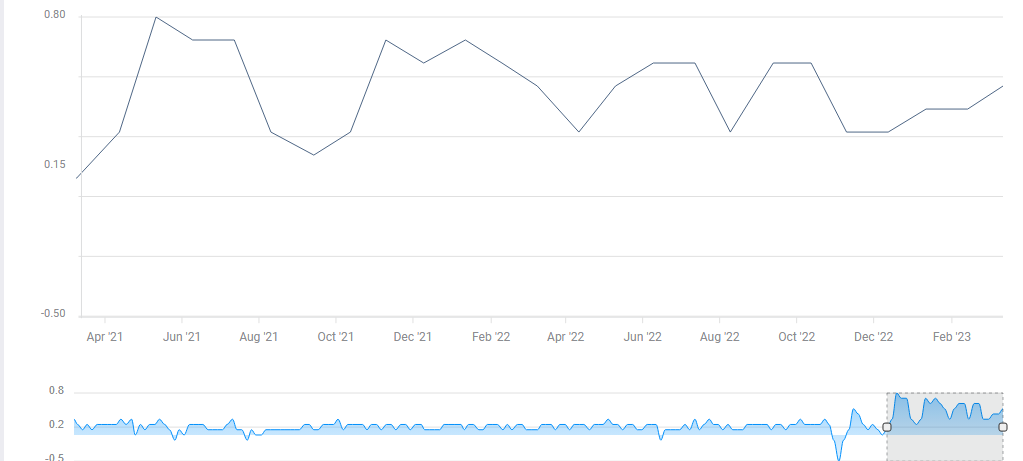
The banking crisis has been acting as a major distraction for markets from the main theme that dogged it beforehand – stubbornly high inflation. The Core Consumer Price Index (Core CPI) accelerated its advance in the past few months, contrary to expectations for an ongoing retreat.
The 0.5% monthly Core CPI increase reported for February is a significant source of worry:
Source: FXStreet
In the labor market, the most recent report showed a cooling in wage growth, an increase of 0.2% MoM in February. Nevertheless, the US continues creating new positions rapidly, indicating further price pressures.
Dollar set to bounce on rate hike, then react to dot plot and statement
At the time of writing, bond markets are not fully pricing a 25 bps hike. Several market participants have called for the Fed to pause, while "insider" Nick Timiraos, a journalist with the Wall Street Journal, has only said the bank faces a "tough decision."
Therefore, I expect the US Dollar to rise in response to such a rate hike, and stocks to decline. With the frantic "to hike or not to hike" debate taking place, the Fed's projections for growth, employment, inflation, and most importantly – interest rates, has almost been forgotten.
After the initial reaction, the focus will shift to interest rate projections. I expect no significant change for 2023 – the Fed will likely stick to its guns about refusing to slash borrowing costs this year. By signaling rates will near 5.50%, the Fed would continue conveying a message of confidence. It could offer a token reduction of its projections for 2024 and 2025 – but markets do not look that far.
The sweetener for markets could come in the accompanying statement. Powell and his colleagues will have to comment on the banking crisis, probably by saying they are working closely to resolve the issues and are ready to act if the situation deteriorates.
Such remarks would ease and balance the pain coming from raising rates and defying expectations for rate cuts later this year.
The Fed releases its rate decision, statement and dot plot at 18:00 GMT. I expect the US Dollar to jump initially in response to the rate hike and the dot plot, then pare some of its gains in response to the soothing words in the statement.
And then, at 18:30 GMT, Fed Chair Powell speaks.
Powell: Focus on financial or price stability? Labor market could steal the show
Central bankers are artists at speaking without making clear commitments – talking without saying anything. However, Powell tends to speak clearly, and markets act clearly. Investors need to make certain decisions despite uncertainty, and I expect them to cling to any openness of Powell to ease policy.
Will the Fed Chair prioritize financial stability over price stability? If Powell clearly prefers stable banks over fighting inflation, stocks would rise, and the US Dollar would fall. Such talk is unlikely – the Fed would want to seem to be working for the American people, not banks.
If fighting inflation is an overriding priority, even if it results in a recession, shares would tumble, and the Greenback would surge. Such a clear-cut message also has low chances.
I expect Powell to dedicate significant emphasis and time to the labor market – the Fed's second official mandate, alongside price stability., He could tie the bank's next moves to jobs data rather than solely banks vs. inflation.
In such a scenario, markets would cling to hope that the Fed would loosen policy to shore up the labor market – providing hope. That would mean a more significant recovery in stocks and a considerable retreat for the US Dollar – despite promises for higher rates in the dot plot.
Final thoughts
The short version of my scenario is: risk-off on the rate hike and the dot plot, followed by an immediate and slight recovery in response to the statement. Then, Powell would further boost the risk-on mood with promises to react to the situation and with caring words about the labor market.
I want to stress that this is my baseline scenario, and there are various others. The tougher the Fed is on inflation, the further markets deteriorate. The greater the worry about banks, the more significant the boost for sentiment.
The Fed decision is a complex event to trade, with various reactions within the event and further responses when Tokyo and London open. Trade carefully and lower your leverage – staying out of markets is also a worthy decision.
Author

Yohay Elam
FXStreet
Yohay is in Forex since 2008 when he founded Forex Crunch, a blog crafted in his free time that turned into a fully-fledged currency website later sold to Finixio.