Fed decision in focus: Will USD/JPY break higher or finally snap?
- USD/JPY consolidates above its daily bullish FVG, holding firm above 151.70 as buyers defend key structure.
- Despite broad USD softness, yield spreads and carry flows keep USD/JPY resilient as traders weigh the Fed’s rate cut impact.
- Bias remains cautiously bullish while 150.47 holds — breakout confirmation above 152.70 could target 154.80.


Fundamentals meet technicals
The USD/JPY pair remains one of the most stable instruments in FX right now — a striking contrast against the broader dollar weakness seen across majors. Price action shows strong defense above the D1 bullish Fair Value Gap (151.73–150.47), hinting that large players continue to accumulate near this zone.
While the Federal Reserve’s expected 25 bps rate cut this week has softened USD sentiment across most pairs, USD/JPY remains a structural outlier. The reason lies in the depth of the yield gap between the US and Japan and in how both central banks approach monetary policy from opposite extremes.
Why USD/JPY still stands strong despite Dollar weakness
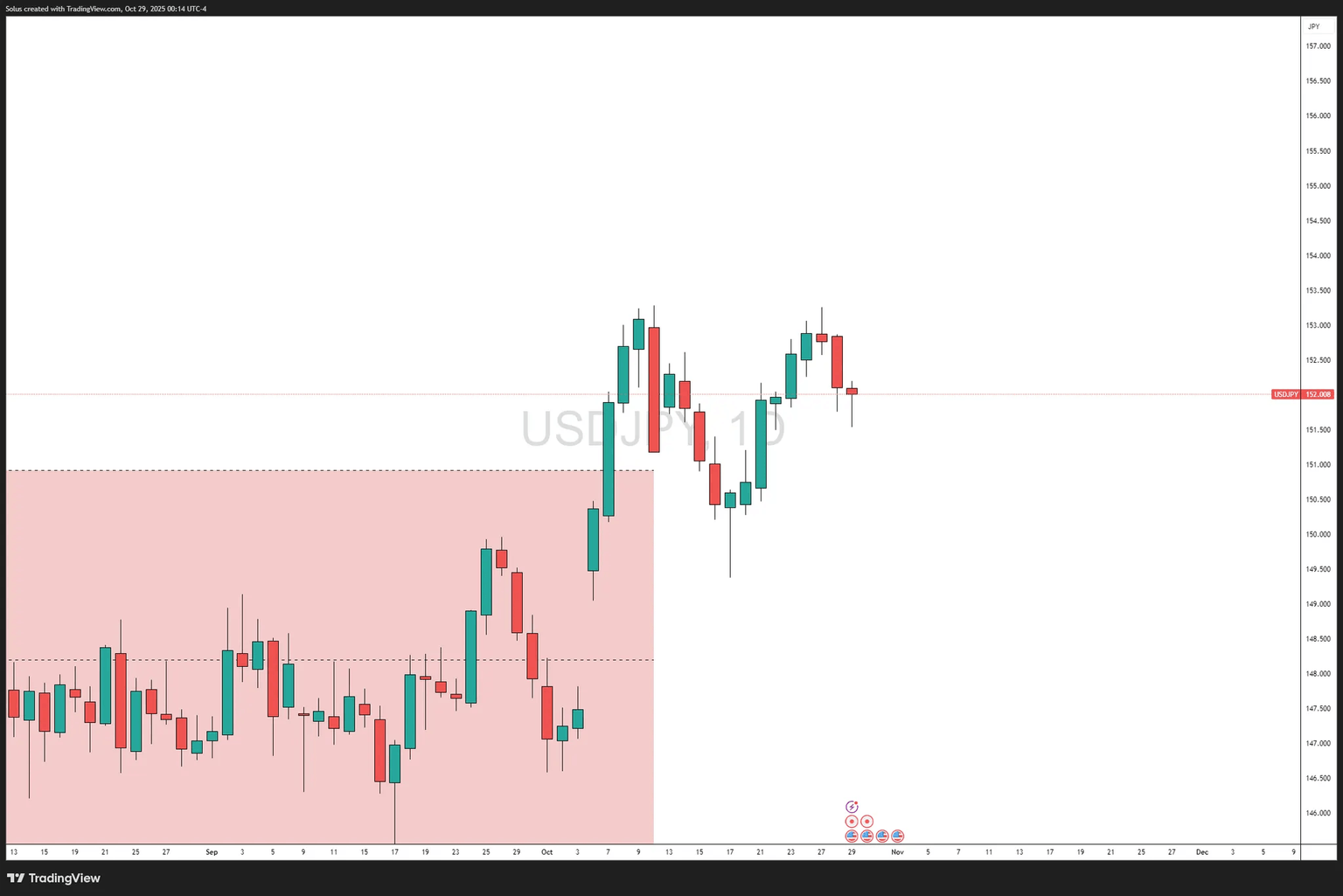
When the DXY weakens, most traders expect USD/JPY to follow — but it hasn’t. The pair’s resilience stems from deeper structural and institutional factors that continue to underpin USD demand versus JPY.
1. Yield differential still dominates
Even if the Fed begins easing, the US still offers one of the highest real yields among G10 nations.
- 10‑year Treasury yields hover near 4.0%, compared to Japan’s 0.75%.
- This 3%+ gap anchors the carry advantage firmly in favor of the USD, meaning traders and institutions still find it profitable to hold USD and short JPY.
Until that differential meaningfully narrows, dips in USD/JPY remain attractive to yield‑seeking investors.
2. BoJ’s cautious tightening limits Yen strength
The Bank of Japan continues to proceed with baby steps toward normalization — keeping short‑term rates near zero.
- The BoJ’s slow, data‑dependent pace prevents JPY from gaining full traction.
- Even mild speculation of tightening hasn’t been backed by actual rate hikes or significant YCC shifts.
This gives USD/JPY a structural floor, as the JPY can’t compete with USD returns in yield or liquidity.
3. Risk‑on sentiment dampens safe‑haven demand
While the dollar weakens due to lower rate expectations, risk appetite remains high — reflected in Nasdaq’s record highs and global equity inflows.
- During such periods, traders sell JPY to fund risk trades, further supporting USD/JPY.
- The pair thus becomes less sensitive to DXY drops, as global sentiment overrides individual USD weakness.
4. Institutional flows and carry demand
Institutional portfolios continue to favor USD/JPY carry positions, earning the interest‑rate differential.
- Shorting JPY remains expensive due to negative carry.
- Japanese importers and pension funds still hedge in USD, generating consistent buying pressure.
The Fed rate cut impact on USD/JPY: USD vs JPY dynamics
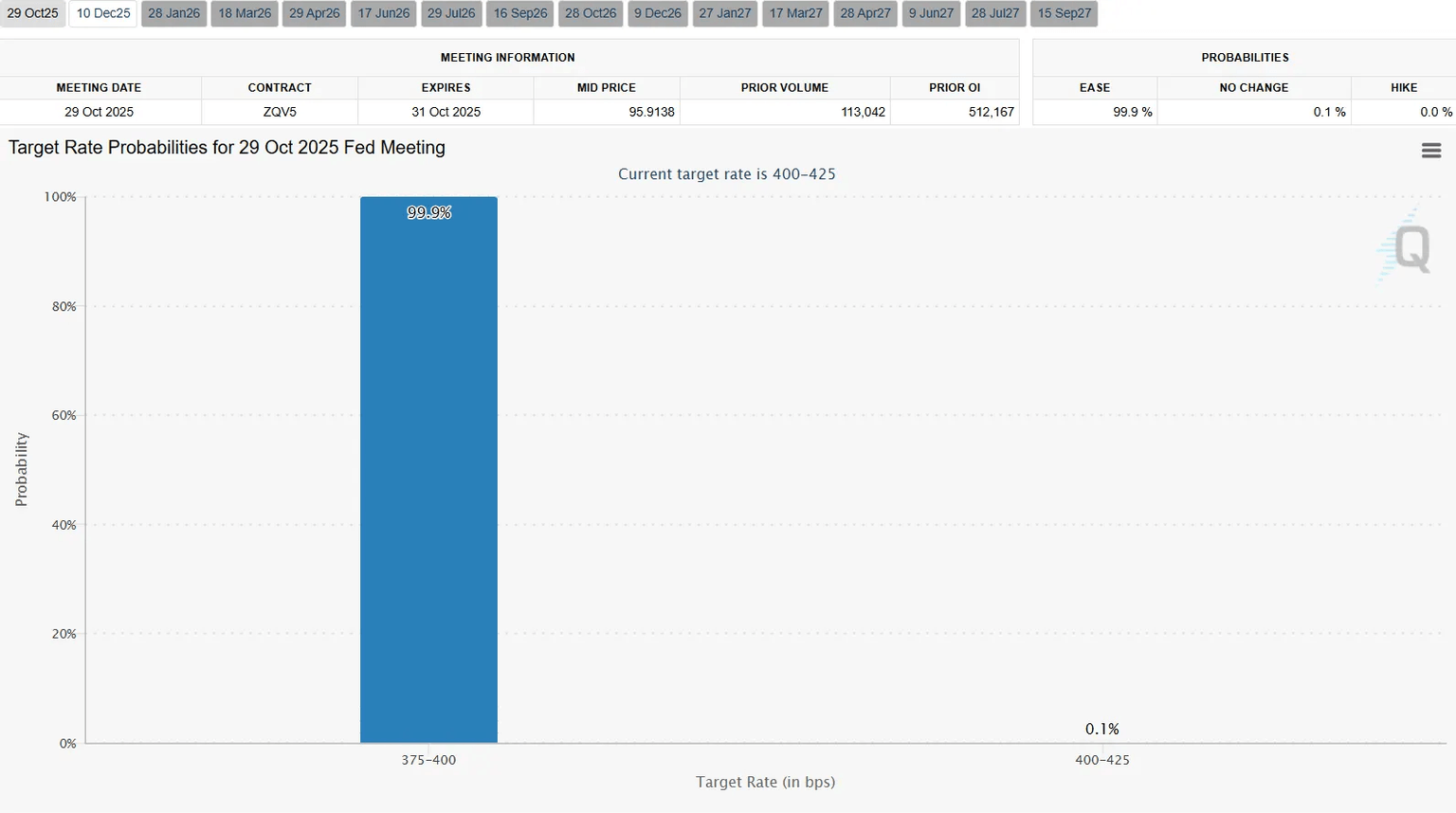
The October 30 Fed rate cut is already 96% priced in, but the real story lies in how the market interprets Powell’s tone after the decision — dovish or neutral.
1. If the Fed cuts but stays neutral → USD support continues
- A “one‑and‑done” cut narrative could stabilize USD yields, preventing a deep DXY collapse.
- Traders may interpret it as a soft‑landing signal, keeping risk‑on sentiment alive.
- In that case, USD/JPY remains supported above 151.70, with upside continuation toward 153.80 – 154.80.
Essentially, if Powell reassures that the cut is precautionary, not aggressive, the market will maintain USD’s yield appeal — preserving USD/JPY strength.
2. If the Fed turns dovish → Yen could strengthen
- A dovish press conference suggesting a series of cuts in coming months would pressure the USD further.
- Lower yields reduce USD’s carry advantage, and risk sentiment may shift toward risk‑off, boosting JPY’s safe‑haven appeal.
- This scenario could trigger a pullback to 150.47 or even 149.50, especially if compounded by risk‑aversion headlines.
3. BoJ’s counterbalance
- If the BoJ remains passive while the Fed cuts, USD/JPY’s downside may still be limited — the JPY cannot compete yield‑wise.
- Conversely, if BoJ signals intent to tighten YCC or raise short‑term rates, USD/JPY could finally break below its FVG zone.
In short, the rate cut alone isn’t decisive — it’s the relative stance that matters. A dovish Fed plus a neutral BoJ means yen strength.
A mild Fed plus passive BoJ means continued USD/JPY support.
Price action narrative
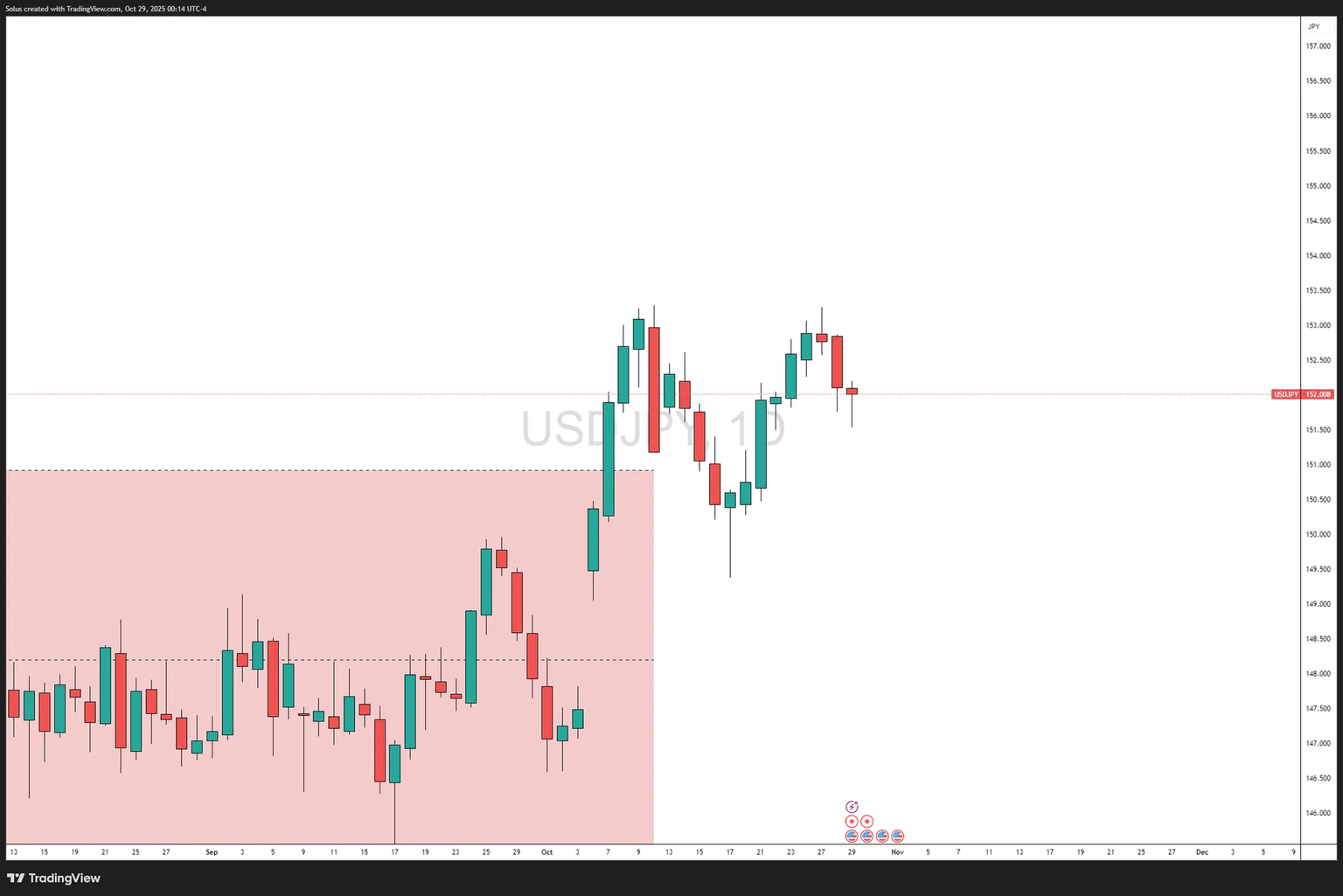
Price is currently consolidating around 152.06, with the 151.73 – 150.47 daily FVG acting as strong demand.
Recent price action forms a higher‑low pattern, signaling accumulation.
A potential retest of 151.70 could serve as the final liquidity sweep before the next impulsive leg up.
Bullish scenario: FVG reclaim and continuation

- Key support: 151.73 – 150.47 (D1 FVG)
- Triggers: 4H bullish engulfing or structure break above 152.70
- Targets:
- 153.80 (intermediate resistance)
- 154.80 (major liquidity pool / previous swing high)
- Invalidation: Daily close below 150.47
This aligns with the neutral Fed‑tone scenario — maintaining carry interest and favoring USD/JPY continuation.
Bearish scenario: FVG breakdown

- Trigger: Loss of 150.47 support zone
- Targets: 149.50 / 149.00 (liquidity zones)
- Fundamental trigger: A dovish Fed or shift to global risk‑off sentiment
- Narrative: Break of the D1 FVG invalidates bullish structure and signals deeper correction before reaccumulation.
Technical summary
Bias | Key support | Resistance | Bullish targets | Bearish targets |
|---|---|---|---|---|
Cautiously bullish | 151.73 – 150.47 (D1 FVG) | 152.70 – 153.00 | 153.80 / 154.80 | 150.00 / 149.00 |
Final thoughts

USD/JPY’s resilience speaks volumes. Even as the dollar weakens elsewhere, structural capital flow and yield dynamics keep the pair supported.
The upcoming Fed decision will likely determine whether the pair extends its bullish leg toward 154.80 or tests deeper liquidity near 150.50.
Traders should anchor around the 151.70 – 150.47 zone — it’s the line separating continuation from correction.
If Powell’s tone remains neutral or data‑dependent, USD/JPY could stay one of the few pairs where the dollar still has a pulse.
Author
Jasper Osita
Independent Analyst
Jasper has been in the markets since 2019 trading currencies, indices and commodities like Gold. His approach in the market is heavily accompanied by technical analysis, trading Smart Money Concepts (SMC) with fundamentals in mind.

















