European FX Outlook: Theresa May’s bittersweet symphony of post-Brexit world

What you need to know before markets open:
- The Federal Reserve chairman Jerome Powell delivered his Congressional testimony for the second time this week in which he presented same introductory statement while expressing a bit more conservative optimism about the growth and interest rate outlook.
- The Eurozone manufacturing PMI confirmed slight deceleration from recent multi-year highs but remained strong.
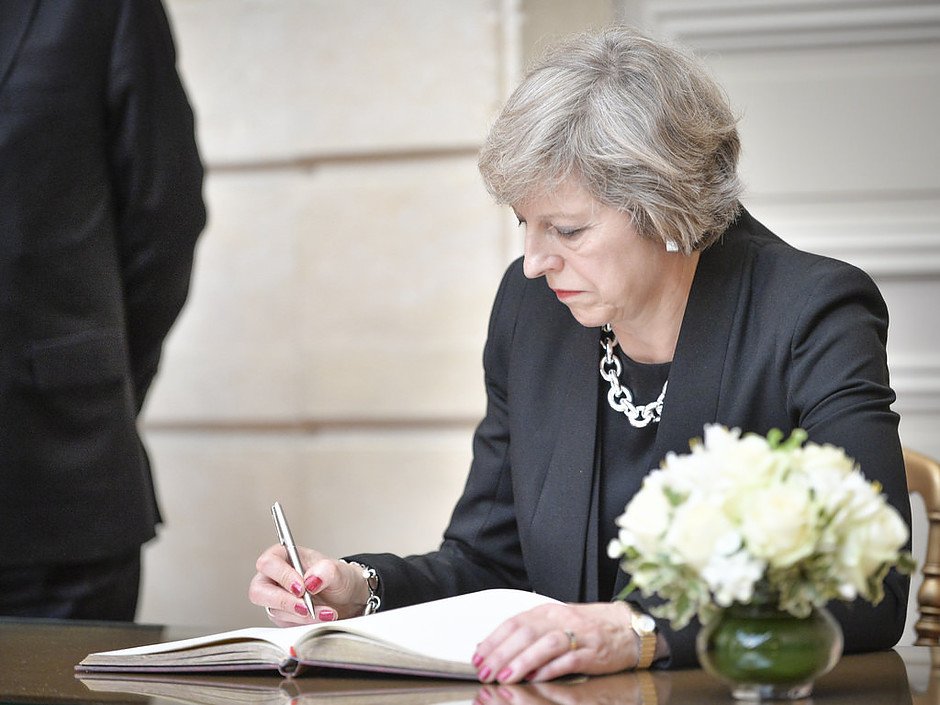
- The political declaration of the UK Prime Minister Theresa May delivering her own vision of post-Brexit relationship with the EU headlines the day.
Friday’s market moving events
- Tokyo CPI excluding fresh food rose 0.9% in February while headline inflation rose 1.5% y/y.
- Japan’s unemployment rate fell to 2.4% in January, beating the market expectations.
- German retail sales are seen rising 0.9% m/m and 3.5% y/y in January.
- ECB executive board member Yves Mersch speaks at KPMG Finance Forum 2018 in Prague, Czech Republic at 8:10 GMT.
- The UK Prime Minister Theresa May is due to speak about Britain's post-Brexit relationship with the European Union, in London.
- The UK construction PMI is expected to rise to 50.5 in February.
- The Bank of England Governor Mark Carney is scheduled to speak about the evolution of money and the emergence of cryptocurrencies, in London at 10:00 GMT.
- The Eurozone PPI is set to decelerate to 1.6% m/m in January.
- Canada’s Q4 2017 GDP is expected to rise 2.0% Q/Q annualized.
- University of Michigan consumer confidence is expected to fall to 99.5 in February.
Major market movers
- The US Dollar was little change against majors, easing off peaks against EUR, but retained gains against GBP.
- The future of the UK and GBP is at stake with Theresa May speaking, but markets may see that future too far away to react as well.
Thursday’s macro summary
- China’s Caixin manufacturing PMI rose to 51.6 in February.
- Spanish Q4 GDP is set to rise 3.1% y/y.
- Spanish manufacturing PMI rose to 56.0 in February with new orders rising to 13-month high.
- Italian final manufacturing PMI fell to 56.8 in February, the lowest since September 2017.
- French final manufacturing PMI decelerated to 55.9 in February.
- German final manufacturing PMI dipped to 60.6 in February.
- The Eurozone manufacturing PMI ticked up to 58.6 in February.
- The UK manufacturing PMI decelerated to 55.2 in February.
- The Eurozone unemployment rate remained stable at 8.6% in January.
- The US personal spending rose 0.2% m/m as expected in January while personal income rose 0.4% m/m.
- The US weekly jobless claims reached 210K in a week ending February 23, falling to the lowest level in four decades.
- The US ISM manufacturing PMI rose to 60.8 in February, up from 58.4 in January.
- The second day of Fed chairman’s Congressional testimony basically repeated the previous statements on the optimistic growth outlook.
- The New York Federal Reserve President William Dudley speaking at a trade conference in Brazil said that trade limits won't affect trade deficit, just trade composition and that raising trade barriers would likely hurt productivity growth.
Author
Mario Blascak, PhD
Independent Analyst
Dr. Mário Blaščák worked in professional finance and banking for 15 years before moving to journalism. While working for Austrian and German banks, he specialized in covering markets and macroeconomics.
More from Mario Blascak, PhD