European economic update: UK leads, Eurozone follows


Summary
- The U.K. economy is showing strong signs of recovery as monthly GDP data continue to impress. In particular, the U.K. services sector is outperforming as restrictions are being lifted and consumer activity rebounds.
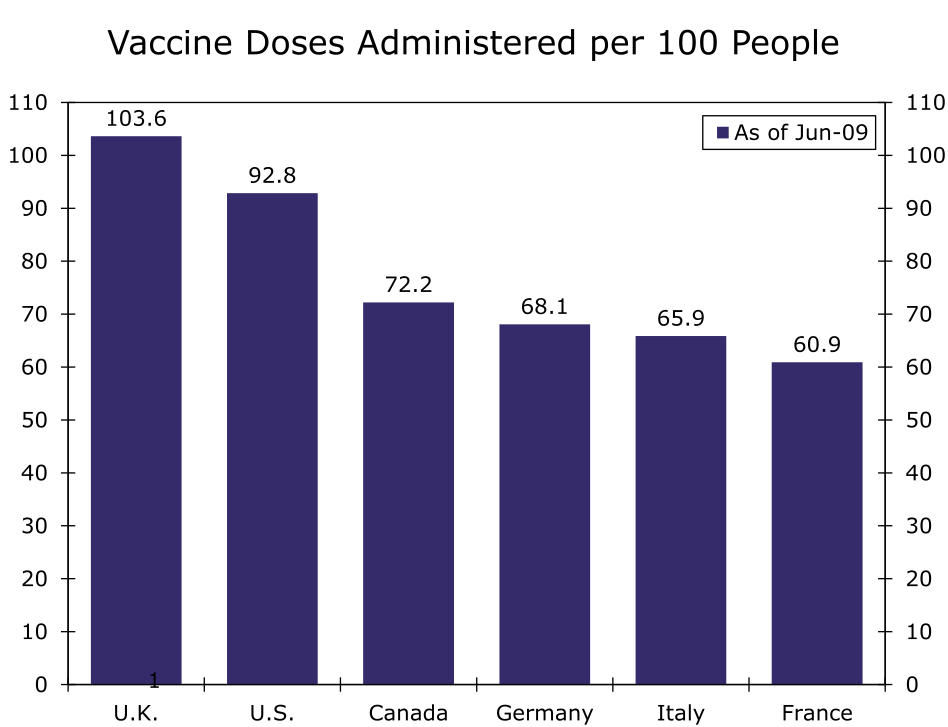
- While the Eurozone is also demonstrating a recovery, the bounce back in activity has been more measured than the U.K. Contributing to the slower recovery is a vaccination campaign that struggled to gather momentum earlier in the year, which resulted in restrictions being in place much longer. Conditions have certainly improved in the Eurozone, but the pace of rebound will likely only get closer to that of the U.K. as restrictions come off and the services sector improves.
- As the U.K. economy rebounds, the Bank of England has made a first initial step towards normalizing monetary policy. On that other hand, as the Eurozone rebound continues to lag the European Central Bank is likely to keep monetary policy very accommodative for the time being. To that point, we expect the Bank of England to further taper asset purchases in August, while the ECB is likely to maintain an elevated pace of asset purchases until at least Q4.
- Diverging paths of monetary policy have resulted in slightly diverging outlooks for the British pound and the euro. As monetary policy turns less accommodative in the U.K., we expect the pound to rally and risks around our forecast are tilted to the upside. As far as the euro, while we are forecasting a stronger currency, the pace of appreciation is likely to be more gradual as the ECB may be more cautious about paring back monetary policy accommodation in the near future.
A Strong Rebound in U.K. Activity is Underway
Today's U.K. April GDP data offered further evidence of the strong rebound that is underway for the U.K. economy. With the government having made good progress in vaccinating the population against COVID, restrictions have been steadily lifted in the United Kingdom during recent months. That is reflected by a 2.3% month-over-month increase in April GDP, coming on top of a 2.1% gain in March. The April gain in service sector activity was particularly noteworthy, with an increase of 3.4%, and clearly reflecting the impact of the re-opening. Accommodation and food service activities surged 44.1% in April, while education rose 11.2%. While not part of today's release, previously reported April retail sales rose 9.2% month-over-month, while the consensus forecast is for sales to rise 1.8% in May. If realized, that would level sales for the April-May period some 14.5% above the Q1 average, another indication of how the domestic and consumer sectors of the economy are leading the rebound.
In contrast, U.K. April industrial output fell 1.3% month-over-month, although even here there are signs of resilience beneath the surface. Given a planned shutdown of oil field production sites for maintenance, mining and quarrying activity dropped by 15%, whereas manufacturing activity fell a more modest 0.3% month-over-month. Finally, while acknowledging the economy has enjoyed a strong recovery in activity in recent months, the level of U.K. GDP in April is still 3.7% below its pre-pandemic peak from February 2020.
Author
Wells Fargo Research Team
Wells Fargo