Europe slips back as attention turns to the FOMC

Europe
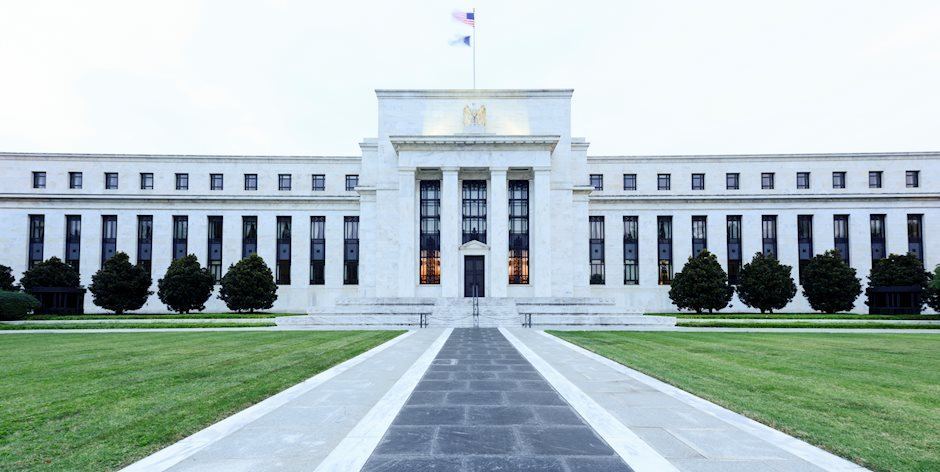
European markets have spent most of the day trading lower ahead of tonight’s Federal Reserve rate decision, after the EU announced it had reached an accord to implement a ban on all Russian oil imports. This ban would take place “in an orderly fashion” by the end of this year, assuming that all parties can agree.
In response oil prices have taken a leap to the upside, helping the likes of BP and Shell to outperform. It’s also the turn of Shell tomorrow to feel the harsh glare of politicians for making too much money from their underlying business as a result of the volatility in energy markets, although some of this will be tempered by the $5bn write down to its Russian oil and gas assets.
Flutter Entertainment is among the best performers on the FTSE100 today after its Q1 numbers showed a big jump in gaming revenue of 9%, helping to push up total revenues to £1.56bn, an increase of 6%. The US business appears to be behind a lot of the improvement, with revenues in this area rising 45% to £429m.
Aston Martin shares have seen a decent move to the upside after Q1 revenues came in better than expected, rising 4% to £232.7m, helped by an improvement in average selling prices to £151k from last year’s £149k. Adjusted EBITDA also improved to £24.4m, an increase of 18%, however losses increased to £111.6m.
The outlook was kept unchanged with an 8% increase in volumes expected to deliver a 50% improvement in EBITA, and on course to generate £2bn in revenues and £500m in EBITDA by 2024/25. The company also announced the appointment of a new CEO, Amedeo Felisa who occupied a similar position at Ferrari for 8 years, until 2016.
On the other side of the ledger retail stocks are under pressure in response to the latest British Retail Consortium shop price inflation numbers, which showed prices rising at their fastest annual rate since 2011 in April. The likes of Kingfisher, Howden Joinery, Ocado, JD Sports are all underperforming.
JD Wetherspoon shares have slipped back, towards their recent lows, after reporting a decline in like for like sales of 4% for the 13 weeks to 24th April, although there have been gradual signs of an improvement as the quarter has progressed. The last two weeks of the reporting period, which covered the Easter period like for like sales, were positive. As far as the outlook is concerned CEO Tim Martin said he expects to see a break-even outcome for profits in the current financial year, and that 2023 would see a return to relative normality.
It’s been another bad day for Boohoo after reporting that it expected a further slowing in revenue growth in the H1 of its new financial year. Today’s final results showed full year revenues rose by 14% to £1.98bn, however the impact of higher costs and lower margins has shown up in its profit before tax numbers, which saw a 94% decline to £7.8m.
CEO John Lyttle blamed a significant increase in outbound carriage costs, and a rise in inbound shipping costs which impacted EBITDA to the tune of £60m. The retailer also paid out £261.5m in capex as it looks to expand and automate its distribution network.
For 2023 Boohoo said it hopes to consolidate its market share gains, and that it expects to see revenue growth in the low single digits, and adjusted EBITDA margins between 4% and 7%.
US
US markets have seen a rather mixed open, with the Nasdaq 100 sliding lower, after the April ADP jobs report saw 247k jobs added, missing expectations of a rise of 383k in a sign that people are still being choosy about whether to re-enter the labour market. The latest ISM services report for April showed a sharp jump in prices paid to a record high, while the employment component slipped into contraction.
Ride sharing company Lyft has seen its shares plunge after reporting it expected to see Q2 revenue of between $950m to $1bn. This was slightly below market expectations of $1.05bn, however it was the adjustment to profit targets that appears to have spooked investors after the company downgraded its EBITDA expectations to between $10-$20m, well below the consensus of $83m. The shortfall appears to be down to the company having to pay up to attract the drivers it needs.
While Lyft disappointed, Uber Q1 numbers were more positive, with revenues coming in at $6.85bn, well above expectations, with gross bookings valued at $26.45bn. Net losses came in at $5.9bn largely related to unrealised losses from its stakes in Grab, Aurora and Didi. For Q2 the company sees a big jump in gross bookings to between $28.5bn and $29.5bn.
Airbnb shares are also higher after reporting Q1 revenues that beat expectations, coming in at $1.51bn, while also upgrading their outlook for Q2, to between $2.03bn and $2.13bn, on hopes that we the summer of 2022 will see a return to normal after the disruptions of the last two years.
Chipmaker AMD has seen its shares rally strongly after revising up its revenue expectations for Q2 to $6.3bn to $6.7bn, well above consensus of $6bn.
For Q1 the company also beat forecasts with revenues coming in $0.9bn above forecasts at $5.9bn, while profits came in at $1.13c a share. This is welcome news for the shares which have been languishing around 9-month lows for the last week or so.
Moderna’s Q1 numbers have proved to be another impressive performance, revenues coming in at $6.07bn, well above expectations of $4.71bn, while profits came in at $8.58c a share. Covid-19 revenue was $5.39bn, which also came in ahead of consensus
FX
The US dollar has come under a little bit of pressure ahead of this afternoon’s Fed rate meeting, trading just below its recent 20-year highs, although it is seeing some decent gains against the Swiss franc.
The pound is also treading water ahead of tomorrow’s Bank of England rate decision where the central bank is expected to follow the US central bank by raising rates, although there is some discussion as to whether they will raise by 25bps or 50bps, with markets pricing the probability of the former.
Commodities
Crude oil prices have taken a leg higher today after the EU announced that it was looking to implement a ban on all Russian oil, “in an orderly fashion”. The plan is to phase out all imports of raw crude within six months and all refined products by the end of the year, although Hungary and Slovakia will be given until the end of 2023. The market reaction is a little surprising given that this was expected, and will likely take time to implement, and evidence is rising that Chinese demand will take a long time to pick up, as reports come out of Beijing of tighter restrictions being imposed.
Gold is treading water close to two-month lows ahead of today’s Fed meeting, while US yields are slightly firmer.
Volatility
Shares in some Chinese e-commerce giants were in a skittish mood yesterday after state media reported that an individual surnamed “Ma” had been detained. The downside for the underlying price in Alibaba was as much as 10% and although later clarification from the press that this wasn’t Jack Ma resulted in the stock recovering most of its losses, price action was somewhat elevated. Daily vol on Alibaba hit 324% against 143% on the month.
The Swedish equity index remained active after Monday’s flash crash, with volatility still looking elevated as the underlying recovered a little. This left daily vol on the local market at 90%, down a fraction from the 124% posted at the start of the week but still well ahead of the monthly print of 44%.
Soft commodities are still showing elevated signs of volatility, with OJ futures topping the board for a second consecutive day. Prices here remain below the mid-April highs, but the uptrend looks to be intact once again. There are those concerns over poor crops, rising labour costs and the underlying fact that prices are set to continue rising for some time yet. As we’ve seen in the asset class before however, the market does risk becoming overheated resulting in sharp pullbacks, so action could remain high for some time yet. Daly vol came in at 156% against 117% on the month.
In a good illustration of those pullbacks, lean hog prices slipped back to lows not seen since the start of the year as demand from China was seen as falling with domestic production on the up, whilst the risk of the product becoming too expensive for the US market was also seen as a factor. Daily vol sat at 107% against 68% for the month.
Finally, rounding off with fiat currencies, the Aussie Dollar was in focus yesterday after a surprise 0.35% rate hike by the RBA. The bigger than expected jump had a consequent impact on price action, driving daily vol on Aussie Dollar – Dollar to 18.68% against 11.42% on the month.
Author
Michael Hewson MSTA CFTe
Independent Analyst
Award winning technical analyst, trader and market commentator. In my many years in the business I’ve been passionate about delivering education to retail traders, as well as other financial professionals. Visit my Substack here.