|

Euro edges higher, US Dollar under pressure

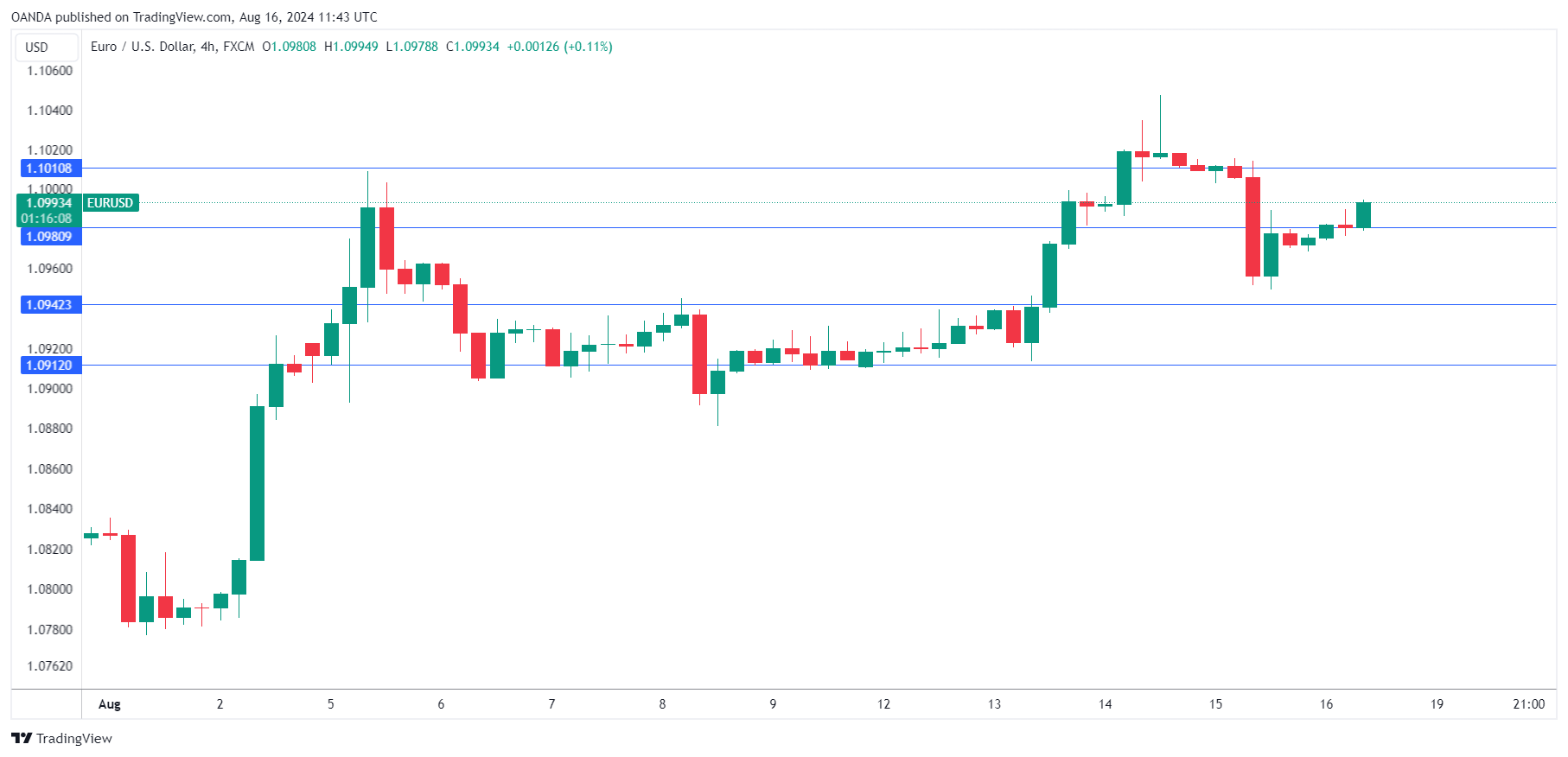
The euro has edged higher on Friday. In the European session, EUR/USD is trading at 1.0994, up 0.21% on the day at the time of writing.

The US dollar is under pressure and the euro rose as much as 1.2% this week before paring about half of those gains. On Wednesday, the euro hit 1.1047, its highest level against the US dollar this year.
Investors are showing greater pessimism about economic conditions. Eurozone investor sentiment fell to 17.9 in August, down sharply from 43.7 a month earlier. This was the lowest reading since November 2023. Germany, the largest economy in the eurozone, showed a similar trend. There are significant uncertainties about the eurozone and German economies and these worries increased due to the recent turmoil in the global stock markets.

Solid US data eases market nerves

Exactly two weeks ago, the US jobs report was weaker than expected, triggering a meltdown across global stock markets. Investors panicked that the US economy was hurtling towards a recession but the markets have recovered courtesy of solid US numbers this week.

US inflation dipped to 2.9% y/y in July, down a notch from 3% a month earlier which was also the market estimate. Retail sales jumped 1% m/m, bouncing back from -0.2% in June and breezing past the market estimate of 0.4%. As well, unemployment claims were lower than the market estimate for a second straight week.

The rout in the financial markets raised expectations for a half-point cut from the Federal Reserve to as high as 60%, but this has fallen to 30% since the retail sales report (a quarter-point has been priced in at 70%). The Fed meets next on September 18 and a rate cut is virtually guaranteed but the size of the cut remains an open question.

EUR/USD technical

  • EUR/USD is testing resistance at 1.0980. Above, there is resistance at 1.1010.

  • 1.0942 and 1.0912 are the next support levels.
Chart

Author

Kenny Fisher

Kenny Fisher

MarketPulse

A highly experienced financial market analyst with a focus on fundamental analysis, Kenneth Fisher’s daily commentary covers a broad range of markets including forex, equities and commodities.


More from Kenny Fisher
Share:

Editor's Picks

AUD/USD advances modestly, hovers around 0.7050

AUD/USD reverses part of Friday’s sharp decline and gyrates around the 0.7050 region ahead of the opening bell in Asia. The pair’s modest recovery comes amid humble losses in the Greenback, always amid the steady uncertainty on the geopolitical front. Moving forward, Westpac’s Consumer Confidence measure will be the salient release on Tuesday.

USD/JPY holds higher ground toward 160.50 despite 'Yentervention' fears

USD/JPY holds higher ground toward 160.50 in Monday's Asian trading, despite intervention fears. Japan’s revised GDP print, which confirmed that the economy lost momentum in the first quarter, weighs on the Japanese Yen. Meanwhile, Friday's upbeat US NFP report and fresh Israel-Iran attacks favor the US Dollar bulls, underpinning the currency pair.

Gold faces initial resistance near  $4,350

Gold manages to reclaim the $4,300 mark per troy ounce and above on Monday. The yellow metal’s small uptick comes on the back of modest losses in the US Dollar, while traders continue to follow geopolitical events in the Middle East and the likelihood of a tighter-for-longer Fed.

Why institutions prefer Solana over newer rivals for stablecoin adoption – Solstice CEO
The cryptocurrency industry has entered a new era spearheaded by stablecoins, real-world asset (RWA) tokenization, decentralized finance (DeFi), and Artificial Intelligence (AI) applications.
$1.75 trillion: Is SpaceX the most popular IPO in history, or the most engineered?

On June 12, the largest initial public offering (IPO) in history is set to hit the tape, and almost nobody is asking whether the price is right, because almost everybody already wants in.

The US economy defies the rules: 100 days into the Oil shock and the recession signal is still missing

More than three months after the start of the Iran war and the resulting disruption to global energy markets, the US economy continues to display remarkable resilience. The conflict has triggered a sharp rise in Oil prices, reignited inflationary pressures and fueled widespread concerns about a potential economic slowdown.