EUR/USD Forecast: Poised to challenge the 1.2000 threshold

EUR/USD Current Price: 1.2013
- Economic contraction in the EU was led by the services sector in January.
- The US ADP survey surprised by reporting 174K jobs positions were added in January.
- EUR/USD remains under selling pressure and could fall below further in the near-term.
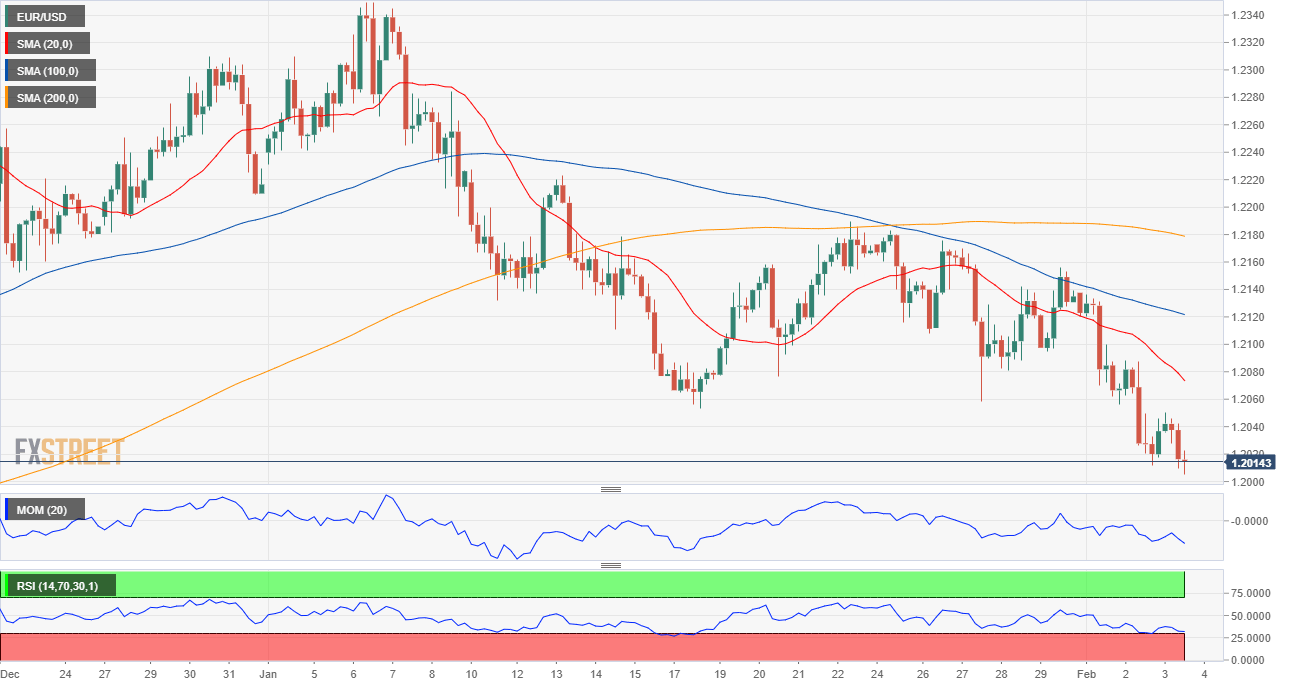
The EUR/USD pair has extended its decline to 1.2004 during European trading hours, as optimistic investors keep buying the greenback. The upbeat sentiment gyrates around hopes that the US government will manage to pass a new, large stimulus program. Coronavirus vaccines are also generating optimism, amid positive news related to the UK AstraZeneca shot and the Russian Sputnik V, both highly effective in preventing serious COVID-19 cases.
Earlier in the day, Markit published the final versions of the EU Services PMIs, with the German one downwardly revised to 46.7. The EU final Composite PMI for the month was confirmed at 47.8. The economic contraction was led by the services sector, as activity there contracted for a fifth consecutive month.
The US has just published the ADP survey on private jobs’ creation, which showed that the country added 174K new positions in January, much better than the 49K expected and the previous -123K. Markit will publish the final US Services PMI while the country will release the official ISM index, foreseen at 56.8 from 57.7 in the previous month.
EUR/USD short-term technical outlook
The EUR/USD pair is trading near the mentioned daily low, hardly reacting to the encouraging employment-related data. The downside is favored according to the 4-hour chart, as the pair fell further below bearish moving averages. Technical indicators head firmly lower near oversold readings, but without signs of exhaustion.
Support levels: 1.2005 1.1970 1.1925
Resistance levels: 1.2025 1.2060 1.2100
Author

Valeria Bednarik
FXStreet
Valeria Bednarik was born and lives in Buenos Aires, Argentina. Her passion for math and numbers pushed her into studying economics in her younger years.