|

EUR/USD Analysis: upside capped by key Fibonacci resistance

EUR/USD Current price: 1.1103

  • EU data disappointed, core inflation fell by 0.6% YoY in July.
  • Germany reportedly preparing to introduce fiscal stimulus.
  • EUR/USD range bound, bearish below the 1.1065 support.
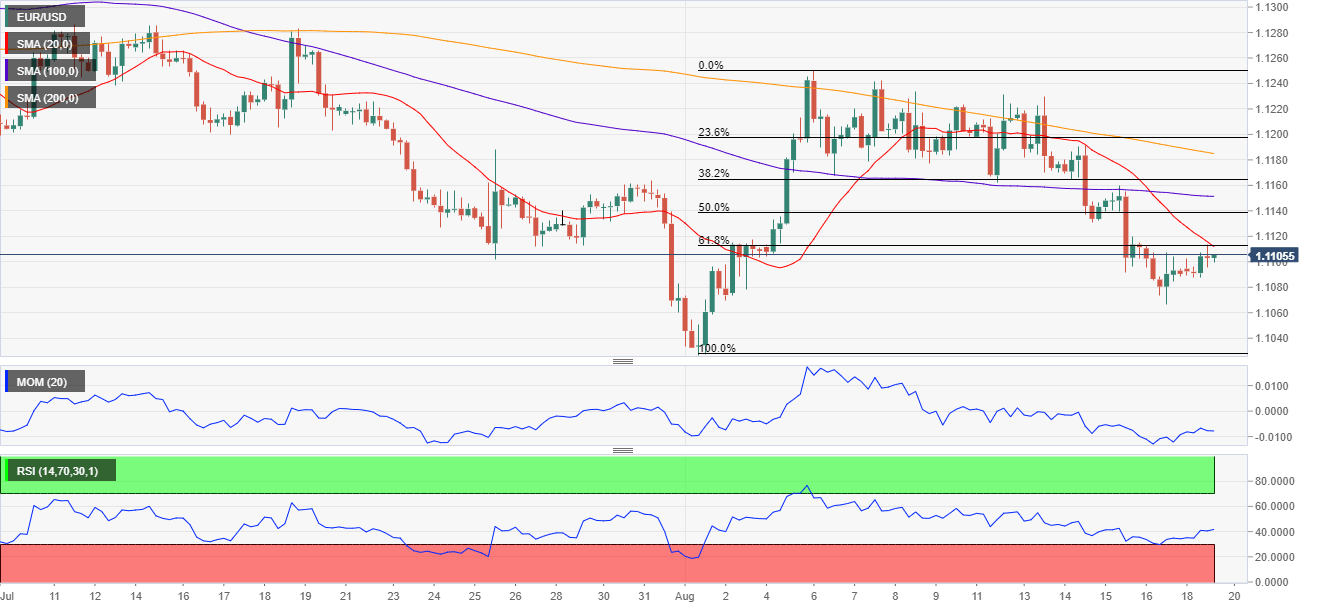
The EUR/USD pair is trading marginally higher in a quiet Monday, currently hovering around the 1.1100 figure. The week kick-started with a moderated optimistic mood on the back of the latest US-China headlines, as on Friday, US President Trump said that there was “progress” in talks. There’s no much to cheer about anyway, as a solution is far from sight, and economic growth keeps deteriorating worldwide.

The EU released its Current Account data early London, which showed that the adjusted current account surplus narrowed to 18.4B euros in June from 30.3B in May. Also, July inflation was much worse-than-anticipated, down by 0.5% MoM and up by just 1.0% YoY in July. The core yearly CPI came in at -0.6% against a 0.3% advance anticipated by the market. The bad news were offset by news indicating that Germany is reportedly preparing to introduce fiscal stimulus measures as a contingency in the event of a crisis. There are no macroeconomic releases scheduled in the US today.

EUR/USD short-term technical outlook

The EUR/USD pair has completed a pullback to the 61.8% retracement of its latest daily advance at around 1.1110, still the main resistance. In the 4 hours chart, the 20 SMA keeps heading lower, a handful of pips above the mentioned Fibonacci level, while technical indicators head nowhere within negative levels. The pair is confined to a 30 pips’ range ever since the day started, and seems unlikely it will manage to achieve directional momentum through the upcoming US session.  

Support levels: 1.1065 1.1025 1.0980

Resistance levels: 1.1110 1.1160 1.1195  

View Live chart for the EUR/USD

Author

Valeria Bednarik

Valeria Bednarik was born and lives in Buenos Aires, Argentina. Her passion for math and numbers pushed her into studying economics in her younger years.


More from Valeria Bednarik
Share:

Markets move fast. We move first.

Orange Juice Newsletter brings you expert driven insights - not headlines. Every day on your inbox.

By subscribing you agree to our Terms and conditions.

Editor's Picks

EUR/USD declines toward 1.1700 on solid USD recovery

EUR/USD turns south and declines toward 1.1700 on Wednesday. A solid comeback staged by the US Dollar weighs heavily on the pair, as traders look to USD short covering ahead of US CPI on Thursday. However, the downside could be capped by hawkish ECB expectations. 

GBP/USD slides toward 1.3300 after softer-than-expected UK inflation data

GBP/USD has come under intense selling pressure, eyeing 1.3300 in the European session on Wednesday. The UK annual headline and core CPI rose by 3.2% each, missing estimates of 3.5% and 3.4%, respectively, reaffirming dovish BoE expectations and smashing the Pound Sterling across the board. 

Gold clings to modest gains above $4,300

Following Tuesday's volatile action, Gold regains its traction on Wednesday and trades in positive territory above $4,300. While the buildup in the USD recovery momentum caps XAU/USD's upside, the cautious market stance helps ithe pair hold its ground.

Bitcoin risks deeper correction as ETF outflows mount, derivative traders stay on the sidelines

Bitcoin (BTC) remains under pressure, trading below $87,000 on Wednesday, nearing a key support level. A decisive daily close below this zone could open the door to a deeper correction.

Monetary policy: Three central banks, three decisions, the same caution

While the Fed eased its monetary policy on 10 December for the third consecutive FOMC meeting, without making any guarantees about future action, the BoE, the ECB and the BoJ are holding their respective meetings this week. 

AAVE slips below $186 as bearish signals outweigh the SEC investigation closure

Aave (AAVE) price continues its decline, trading below $186 at the time of writing on Wednesday after a rejection at the key resistance zone. Derivatives positioning and momentum indicators suggest that bearish forces still dominate in the near term.















