EUR/USD Analysis: Friday's short-covering rally runs out of steam rather quickly
- A combination of factors prompted aggressive short-covering around EUR/USD on Friday.
- The discovery of a new COVID-19 variant boosted funding currencies, including the euro.
- The repricing of the Fed’s policy outlook, declining US bond yields weighed on the USD.

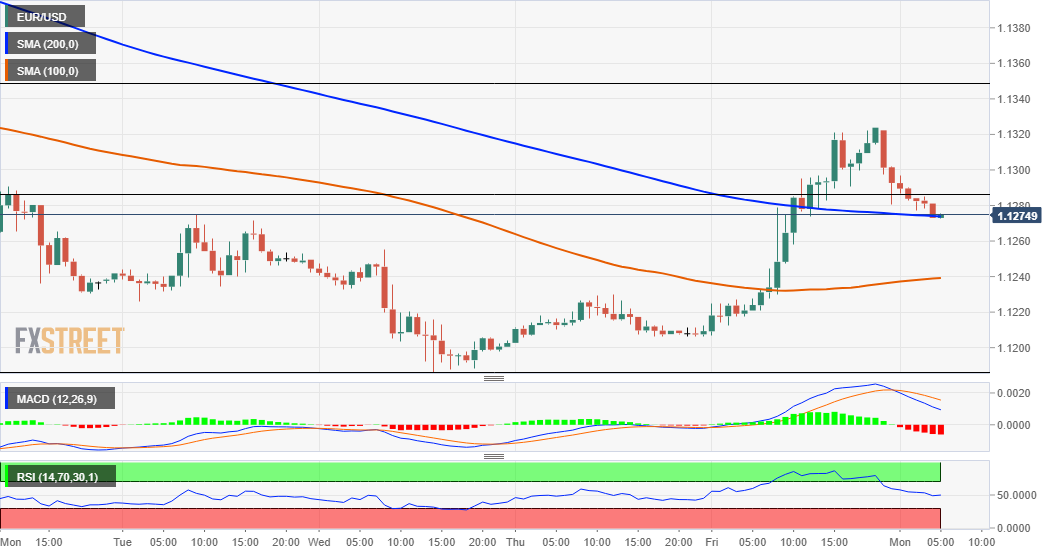
The EUR/USD pair witnessed an aggressive short-covering move on Friday and moved further away from the lowest level since July 2020 set in the previous day. The pair rallied over 125 pips from the vicinity of the 1.1200 mark and was supported by fresh COVID-19 jitters. Investors rushed to unwind their carry-trade positions amid worries about the detection of a new vaccine-resistant coronavirus variant. This was seen as a key factor that drove flows towards funding currencies, including the euro.
Meanwhile, the latest development forced investors to reassess the Fed's (hawkish) policy outlook. This, along with the global flight to safety, led to a steep decline in the US Treasury bond yields. Following the recent bullish run-up, the combination of factors prompted US dollar profit-taking, which, in turn, provided an additional boost and pushed the pair back above the 1.1300 round figure. The pair recorded its best day since December 2020, albeit a struggl to capitalize on the move.
The global risk sentiment stabilized a bit on the first day of a new week as investors preferred to wait and see if the Omicron coronavirus variant would eventually derail the economic recovery. This was evident from a goodish rebound in the equity markets and the US bond yields, which extended some support to the greenback and exerted some pressure on the major. Market participants now look forward to the release of the Prelim German CPI print and Pending Home Sales from the US.
The data might do little to provide any meaningful impetus as the market focus would remain glued to developments surrounding the coronavirus saga. Apart from this, traders might take cues from the European Central Bank President Christine Lagarde's scheduled speech later during the US session.
Technical outlook
From a technical perspective, the corrective bounce struggled to find acceptance above the 23.6% Fibonacci level of the 1.1609-1.1185 downfall. However, the subsequent pullback, so far, remains cushioned near the 200-hour SMA. This is followed by 100-hour SMA, around the 1.1240 region, which if broken decisively will suggest that the near-term downtrend is still far from being over. The pair might then turn vulnerable to break below the 1.1200 round-figure mark. Some follow-through selling below the YTD low, around the 1.1185 region, will be seen as a fresh trigger for bearish traders and set the stage for further losses.
On the flip side, the 1.1300 mark now seems to act as an immediate resistance ahead of Friday’s swing high, around the 1.1330 region. A sustained move beyond has the potential to lift the pair further beyond the 38.2% Fibo. level, around mid-1.1300s, towards the next relevant hurdle near the 1.1375-80 supply zone and the 1.1400 mark. The latter coincides with the 50% retracement level, which if cleared decisively will negate any near-term bearish bias and trigger a fresh wave of the short-covering move.
Author

Haresh Menghani
FXStreet
Haresh Menghani is a detail-oriented professional with 10+ years of extensive experience in analysing the global financial markets.

















