EUR/TRY: A technical and fundamental update
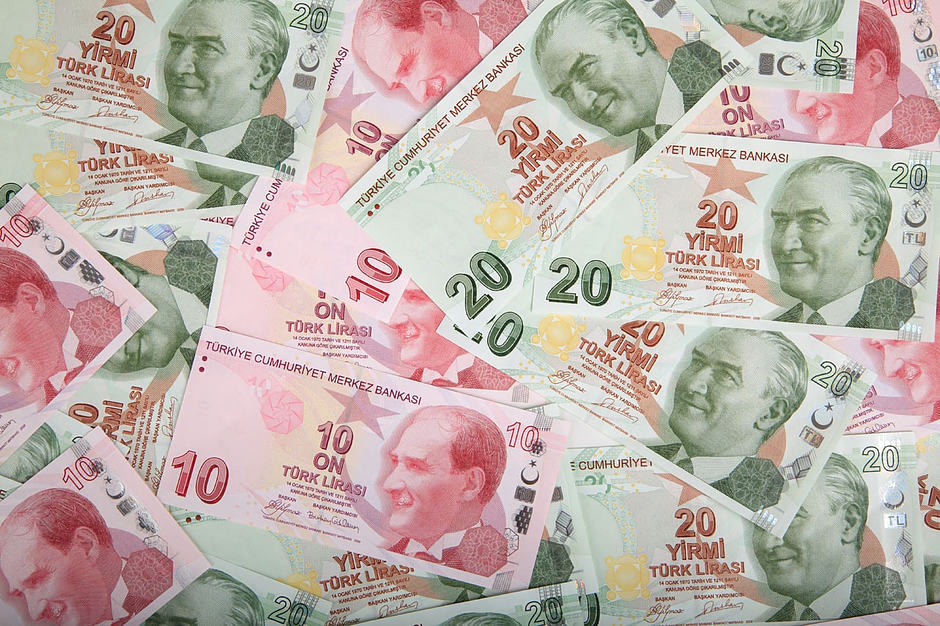

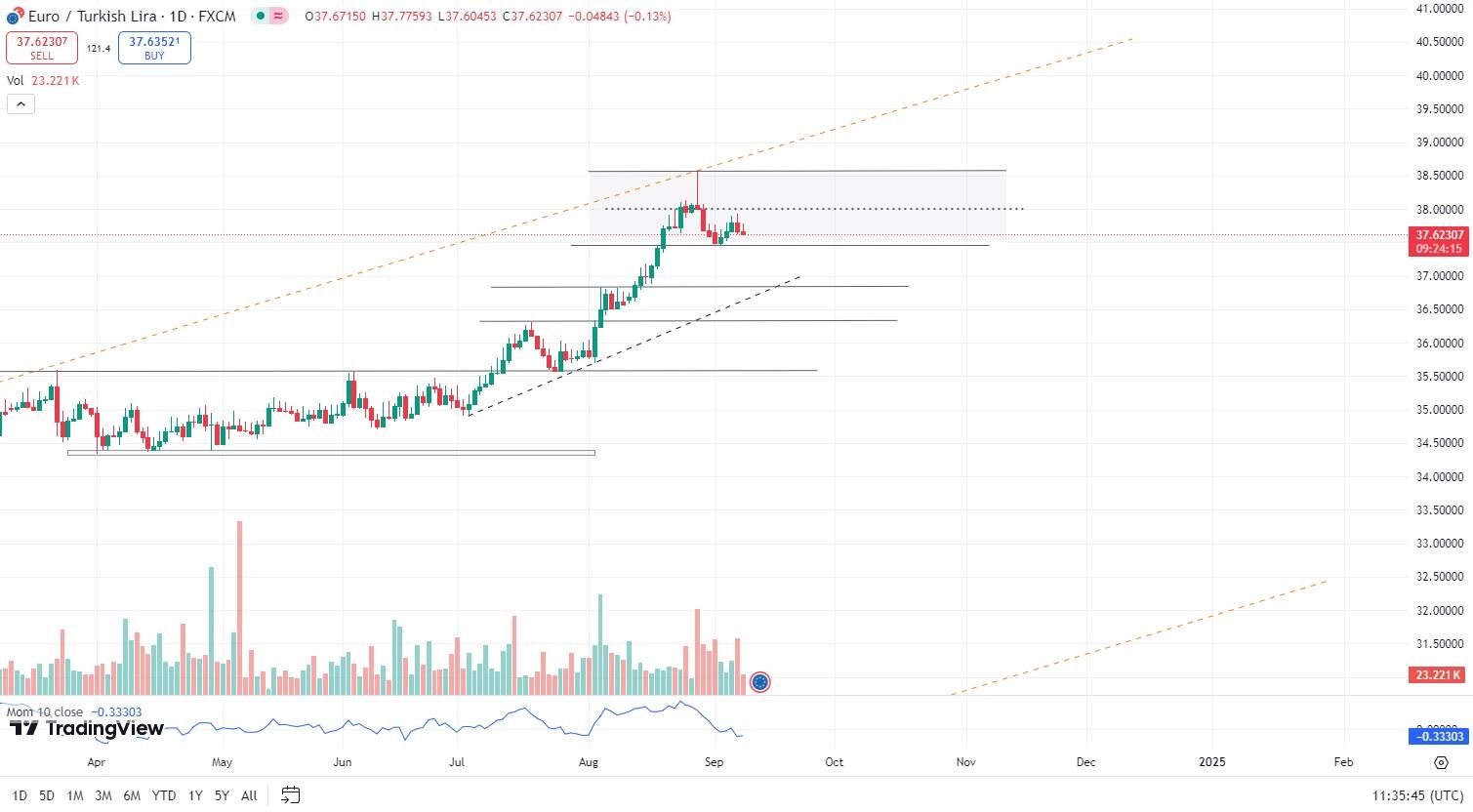
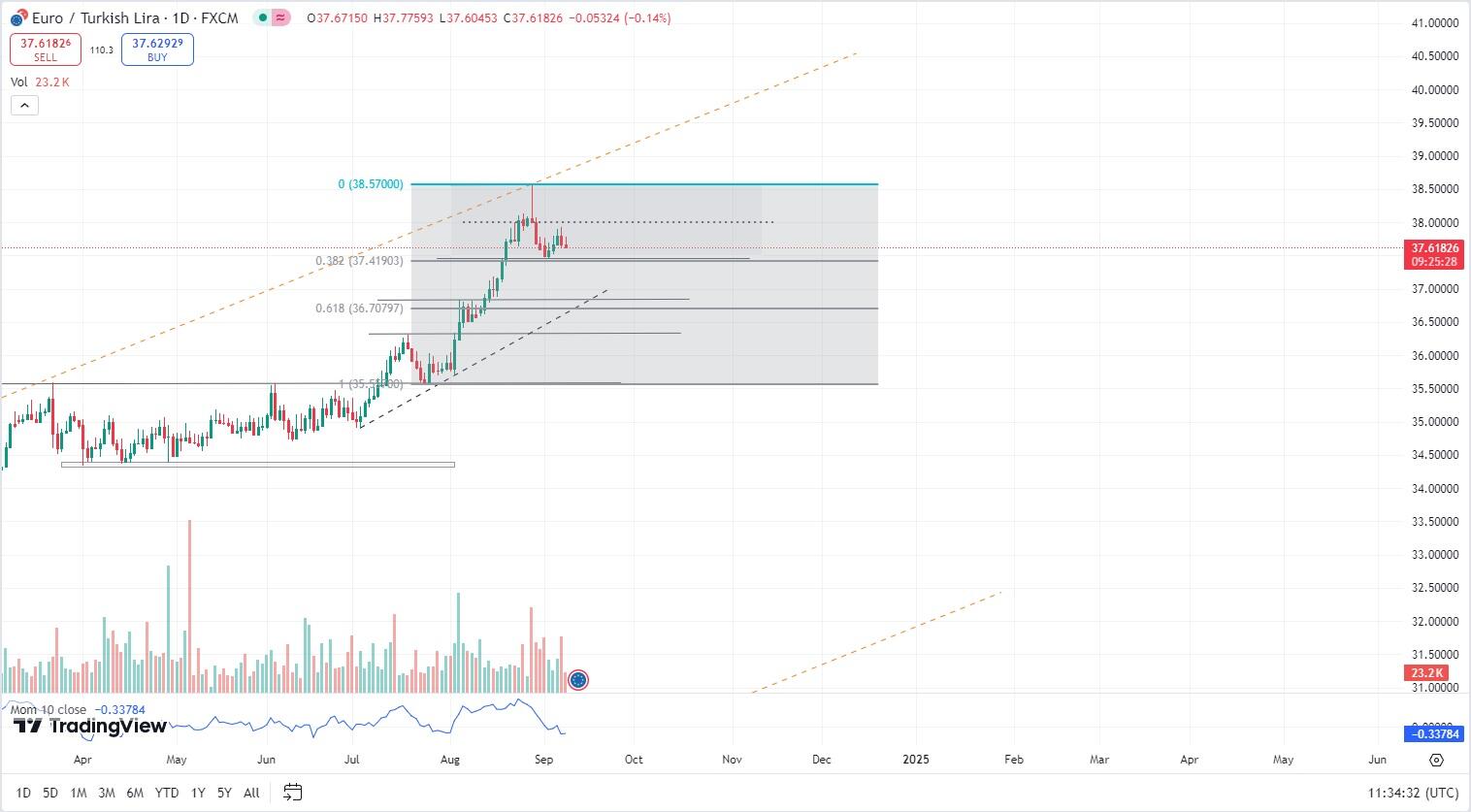
The EUR/TRY pair is trading around 37.62 (on the FXCM trading platform) at the time of writing, following a few choppy days. The pair surged strongly in August, reaching the psychological level of 38 and briefly surpassing it on August 28, when it hit a new all-time high of 38.28. Since then, a correction brought it down to 37.46 on September 3. Interestingly, this level corresponds roughly with the 38.2% Fibonacci retracement, calculated by applying the Fibonacci tool to the leg from the July 25 low to the August 28 high.
As noted in my previous articles, in the short term the psychological level of 38 is acting as a pivotal resistance, alongside the 38.36 area, which represents a double Fibonacci extension using the price levels from July 3, 18, and 24.
At present, the pair seems to have entered a trading range, with support around 37.46 and resistance near 38, with 38.57 acting as an extreme pivot level. If the pair retraces lower, the first support is around 36.80, followed by the 36.30 area.
While the trading range appears to be the most likely pattern for the EUR/TRY in the short term, a series of key data releases from the U.S. and Europe could bring volatility to the market. This week the U.S. CPI (Wednesday), the U.S. PPI, and the ECB interest rate decision (Thursday), followed by next week’s Fed rate decision and the EU HICP data release. These much-anticipated macroeconomic events are likely to impact the forex market, especially if the results deviate from expectations and, as a cross rate, the EUR/TRY pair is likely to be influenced as well.
On the fundamental side, the recent EUR/TRY price movements have largely mirrored the Euro’s performance against the USD. After a strong month in August, the Euro has seen declining momentum in early September. Several macroeconomic and financial factors have contributed to market tension. U.S. economic data releases in August raised concerns about the strength of the U.S. economy, prompting debate over potential Fed rate cuts, which weakened the USD and caused volatility in the stock market. In early August, a shift in Japanese monetary policy triggered a quick recovery in the Yen, affecting market participants involved in carry trades (where investors borrow in a low-interest-rate currency like the Yen and invest in higher-yielding assets). The unwinding of these trades has extended into the following weeks.
Amid this international market turmoil, Turkish developments have been somewhat overlooked. Recent positive data confirmed the Turkish Central Bank's commitment to reducing inflation, with the annual inflation rate slowing to 52.2% in August from 61.78% in July. The next step is to generate positive sentiment in the domestic market, where household expectations for 12-month inflation remain high, rising by 1.1% to 73.1%.
In line with this approach, the Turkish Central Bank implemented measures in August to curb demand for foreign currency by introducing policies to boost Lira deposits and tighten liquidity. According to Bloomberg, the central bank intervened directly in the forex market throughout the past month by selling foreign currencies to meet demand.
While the Central Bank has reiterated that it does not target a specific exchange rate for the Lira, maintaining a positive real interest rate on the currency is crucial in its fight against inflation. As I have emphasized before, this stance will continue to play a significant role in shaping the future course of the EUR/TRY pair in the coming months.
Author
Giuseppe Bocci, CTA
Independent Analyst
Giuseppe Bocci is an independent trader primarily active in the U.S. stock market, international bonds, commodities, and forex. He has been trading full-time for about ten years, turning a passion into a profession.

















