EU Inflation Preview: Easing price pressures will lift hopes, but can it impact the Euro?
- Euro Zone December Harmonized Index of Consumer Prices foreseen up by 9.7% YoY.
- It seems unlikely the EU HICP could affect the European Central Bank's monetary policy path.
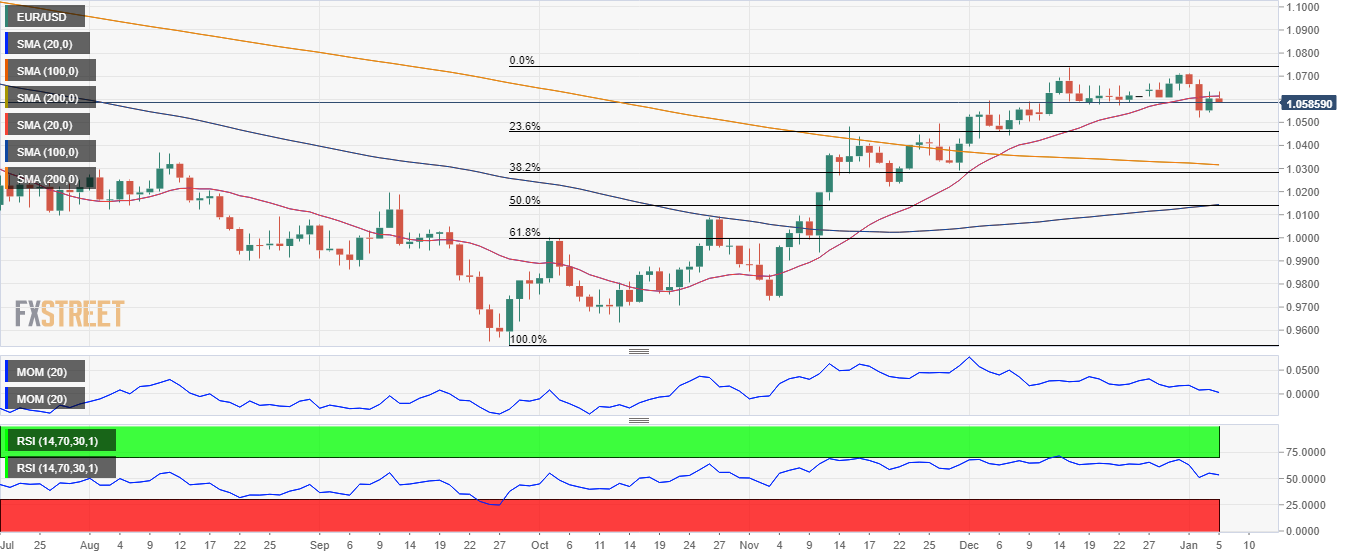
- EUR/USD consolidates near a multi-month high, with Euro bulls on pause.

The Eurostat will publish the Eurozone December Harmonized Index of Consumer Prices (HICP) on Friday, December 6 at 10 GMT. Price pressures are expected to have eased further after having risen by a record 10.6% YoY in October 2022, and to have increased at an annual pace of 9.7% in the last month of the year. The core HICP figure in the year to December, however, is foreseen stable at 5%.
Inflation in the Eurozone has been on the rise since June 2021, as the world left behind the initial stage of the Coronavirus pandemic, and the economic recovery generated global bottlenecks and supply-chain issues at the time consumption resumed. Signs of more stable market conditions emerged in mid-2022, which, coupled with aggressive monetary policies, resulted in peaking inflation among major economies in the final quarter of the year.
European macroeconomic data released ahead of the EU HICP has been quite encouraging, as the German HICP rose in December by 9.6% YoY, well below the 11.3% posted in November. France's inflation increased by 7% YoY, also easing from record highs.
Inflation and the European Central Bank
The worst of the Euro Zone inflation crisis seems to be over, but what does that mean for the European Central Bank (ECB)?
The European Central Bank joined the tightening train late and with a conservative stance, which means European interest rates have a long way to go. Indeed, price pressures eased amid improved energy prices, but food price inflation and the underlying price pressures across the economy will likely persist for some time, according to the ECB. Furthermore, inflation could be easing but remains far above the central bank’s 2% goal.
ECB President Christine Lagarde surprised with her hawkish words following the December monetary policy, noting that “of course” more rate hikes are on the docket. So, while easing inflation is an encouraging economic sign, it would have no specific effect on the upcoming ECB decisions.
EUR/USD technical outlook
The EUR/USD pair rallied between September and December to reach a multi-month high of 1.0735, losing positive momentum afterwards but mostly consolidating. The 23.6% Fibonacci retracement of such a rally provides a strong static support level at 1.0450, too far away from the current price to be relevant, but still, a level market players will be paying attention.
Meanwhile, the 61.8% Fibonacci retracement of the 2022 yearly decline comes at 1.0740, slightly above the December high and reinforcing the resistance area. As long as the major currency pair remains below the latter, the bullish trend from the last quarter of the previous year will remain on pause. However, for Euro bears to take over EUR/USD, they would need at least to pierce the 38.2% retracement of its September/December rally at 1.0275, quite an unlikely scenario.
Easing Euro Area price pressures will be welcomed but not a surprise. On the other hand, if inflation figures come in higher than anticipated, and even further, above 10%, market participants will likely rush to price in a more aggressive ECB monetary tightening, which will end up benefiting the Euro in the near term.
Premium
You have reached your limit of 3 free articles for this month.
Start your subscription and get access to all our original articles.
Author

Valeria Bednarik
FXStreet
Valeria Bednarik was born and lives in Buenos Aires, Argentina. Her passion for math and numbers pushed her into studying economics in her younger years.