ETH/USD forms bearish divergence as recovery fades

The price of crude oil retreated slightly on Thursday after the Biden administration prepared to release more reserves in a bid to lower the rising oil prices. It will release up to 1 million barrels a day from the country’s strategic petroleum reserves. Other countries like Japan and South Korea have also moved to release their reserves. In the past, such moves have barely had a long-term impact on prices considering that the bigger picture is in Russia and Saudi Arabia. Saudi, an American ally, has rejected Biden’s call for more production.
The euro declined even after the strong economic data from the Eurozone. According to Eurostat, the bloc’s unemployment rate declined to a record low in February. Precisely, there were 11.6 million unemployed people in the euro area in February. As a result, the rate declined from 6.9% to 6.8% in February. In the wider EU, the rate declined to 6.2%. Analysts expect that the tightening labor market will put pressure on wages. Meanwhile, preliminary data from France showed that the headline inflation rose from 3.6% to 4.5% in March.
The British pound was little changed after the strong UK GDP and house price index (HPI) data. According to Nationwide, the country’s home price index rose from 12.6% in February to 14.3% in March. This was the highest increase since 2004 and is a sign that the industry has no sign of slowing down. The performance is mostly because of the rising demand even as interest rates keep rising. Further data revealed that the country’s GDP rose by 1.3% on a QoQ basis and by 6.6% on a YoY basis. Economists expect that this growth will slow down dramatically because of the rising cost of living.
GBP/USD
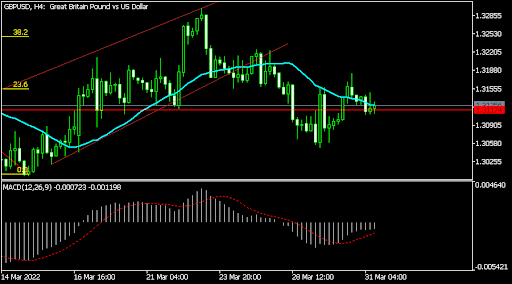
The GBPUSD remained stagnant on Thursday after the strong UK GDP data. It is trading at 1.3130, which is lower than last week’s high of 1.3298. It is trading at the same point as the 25-day moving average and slightly below the 23.6% Fibonacci retracement level. Also, the MACD has formed a bullish divergence pattern. Therefore, the pair will likely remain in this range today.
EUR/USD
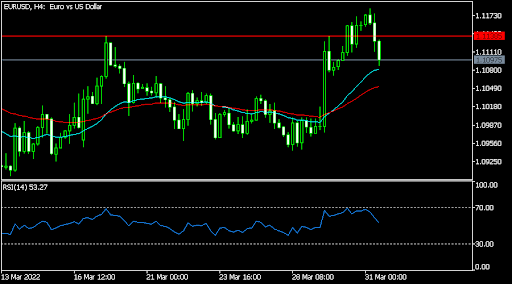
The EURUSD pair retreated even after the strong economic data from Europe. It moved to a low of 1.1093, which is lower than this week’s high of 1.1187. It has moved below the important support level at 1.1138, the highest point on March 18th. Also, it moved slightly below the 25-day moving average while the Relative Strength Index retreated. The pair will remain in this range ahead of the upcoming US jobs data.
ETH/USD
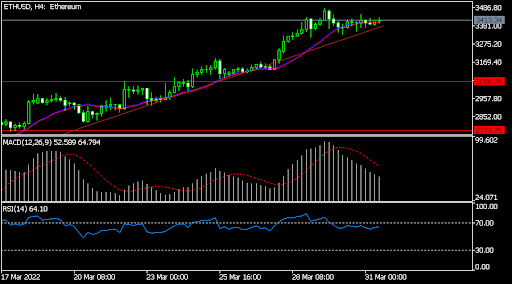
The ETHUSD pair remained unchanged as the bullish momentum ended. The pair is trading at 3,413, where it has been in the past few days. It is trading along the 25-day and 50-day moving average while the MACD and RSI have formed a bearish divergence pattern. The pair will likely drop slightly during the American session.
Author

OctaFx Analyst Team
OctaFX
OctaFX is a market-leading forex broker, providing personalised forex brokerage services to customers in over 100 countries worldwide.