Eggs save the Fed’s bacon


The US CPI release was broadly expected to return a high figure as tariffs began to bite, after all, despite Trump’s aversion to raising taxes, tariffs a form of tax on US consumers of foreign goods. Given the overall US import tally of $4.1 trillion in 2024, we may safely assume that almost all 340 million Americans are importers at some point, meaning that tariffs represent a tax in all but bluster.
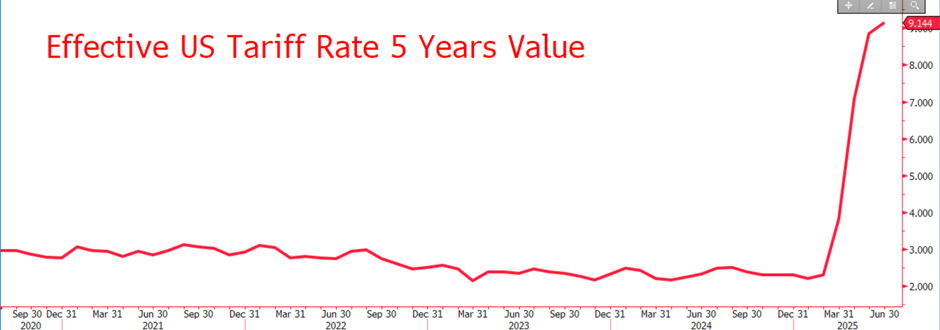
Now that the average tariff rate for imports into the United States is a full 450% higher than only 8 months ago, we might anticipate that this would be a significant prompt for US inflation.
Only, it seems so far to be dodging the CPI figure, even as we look deeper into food prices, which given the American appetite for Coffee, Whiskey and a whole host of other foreign goods, prices remain either unchanged or just a modicum higher.
Figures regarding the price of everyday essentials in the United States have long since shocked UK and European audiences. A Dollar an egg in areas of the West Coast and an average price for a pack of 12 eggs being $5 in the US already seems high, but once we throw in tariffs on Avocado producing Peru (10%), Chapagne producing France (15%) and Banna producing Laos (40%), this number seems destined to rise.
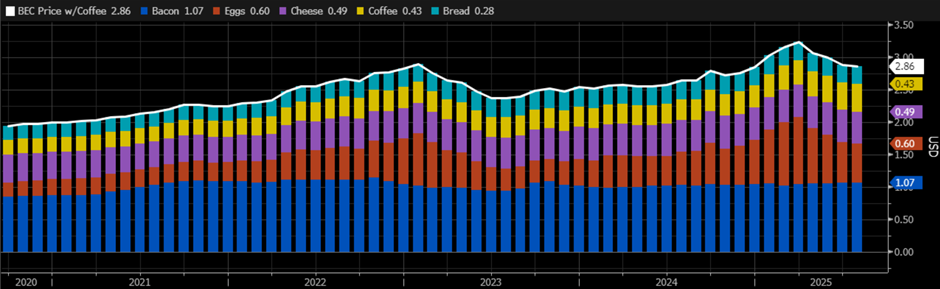
The above chart, which measures the prices of various US food staples shows that prices have in fact declined, the reasons for which remain unclear. Whether it’s US consumers preferring US goods or firms not yet passing on recent tariffs to consumers, you would think nothing had changed since January given these prices.
And that spells trouble for the Dollar, which is 2.3% down on a broad scale this month, a drop made more aggressive by Wednesday’s cooler than expected inflation. With US unemployment rising in July and inflation seemingly calm, the Fed has an ever smaller platform to promote higher rates. This is especially true given the President’s open musings of replacing Chairman Powell with a dovish stooge.
There was some speculation that USD had hit its bottom over the past 3 months or so, but given the lack of tariff impact on the CPI figure, we may estimate that no bottom has been found yet.
Author
David Stritch
Caxton
Working as an FX Analyst at London-based payments provider Caxton since 2022, David has deftly guided clients through the immediate post-Liz Truss volatility, the 2020 and 2024 US elections and innumerable other crises and events.

















