ECB Rate Decision Quick Analysis: Expanding economic support for the eurozone
- Central bank increases the Pandemic Emergency Purchase Program by €600 billion.
- Bond program proceeds to be reinvested until at least the end of 2022.
- Interest rates unchanged at 0.0%, deposit at -0.5%.
- Euro has gained 3.5% against the dollar since May 18 as panic pricing ebbs.

The European Central Bank brought its bond purchase program limit to €1.3 trillion in an effort to help member states cope with the expense of rebuilding their economies after the coronavirus pandemic.
Citing the downward pressure on inflation the bank stated, “The PEPP expansion will further ease the general monetary policy stance, supporting funding conditions in the real economy, especially for businesses and households.”
The timeframe of the PEPP purchases will last until at least the end of June 2021 or until the governors determine that the “coronavirus crisis phase is over.” The bank also committed to reinvesting the maturing principal proceeds of the PEPP program until at least the end of 2022. The main refinance rate was left unchanged at 0.0% and the deposit rate at -0.5%
Euro rises
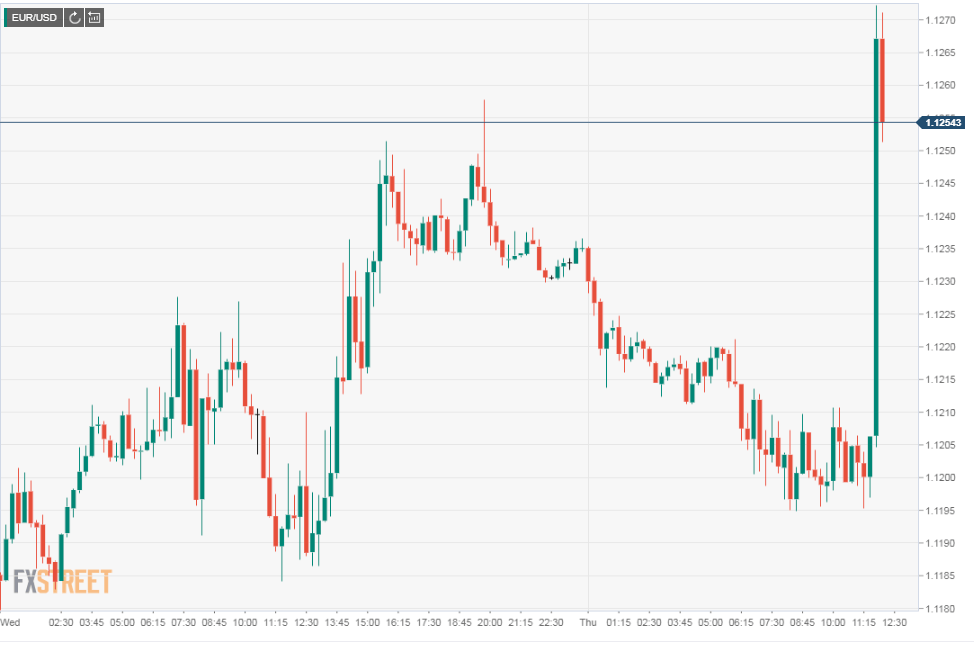
The move by the central bank had been widely expected and largely priced into the euro. The united currency which has added 3.5% against the dollar in the last three weeks rose about 65 points to 1.1272 in response to the announcement.
ECB President Christine Lagarde has repeatedly asked European governments to provide more fiscal support to the bloc’s faltering economy. The recent announcement of a €750 billion recovery plan is expected to complement the bank PEPP efforts.
The ECB program is designed to assist government restrain their borrowing costs by using its leverage to buy bonds and curb the interest rate demanded by the credit market. It does not lend directly to countries and firms.
The EU program administered by the EU Commission will distribute two-thirds of the monies in grants, as per the demand of France and Germany, and the balance in loans.
The debt to GDP ratio across the eurozone is expected to be over 100% by the end of this year, with the top five nations in descending order Greece, Italy, Portugal, France and Spain.
The ECB has said that it anticipates an increase of national debt by €1.0 trillion to €1.5 trillion this year and an average budget deficit of 8%. The EU will also borrow €750 billion with its new recovery fund.
Author

Joseph Trevisani
FXStreet
Joseph Trevisani began his thirty-year career in the financial markets at Credit Suisse in New York and Singapore where he worked for 12 years as an interbank currency trader and trading desk manager.