|

Durable goods orders stabilize in August

Summary

Durable goods orders declined for the second consecutive month in August, but in stripping away volatile factors, the underlying details of the report point to some stabilization in core orders. While the August durable goods report suggests new demand is not yet falling off a cliff, the broader manufacturing sector is still facing tough conditions.
fxsoriginal

Some sign of strength in August orders

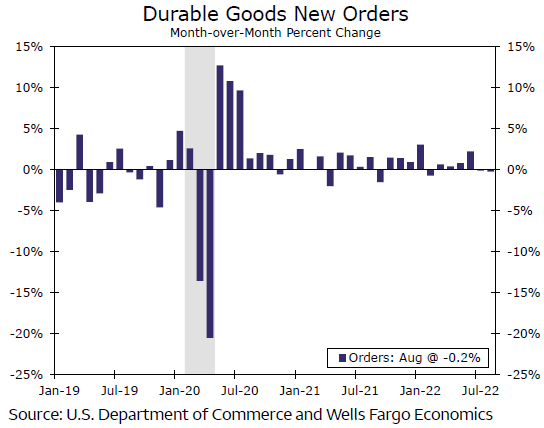
New orders for durable goods came in slightly better than expected in August slipping just 0.2% during the month (chart). While the manufacturing sector still looks to be losing momentum, activity is not falling off a cliff. Digging into the details of the report shows a rebound in defense aircraft orders specifically helped prevent a steeper decline in orders last month (orders ex-defense declined 0.9%). That, however, was partially offset by a pullback in nondefense aircraft orders, consistent with previously published data from Boeing that revealed a sizable pullback in monthly orders for aircraft last month. Cutting through the noise, underlying core capital goods orders, which strips defense and aircraft rose 1.3%, or at the fastest pace in eight months.
fxsoriginal

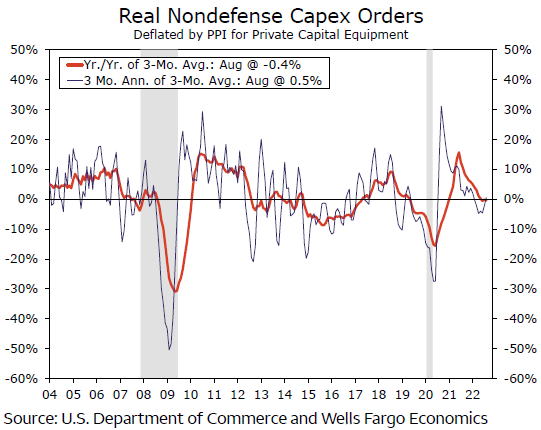
Even after considering inflation, the orders data were relatively solid in August. Core capital goods orders adjusted by the Producer Price Index (PPI) for private capital equipment rose 0.5% over the past three months at an average annualized rate, marking a breakaway from recent weakness (chart). Core capital goods orders were relatively broad based, with just orders for fabricated metal products declining 0.7% last month. The 3.1% gain in communications equipment was particularly impressive after the 4.6% increase a month earlier, and electrical equipment & appliances also rose a solid 1.0% in August. While the underlying orders details were favorable, the manufacturing sector remains under pressure.

Download The Full Economic Indicator

Author

More from Wells Fargo Research Team
Share:

Editor's Picks

EUR/USD hits two-day highs near 1.1820

EUR/USD picks up pace and reaches two-day tops around 1.1820 at the end of the week. The pair’s move higher comes on the back of renewed weakness in the US Dollar amid growing talk that the Fed could deliver an interest rate cut as early as March. On the docket, the flash US Consumer Sentiment improves to 57.3 in February.

GBP/USD reclaims 1.3600 and above

GBP/USD reverses two straight days of losses, surpassing the key 1.3600 yardstick on Friday. Cable’s rebound comes as the Greenback slips away from two-week highs in response to some profit-taking mood and speculation of Fed rate cuts. In addition, hawkish comments from the BoE’s Pill are also collaborating with the quid’s improvement.

Gold climbs further, focus is back to 45,000

Gold regains upside traction and surpasses the $4,900 mark per troy ounce at the end of the week, shifting its attention to the critical $5,000 region. The move reflects a shift in risk sentiment, driving flows back towards traditional safe haven assets and supporting the yellow metal.

Crypto Today: Bitcoin, Ethereum, XRP rebound amid risk-off, $2.6 billion liquidation wave

Bitcoin edges up above $65,000 at the time of writing on Friday, as dust from the recent macro-triggered sell-off settles. The leading altcoin, Ethereum, hovers above $1,900, but resistance at $2,000 caps the upside. Meanwhile, Ripple has recorded the largest intraday jump among the three assets, up over 10% to $1.35.

Three scenarios for Japanese Yen ahead of snap election

The latest polls point to a dominant win for the ruling bloc at the upcoming Japanese snap election. The larger Sanae Takaichi’s mandate, the more investors fear faster implementation of tax cuts and spending plans. 

XRP rally extends as modest ETF inflows support recovery

Ripple is accelerating its recovery, trading above $1.36 at the time of writing on Friday, as investors adjust their positions following a turbulent week in the broader crypto market. The remittance token is up over 21% from its intraday low of $1.12.















