Draghi passes the torch on to fiscal policy
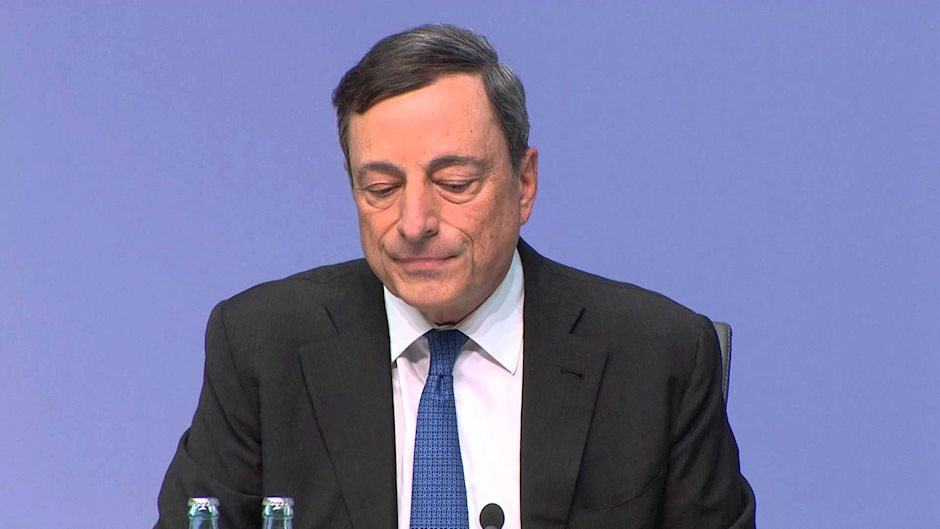

ECB President Draghi threated markets with an early goodbye present. The central bank cut the deposit rate by 10 bps to -0.50%, introduced a tieredsystem to mitigate some of the negative side-effects for the financial sector, extended its forward guidance which now is data instead of time dependent, raised the attractiveness of TLTRO's and restarted its Asset Purchase Program (€20bn/month). The magnitude of the package slightly exceeded expectations, explaining the initial decline in bond yields. However, ECB President Draghi stressed that it's time to pass the torch on to fiscal policy to revive EMU growth (and as a consequence inflation). We interpret it as a strong hint that the ECB might be out of ammunition and that we're on the eve of a regime change under next president Lagarde. The market reaction following the Q&A session was a textbook case of investors interpreting the current rate cut as the final one in the cycle. The German yield curve bear flattened with yields rising by 11.8 bps (2-yr) to 1.5 bps (30-yr). Peripheral yield spreads vs Germany narrowed by 8 bps (Portugal/Spain) to 15 bps (Italy) on Draghi's open-ended promise to continue buying bonds. US yields added 3.2 bps (10-yr) to 4.5 bps (2- yr). The US Treasury's $30-yr Bond auction was soft with a 1.6 bps tail and a slightly below average bid cover.
Positive risk sentiment on Asian stock markets remains in place as the US and China prepare for trade talks. Sources suggest that US officials have discussed offering an interim trade deal to China to delay tariffs. Main indices gain up to 1%. The Bund and US Note future trade near yesterday's closing levels.
Today's eco calendar contains US retail sales (August) and University of Michigan consumer confidence (September). Both indicators have market moving potential as they offer insight on developments in the stronghold of US growth: consumption. Hints of weakness might be taken as a sign that weakness in the globally oriented production sector infected the domestic services sector. We see downside risks for US retail sales, suggesting a better bid for US Treasuries in this week's final trading session. US investors eye next week's FOMC meeting as well. German Bunds can further underperform US Treasuries.
Technically, the German 10-yr yield and US 10-yr yield both broke first minor support levels, respectively at -0.61% and 1.6%, calling of the downside alert. Our interpretation of yesterday's ECB meeting (see above) suggest more room for profit taking on Bund positions. The next resistance for the German 10-yr yield stands at -0.40%. Next resistance for the US 10-yr yield is 1.94%.
Author
KBC Market Research Desk
KBC Bank

















