|

December CPI: No coal in the stocking

Summary

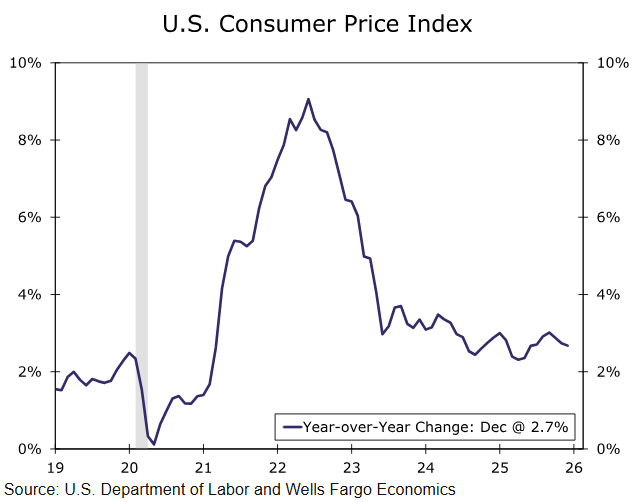
The CPI report covering the final month of 2025 generally was encouraging. Core CPI in December rose 12 bps less than our forecast, largely on the back of a smaller-than-expected bounce back in core goods inflation after November's unusually soft, shutdown-delayed report. On a year-over-year basis, the core CPI held steady at 2.6%, an improvement from the 3.1% reading in August and the 3.2% pace seen in December 2024. A quirk related to shelter inflation is depressing the year-over-year CPI readings by a tenth or so. Furthermore, we are not out of the woods yet on the tariff front, as Q1 seasonality related to companies updating their prices at the start of the year is an important hurdle yet to be cleared.

That said, there is still plenty of signal in today's report, and it strengthens our conviction that inflation will show continued progress toward returning to 2% in 2026. With the labor market still showing signs of flagging, we continue to think the FOMC will continue to gradually move the federal funds rate toward neutral in the coming months.

Encouraging CPI report to finish 2025

Consumer price inflation came in a bit slower than expected to finish 2025. Headline CPI rose 0.31% over the month, while core CPI was a cooler 0.24%. Food inflation came in hot in December, rising 0.7%, while energy inflation was a tamer 0.3%. Despite monthly fluctuations, inflation for food and energy commodities (e.g., gasoline) remains relatively modest. Over the past year, food inflation stands at 3.1%, while energy commodity prices are down 3.0%. One exception is energy services inflation where electricity prices (+6.7% year-over-year) and piped gas prices (+10.8% year-over-year) have grown much faster, a trend likely to continue amid the ongoing AI buildout (chart).
Chart

Download The Full Economic Indicator

Author

More from Wells Fargo Research Team
Share:

Editor's Picks

EUR/USD: US Dollar to remain pressured until uncertainty fog dissipates

Unimpressive European Central Bank left monetary policy unchanged for the fifth consecutive meeting. The United States first-tier employment and inflation data is scheduled for the second week of February. EUR/USD battles to remain afloat above 1.1800, sellers moving to the sidelines.

GBP/USD reclaims 1.3600 and above

GBP/USD reverses two straight days of losses, surpassing the key 1.3600 yardstick on Friday. Cable’s rebound comes as the Greenback slips away from two-week highs in response to some profit-taking mood and speculation of Fed rate cuts. In addition, hawkish comments from the BoE’s Pill are also collaborating with the quid’s improvement.

Gold: Volatility persists in commodity space

After losing more than 8% to end the previous week, Gold remained under heavy selling pressure on Monday and dropped toward $4,400. Although XAU/USD staged a decisive rebound afterward, it failed to stabilize above $5,000. The US economic calendar will feature Nonfarm Payrolls and Consumer Price Index data for January, which could influence the market pricing of the Federal Reserve’s policy outlook and impact Gold’s performance.

Week ahead: US NFP and CPI data to shake Fed cut bets, Japan election looms

US NFP and CPI data awaited after Warsh’s nomination as Fed chief. Yen traders lock gaze on Sunday’s snap election. UK and Eurozone Q4 GDP data also on the agenda. China CPI and PPI could reveal more weakness in domestic demand.

Three scenarios for Japanese Yen ahead of snap election

The latest polls point to a dominant win for the ruling bloc at the upcoming Japanese snap election. The larger Sanae Takaichi’s mandate, the more investors fear faster implementation of tax cuts and spending plans. 

XRP rally extends as modest ETF inflows support recovery

Ripple is accelerating its recovery, trading above $1.36 at the time of writing on Friday, as investors adjust their positions following a turbulent week in the broader crypto market. The remittance token is up over 21% from its intraday low of $1.12.