|

DAX recovers as U.S. eases restrictions on Huawei

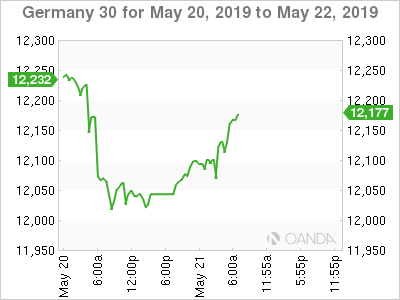
The volatility continues for the DAX index this week. Currently, the index is at 12,176, up 1.1% on the day, after falling 1.6% on Monday. For a second successive day, there are no major German or European events on the schedule. The eurozone releases consumer confidence, which is expected to remain in negative territory, with a forecast of -8.

The DAX had a dismal start to the week, but has rebounded on Tuesday, as the U.S. lowered tensions over the Huawei crisis. The Trump administration had announced it was imposing trade sanctions on the Chinese telecom giant, a move which sent stock markets reeling on Monday. However, the U.S. Commerce Department has taken a step back, saying that it will provide 3-month exemptions to U.S. companies that sell to Huawei. The tussle over Huawei has exacerbated the trade war between the two economic giants, and risk appetite will remain soft until the sides resume negotiations.

Voters in all 28 members of the European Union will head to the polls for a 4-day election, beginning on Thursday, to elect members to the European Parliament. Election turnout has been on the decline, with only 43% of eligible voters casting a vote in 2014. Key issues included the economic slowdown, the migrant crisis and the rise in Euroskpeticism. Euro-skeptics increased their representation in parliament from 12% to 25% in the last election, and with the dramatic increase in strength of populist parties, this trend could well continue. A strong showing by parties with an anti-EU agenda could weaken the euro. As well, the outcome of the vote could have an impact on the choice of the new head of the ECB, as Mario Draghi steps down in October, after an eight-year term.
DE30

Author

Kenny Fisher

Kenny Fisher

MarketPulse

A highly experienced financial market analyst with a focus on fundamental analysis, Kenneth Fisher’s daily commentary covers a broad range of markets including forex, equities and commodities.


More from Kenny Fisher
Share:

Editor's Picks

EUR/USD weakens to near 1.1900 as traders eye US data

EUR/USD eases to near 1.1900 in Tuesday's European trading hours, snapping the two-day winning streak. Markets turn cautious, lifting the haven demand for the US Dollar ahead of the release of key US economic data, including Retail Sales and ADP Employment Change 4-week average.

GBP/USD stays in the red below 1.3700 on renewed USD demand

GBP/USD trades on a weaker note below 1.3700 in the European session on Tuesday. The pair faces challenges due to renewed US Dollar demand, UK political risks and rising expectations of a March Bank of England rate cut. The immediate focus is now on the US Retail Sales data. 

Gold sticks to modest losses above $5,000 ahead of US data

Gold sticks to modest intraday losses through the first half of the European session, though it holds comfortably above the $5,000 psychological mark and the daily swing low. The outcome of Japan's snap election on Sunday removes political uncertainty, which along with signs of easing tensions in the Middle East, remains supportive of the upbeat market mood. This turns out to be a key factor exerting downward pressure on the safe-haven precious metal.

Bitcoin Cash trades lower, risks dead-cat bounce amid bearish signals

Bitcoin Cash trades in the red below $522 at the time of writing on Tuesday, after multiple rejections at key resistance. BCH’s derivatives and on-chain indicators point to growing bearish sentiment and raise the risk of a dead-cat bounce toward lower support levels.

Follow the money, what USD/JPY in Tokyo is really telling you

Over the past two Tokyo sessions, this has not been a rate story. Not even close. Interest rate differentials have been spectators, not drivers. What has moved USD/JPY in local hours has been flow and flow alone.

Bitcoin Cash trades lower, risks dead-cat bounce amid bearish signals

Bitcoin Cash (BCH) trades in the red below $522 at the time of writing on Tuesday, after multiple rejections at key resistance. BCH’s derivatives and on-chain indicators point to growing bearish sentiment and raise the risk of a dead-cat bounce toward lower support levels.