CryptoEconomics Redux: What’s up with Ripple?


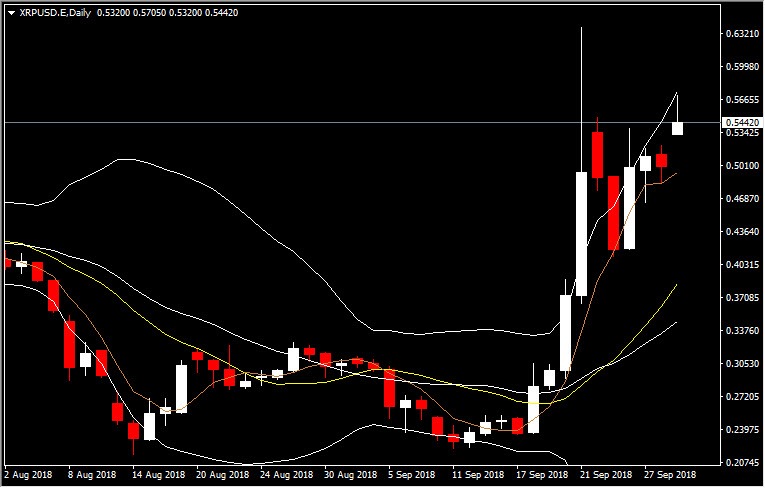
Ripple (XPR) appears to be the first coin to have escaped the close relationship with Bitcoin. While the crypto leader continues its slow descending trend, Ripple has jumped by more than 130% in the past weeks, from the lows of $0.23 to $0.54. As traders well know, such surges in price are almost always the outcome of important news hitting the market.
In this case, the piece of news that made the price jump was that a division of PNC Financial Services Group Inc announced that it intends to use technology built by Ripple to process international payments. In more detail, PNC Treasury Management will use xCurrent, a system developed by Ripple, to speed up the way its US business clients get paid invoices by overseas buyers. PNC is, at the moment, the 9th largest bank in the US. This information comes at a time when banks have been increasing their investments in ledger technology (blockchain), however with few blockchain systems developed so far. This is not the first bank to invest in Ripple or the xCurrent, as the same technology was used to build Banco Santander’s international money transfer service, which was launched in April.
The move was most likely perceived by the market as a sign that blockchain technologies have entered mainstream business and this could probably increase in the future. The benefit of Ripple’s centralised system over the decentralization most blockchain protocols require, has made the company’s product more suitable for applications within the banking system, as banks do not appear willing to use decentralized blockchain protocols at the moment, given several privacy issues.
Last week, when I discussed the economics of cryptocurrencies, I noted that Ripple, with its centralized protocol, would be better suited for transactions. The benefits of adopting a blockchain-like technology which would allow for faster international transactions are evident in the huge reduction in the time it takes to process them. While blockchain technology and its spin-offs are heralded for wider use in the banking sector, the issue is that none of the banks is actually using XPR or any other cryptocurrency. Hence, while Ripple reacts to news regarding the company’s future, it is still uncertain as to how the currency will be used in the future and how much it will fluctuate following any developments in the market. At the moment though, it appears that it is the only one which has managed to liberate itself from Bitcoin’s influence, allowing it to fluctuate along its own developments.
Author
With more than 4 years of experience at the Central Bank of Cyprus where he obtained hands-on experience with real-life economics, Dr Nektarios Michail is a supporter of a balanced approach between science and art when it comes to