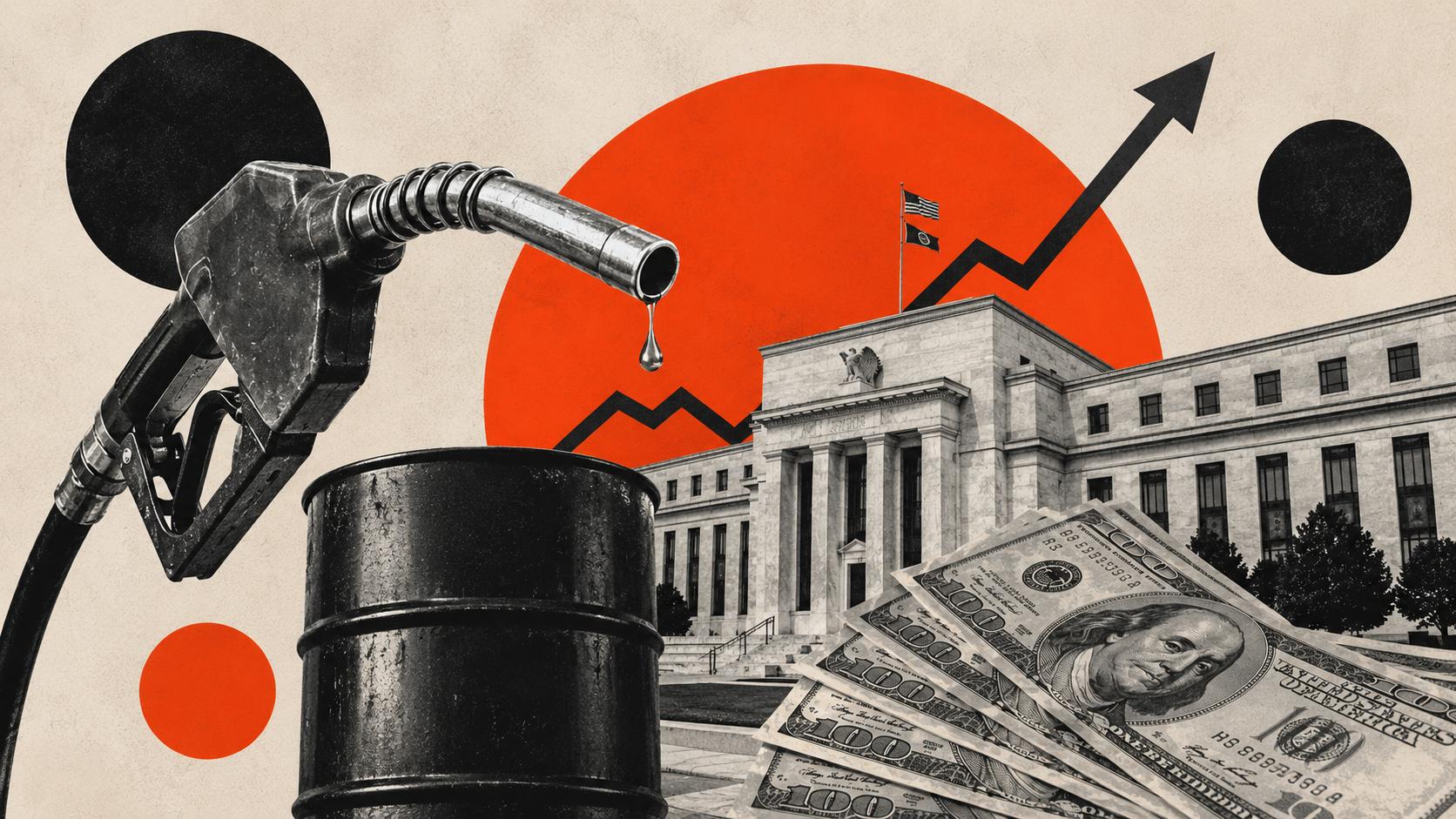
Could July be the month the FOMC cuts rates?

There is some momentum gaining for a July rate cut if trends persist.
This week, markets will be tuned in to what Federal Reserve Board Chairman Jerome Powell has to say about interest rates when he testifies before Congress on Tuesday and Wednesday.
But another influential member of the Federal Reserve’s Federal Open Market Committee (FOMC) made news on Monday with remarks about the potential for rate cuts at the FOMC’s next meeting on July 29-30.
Speaking at a conference in Prague, FOMC member Michelle Bowman, the newly appointed vice chair for supervision at the Fed, said she would be in favor of a July rate cut, if conditions warrant it.
It was more than vague Fed-speak, as Bowman actually laid out the scenario in which she would vote to lower rates.
The markets reacted positively, as her comments lifted stocks, which had been down most of the day due to global tensions between the U.S. and Iran and other factors.
The CME FedWatch poll, which tracks the views of interest rate traders on rates, shifted a bit on Monday. Now, about 77.3% expect the FOMC to hold rates at 4.25% to 4.50% in July, down from 85.3% one week ago. The other 22.7% believe the FOMC will lower rates by 25 basis points in July.
Further, 65.3% expect a rate cut in September, up from 56.0% last week, while 17.8% anticipate a 50-point reduction in September, up from 8.6% one week ago.
So, what did Bowman say?
In her speech, titled “Unintended Policy Shifts and Unexpected Consequences,” Bowman took a few minutes to address the current state of monetary policy.
“As we think about the path forward, it is time to consider adjusting the policy rate,” Bowman said. “As inflation has declined or come in below expectations over the past few months, we should recognize that inflation appears to be on a sustained path toward 2 percent and that there will likely be only minimal impacts on overall core PCE inflation from changes to trade policy. We should also recognize that downside risks to our employment mandate could soon become more salient, given recent softness in spending and signs of fragility in the labor market.”
If inflation continues to “evolve favorably” with upward price pressures limited to goods, and there are signs of softer spending creating weaker labor market conditions, Bowman said these developments should be addressed at the next meeting.
“Should inflation pressures remain contained, I would support lowering the policy rate as soon as our next meeting in order to bring it closer to its neutral setting and to sustain a healthy labor market. In the meantime, I will continue to carefully monitor economic conditions as the Administration’s policies, the economy, and financial markets continue to evolve,” Bowman said.
Bowman is not alone in that assessment, as FOMC member Christoper Waller expressed similar sentiments in an interview with CNBC last Friday.
“I think we’re in the position that we could do this as early as July,” Waller said on CNBC last Friday. “That would be my view, whether the committee would go along with it or not.”
A key piece of economic data will be delivered Friday when the May personal consumption expenditures (PCE) report is posted. The PCE report is the Fed’s preferred gauge of inflation. Then, the June unemployment report will be issued next Thursday, July 3. Those two reports could provide some answers for Bowman, Waller, and the FOMC.
Author

Jacob Wolinsky
ValueWalk
Jacob Wolinsky is the founder of ValueWalk, a popular investment site. Prior to founding ValueWalk, Jacob worked as an equity analyst for value research firm and as a freelance writer. He lives in Passaic New Jersey with his wife and four children.