Control group retail sales posts solid April gain


Summary
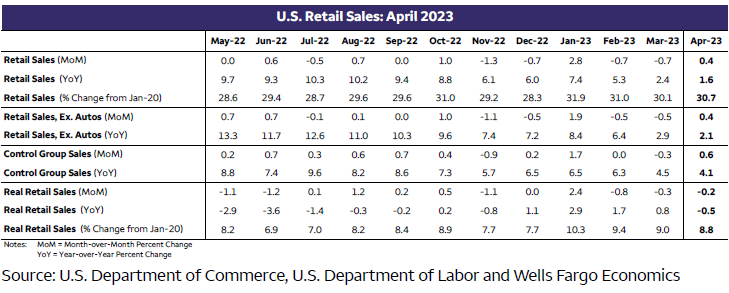
April retail sales saw control group sales post the second largest gain of the past seven months. Yet a number of categories point to consumers running out of momentum, and an expected surge in autos did not happen. Real retail sales were actually down in five of the past six months.
Auto dealers finally have inventory, if only people were buying
If consumers continue to be price takers, what incentive do firms have to lower prices? That is a question Fed policymakers might reasonably be asking after today's April retail report, which shows consumers continue to spend. Retail sales rose 0.4% in April, which came on the back of upward revisions to the previous month. But details were a bit mixed under the hood, with only seven of 13 retailers reporting a rise in sales last month. A weaker-than-expected print in auto sales can explain some of the miss.
Coming into today's report, we already knew that wholesale auto sales rose in April to the highest annualized rate since before supply shocks led to mostly empty dealer lots in the summer of 2021. Most economists, ourselves included, expected a boost from autos. That was evident in the fact that consensus expectations for the headline were +0.8%, double the 0.4% expected increase for the ex-autos number. In the actual event, autos posted a mild 0.4% gain in April, not even enough to make up for last month's 0.5% decline. Auto dealers finally have vehicles to sell, but would-be buyers are no longer flush with cash like they were in 2021–the last time wholesale auto sales were this strong.
Sales at gas stations were down in April, part of a mostly price-driven decline that has resulted in lower receipts at gas stations for five straight months. The upshot is that excluding autos and gas, retail sales posted a +0.6% increase in April, the best outturn since January. In fact, control group sales, which excludes volatile categories like autos, gasoline, building materials and food services, rose 0.7% in April, marking the second largest gain in seven months. This measure feeds directly into the BEA's calculation of PCE in the GDP accounts and suggests consumer spending has started the quarter on the right foot.
That is not to say that consumers are back to their old habits. In fact, it is evident that some high-flying categories where people splurged in the early pandemic years are under pressure now (chart). Sporting goods stores, department stores, as well as furniture and home furnishings outlets topped the list of store types that saw consumers dial back spending in April.
Author
Wells Fargo Research Team
Wells Fargo

















