Construction spending slides in March


Residential and nonresidential construction edge lower
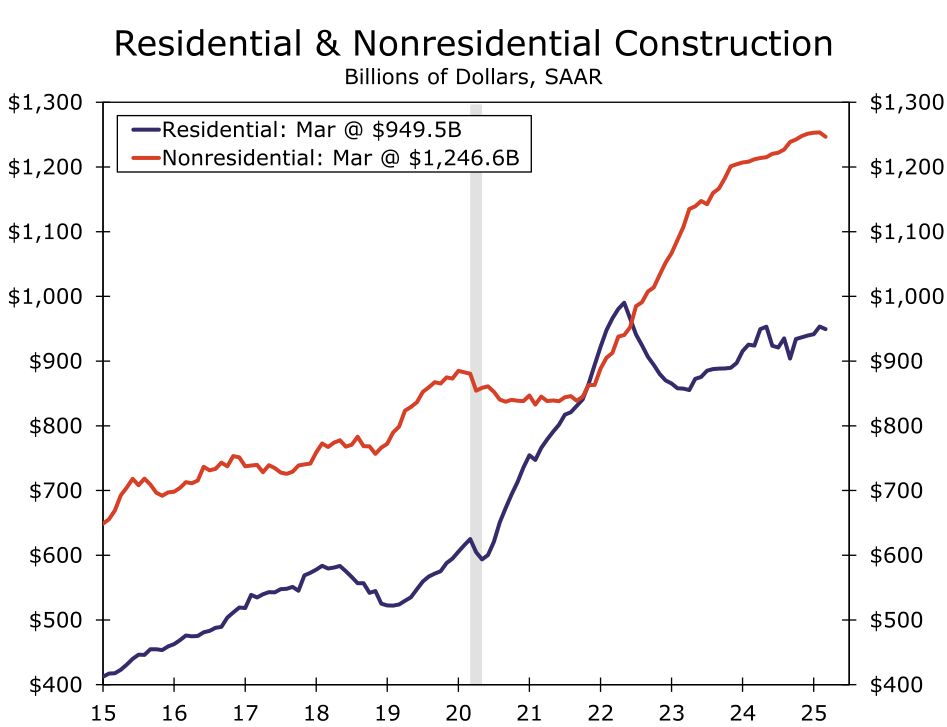
Overall construction spending dipped 0.5% in March, a weaker-than-expected outturn propelled by declines in both residential and nonresidential spending. Residential construction spending registered its first slip in six months, largely driven by a drop in home improvement outlays. Single-family outlays also showed signs of waning momentum, posting a modest 0.1% upturn. Meanwhile, nonresidential construction spending worsened across both public and private projects as high interest rates and heightened economic uncertainty suppressed new building. If a silver lining can be gleaned, it is that multifamily construction appears to be stabilizing following a year-long downdraft, reflecting persistent affordability challenges facing single-family homebuyers.
Tariff-driven increases in materials prices and broader macroeconomic headwinds stand to constrain overall construction spending in the year ahead. Single-family housing starts contracted 14.2% in March as builders surveyed by the NAHB revealed that tariffs are likely to raise construction costs by $10.9K per single-family home. Ongoing softness in architecture billings, compounded by a stark decline in new project inquiries, also point to a weaker pace of nonresidential construction moving forward.
Residential construction starts to soften
Residential construction outlays softened for the first time in six months, declining 0.4% in March.
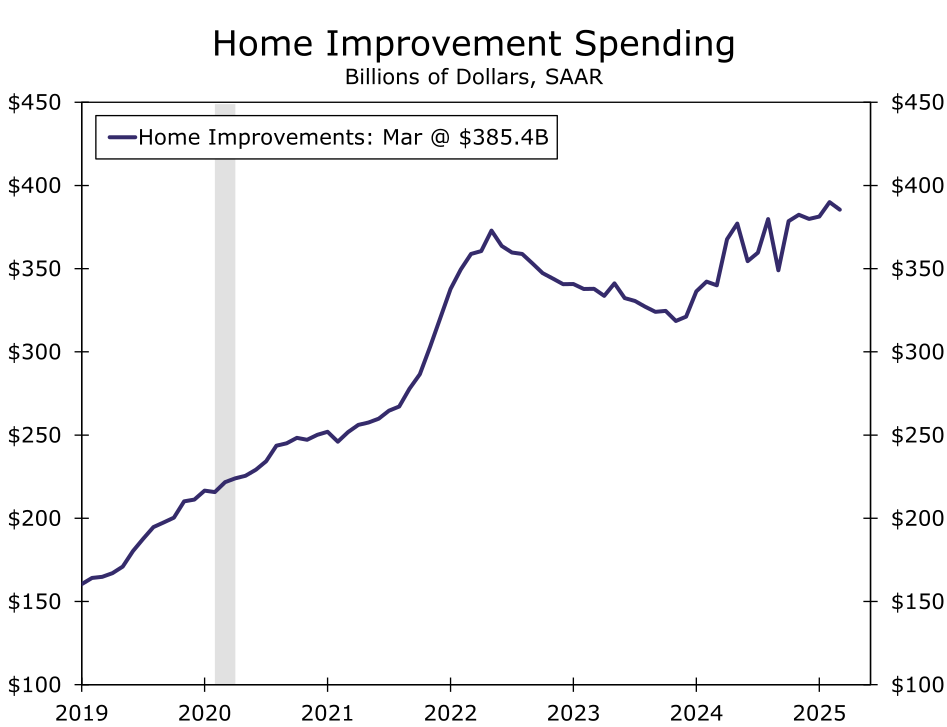
The deterioration in residential construction was mostly owed to a 1.2% drop in private home improvement outlays. Yet, March's downturn followed a jump in February, keeping the pace of home improvement spending elevated 13.3% above its year-ago level.
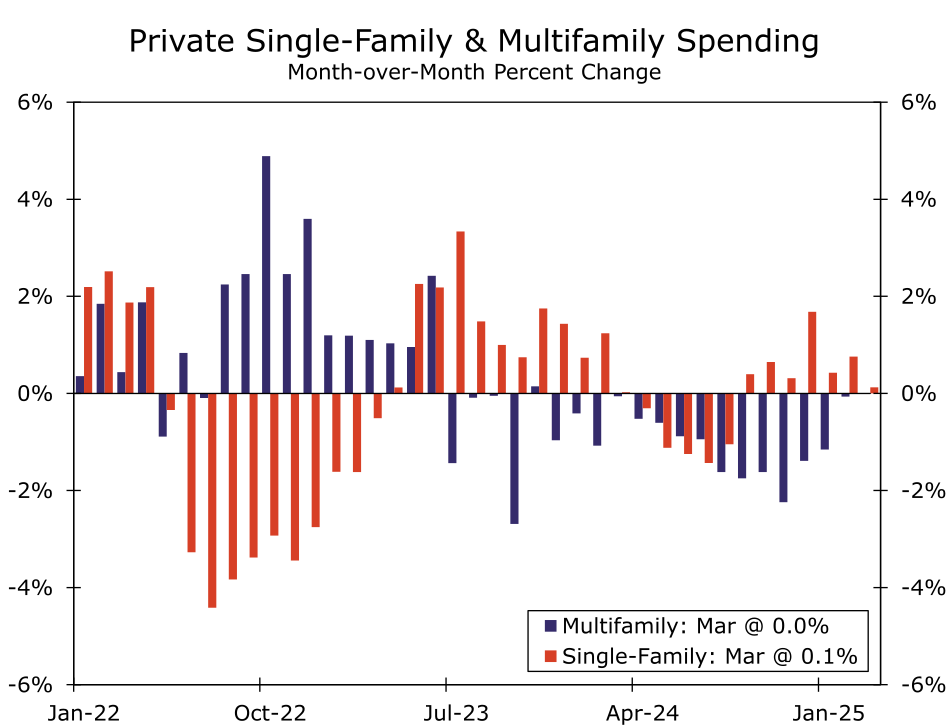
The momentum behind single-family construction appears to be waning. Although single-family construction posted a 0.1% improvement in March, this marked the weakest monthly gain in seven months. Looking ahead, higher materials costs and broader macroeconomic headwinds will likely weigh on single-family construction.
Multifamily construction spending, alternatively, may have found a floor. Apartment construction outlays were unchanged in March following 15 back-to-back declines. Robust apartment demand and easing supply pressures have lifted multifamily starts in recent months, paving the way for an improvement in apartment construction this year.
Nonresidential outlays weaken
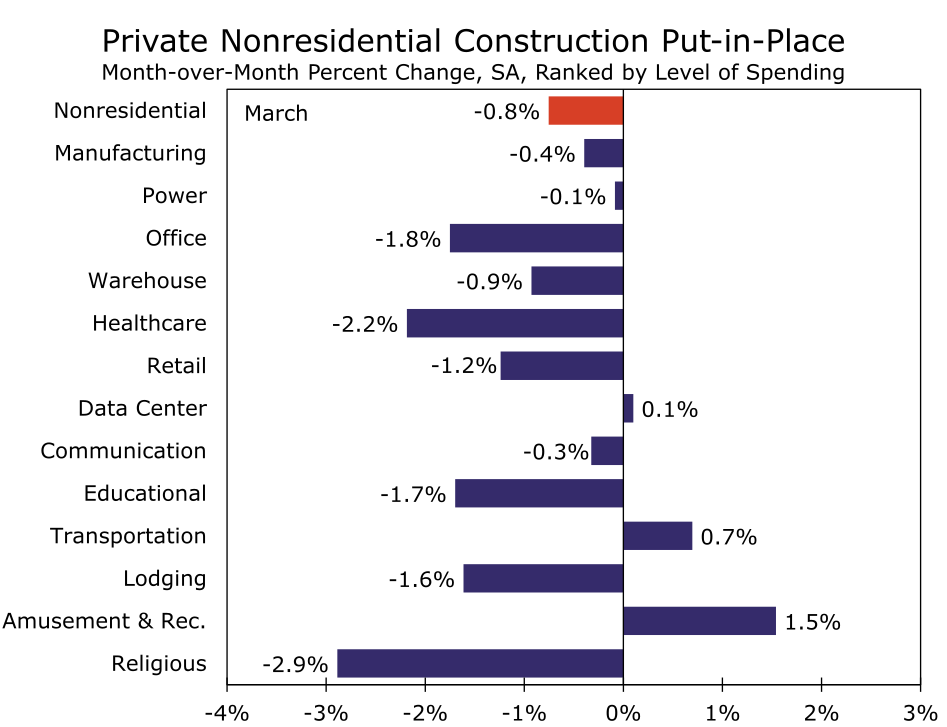
Nonresidential construction outlays buckled 0.5% in March, weakening to their softest pace since October 2024. Declines were observed across public (-0.2%) and private (-0.8%) nonresidential projects.
Nearly every category of private nonresidential construction softened over the month. Outlays slipped across office, health care, commercial and manufacturing projects, a product of the lagged effects of monetary tightening exerting downward pressure on new project starts.
Some nonresidential categories bucked the trend, including amusement & recreation and transportation projects.
Spending on data centers also improved, however only modestly at 0.1%. Despite the weaker monthly print, data center construction outlays are still up 33% over the year.
Public construction spending was weak on balance. Lower outlays dedicated to education, power and highway & street projects offset gains in transportation, office and water supply construction.
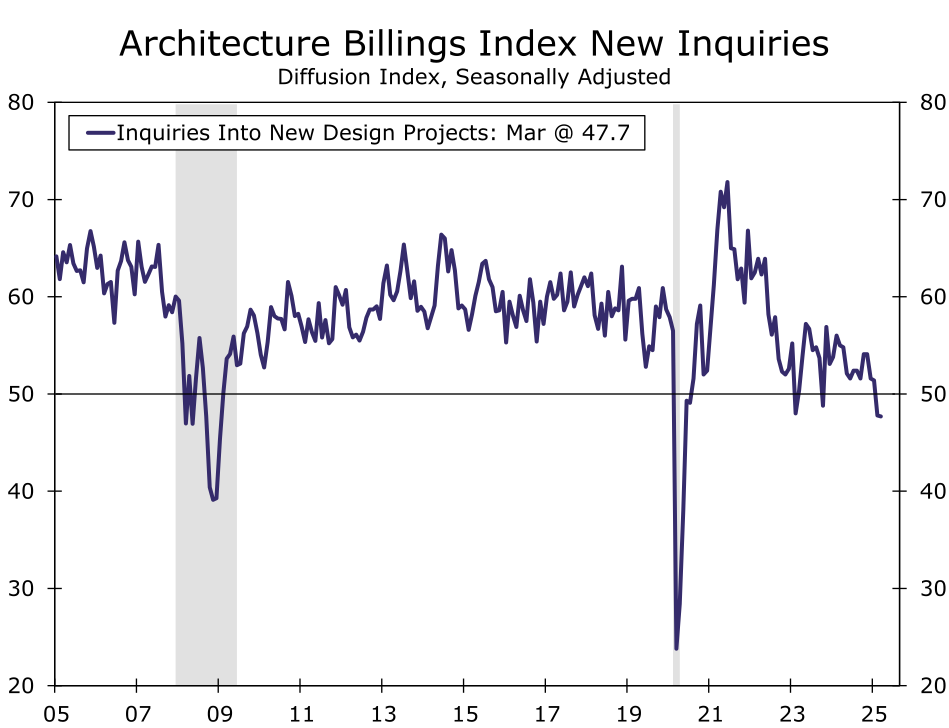
Nonresidential construction spending will likely remain a drag this year. The AIA/Deltek Architecture Billings Index dipped to 44.1 in March, indicating that billings declined at a majority of architecture firms.
More striking was a two-month contraction in new project inquiries, which have generally continued to expand despite high interest rates and credit access headwinds over the past few years. This deterioration likely portends a weaker pace of nonresidential construction in the year ahead.
Author
Wells Fargo Research Team
Wells Fargo