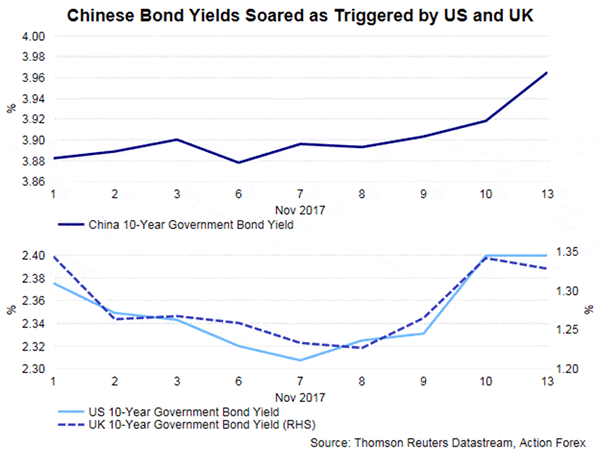
China's Bond Yields Jumped, Following Suit Of US And UK, Also Reflecting Tighter Liquidity Environment


Notwithstanding disappointing headlines, China's economic activities and credit conditions in October were a result of the government's regulatory tightening and the “neutral and prudent” monetary policy with a tighter bias. China's 10 year yields jumped to a 3-year high, approaching 4%, while 5-year yields breached 4% the first time in over 3 years, on Tuesday. The surge in yields can be attributed to a confluence of factors, including a selloff of sovereign bonds after softer-than-expected macroeconomic data and a reflection of tightened liquidity in the financial system. However, we believe the most critical factor is the rallies in US yields, on expectations of a December rate hike, and UK yields, amidst BOE's rate hike earlier this month.
Retail Sales, Industrial Production and Urban FAI
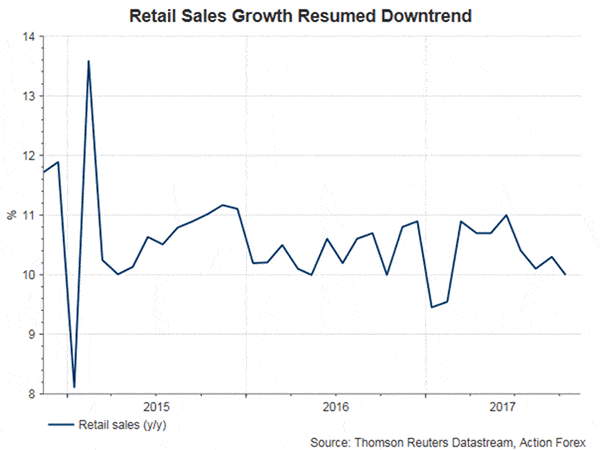
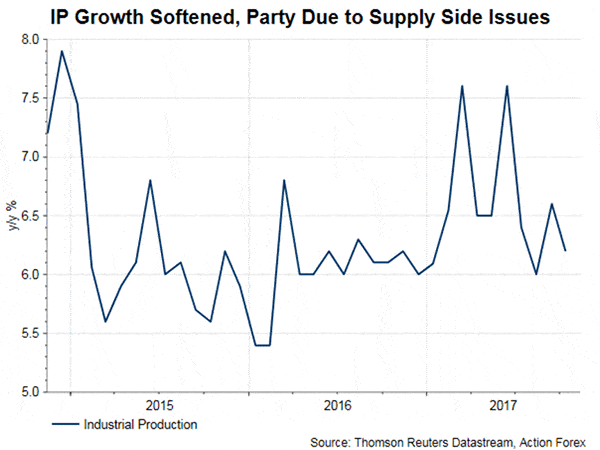
Following last week's data on inflation, trade and FX reserve, China has, over the past two days, released its retail sales, industrial production and fixed asset investment (FAI), as well as credit situation, for October. Retail sales surprised to the downside in October. The year-over-year +10% growth recorded came in weaker than consensus of +10.5% as expected and September's +10.3%. Note, however, that consumers might have deferred their spending until the “double-11” event in November, thus suppressing the October data. Meanwhile, cyclically weak auto sales also contributed to softer growth. Industrial production expanded +6.2% y/y in October, in line with expectations but moderating form +6.6% in September. Looking into the details, IT & electronic goods production shows the biggest headline slowdown, resulting from the supply side constraint of several products.
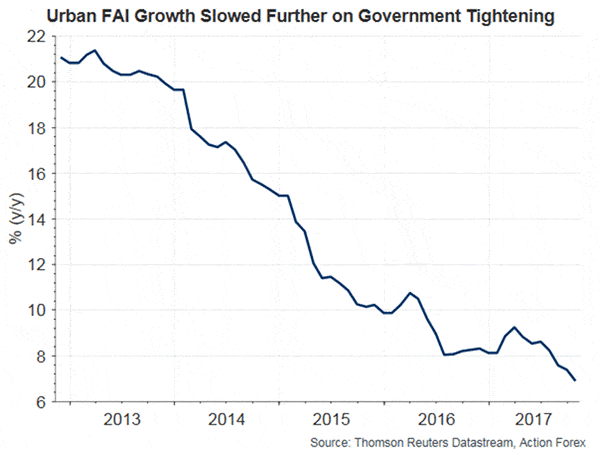
Urban fixed asset investment rose +7.3%, in line with consensus and constituting the recent deceleration in growth, in the first 10 months of the year.
Tighter Credit Conditions Suppressed Loan Growth
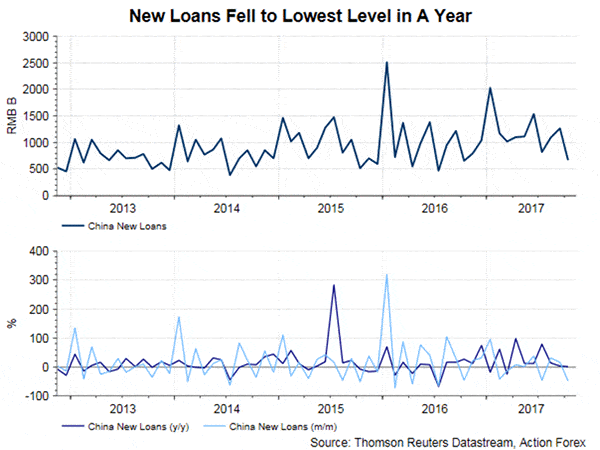
Credit growth surprised to the downside in October, reflecting the government's deleveraging measures. Monthly new loans slumped to RMB 663B from RMB 1.27 trillion in September. This came in even worse that the market's expectations of a sharp fall to RMB 783B. Weaker than expected new loans, ending the streak of upside surprises over the past 6 months, were mainly driven by falling home mortgage and consumer credit. We find this consistent with the slower growth in urban FAI as the government heightened the property tightening measures. Note, however, that loan growth this year has remained strong as new loans have accumulated to RMB 12.1 trillion for the first 10 months of the year, compared with RMB 12.4 trillion in the full year of 2016
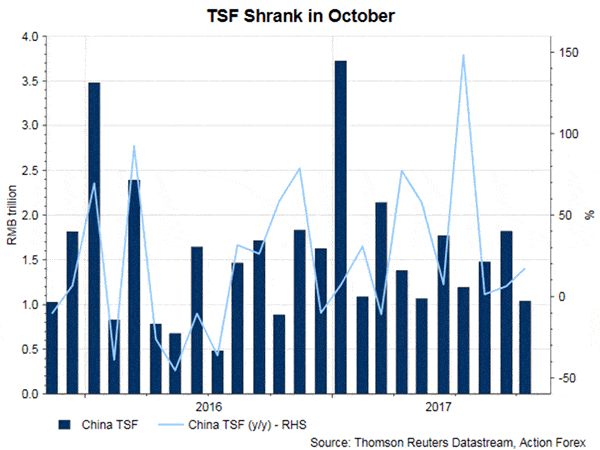
A key area of government regulation tightening is shadow bank financing. The sharp decline in off-balance-sheet financing in October signals the effects of regulations are being seen. New entrusted loans, trust loans and bank acceptance financing plunged to RMB 4B, RMB 102B and RMB 1B in October, from RMB 78B, RMB 237B and RMB 78B in September, respectively. As such, total off-balance-sheet financing fell to RMB 107B in October from RMB 393B a month ago. Total social financing (TSF) sank to RMB 1.04 trillion in October, from RMB1.82 trillion a month ago. Yet this marked an increase from the RMB 886.5B in the same month last year.
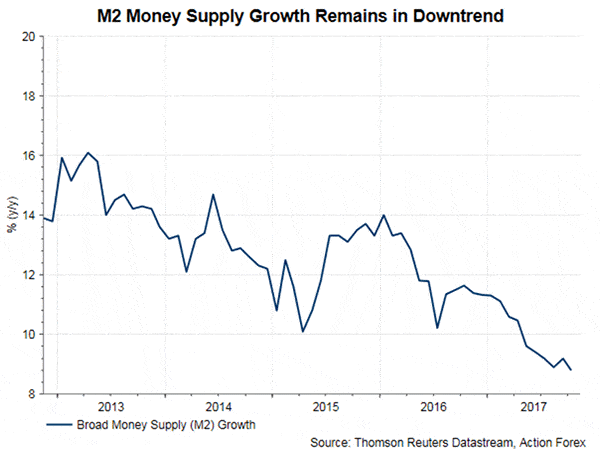
M2 money supply grew +8.8% y/y in October, slowing from +9.2% in September, as partly driven by the one-off large increase in fiscal deposit(to RMB 1.05 trillion from RMB 682B in the same period last year) and partly due to softer loan growth.
Despite the downside surprise, the set of credit data largely reflects the government's stepping up of regulatory tightening and deleveraging measures. We expect PBOC to maintain the “prudent and neutral” monetary policy for the rest of this year and in 2018. Since the government has put its focus on deleveraging and curbing excessive investment on certain areas, its so called neutral policy is actually skewed to the tight side.
Author
Agnes Tse
ActionForex.com
Agnes Tse, CFA, is adept at analyzing the impacts of politics on global financial markets.