|

Charts of the week: AUD/JPY & GBP/USD move to critical levels, extensions likely

As we head into the closing trading days of the year, two charts have stood out the most – AUD/JPY & GBP/USD. However, holiday lull likely means consolidation and profit-taking. 

AUD/JPY bulls targetting 76.50 ahead of 77.50

  • Broken the weekly down channel resistance.
  • Supported by the 21 200-week moving average.
  • Weekly RSI/Stock and MACD have upside.
  • Next upside targets can be located at 76.34/50 and 77.54. 
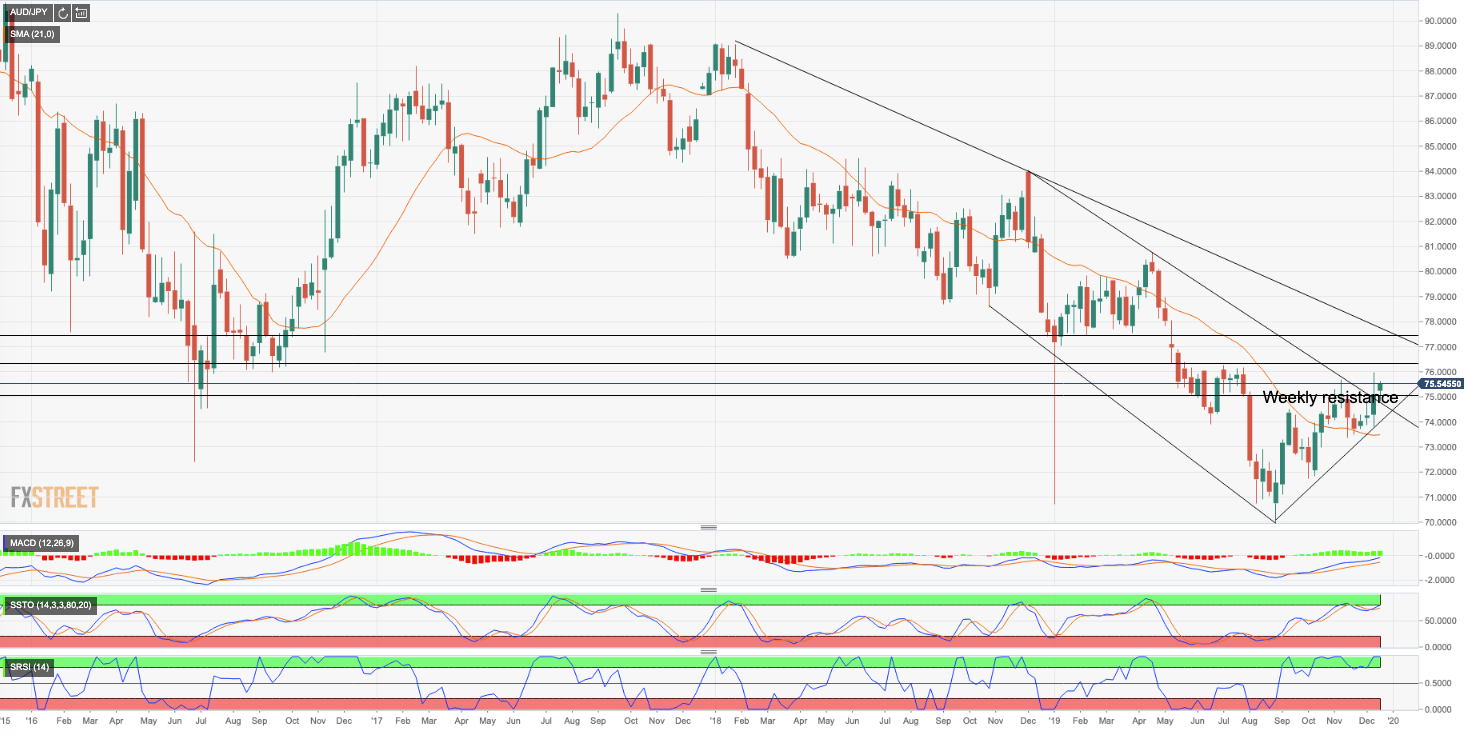
Supported by the 21 200-week moving average, AUD/JPY has been grinding its way higher within an ascending wedge pattern as traders buy the dip on positive fundamentals. The price action ended last week technically bullish with momentum indicators in positive territories with plenty of upsides yet to go on the longer-term time frames, such as the daily and weekly charts – Weekly RSI/Stock and MACD have upside. 

Bulls extended the Thursday close above the 200-day moving average on Friday making for three days of consecutive higher highs and lows. The December low so far has been higher than the November and October lows, bullishly reinforced by a higher December high versus the November high and price action paints a bullish bias. The move has also broken the weekly down channel resistance. While liquidity in thin out there, outside of a surprise geopolitical trigger, it is highly unlikely that we will see additional moves unlit after the holiday lull. However, the next upside targets can be located at 76.34/50 and 77.54. 

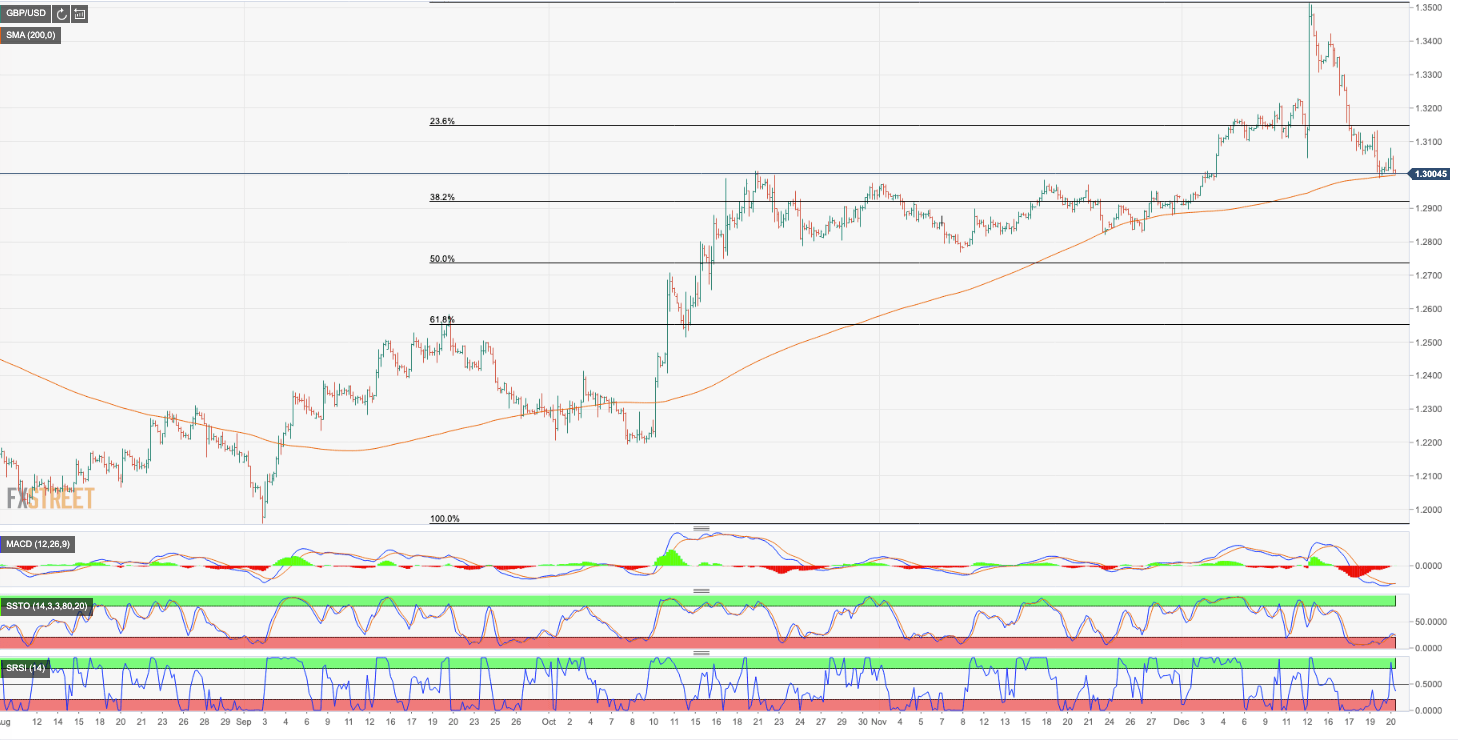
GBP/USD bears seeking critical support down at Nov 7th lows

  • GBP/USD testing the 200 4-hour moving average.
  • GBP/USD closes below a key support at 1.3011.
  • Bears eye a 38.2% Fibo retracement confluence target (50-DMA) around 1.2920.
  • The 7th Nov lows are located at 1.2768 ahead of 50% Fibo around 1.2740. 
Author

Ross J Burland

Ross J Burland, born in England, UK, is a sportsman at heart. He played Rugby and Judo for his county, Kent and the South East of England Rugby team.


More from Ross J Burland
Share:

Editor's Picks

AUD/USD turns south toward 0.6900 as USD firms up

AUD/USD sees fresh selling and drops toward 0.6900 in late Asian trading on Monday, as renewed US Dollar strength weighs on the pair amid lingering Middle East and Russia-Ukraine geopolitical tensions. Focus remains on Oil prices, Treasury bond yields, and RBA expectations for fresh trading impetus in the major.

USD/JPY retakes 158.00 amid hawkish BoJ bets, firmer USD

USD/JPY erases losses and retakes 158.00 in the Asian session on Monday, trading within a one-week-old range. Geopolitical uncertainty continues to underpin the US Dollar, despite fading Fed rate hike hopes, supporting the pair's rebound. However, further upside could be capped by hawkish BoJ expectations and looming intervention risks that could support the Japanese Yen.

Gold flirts with $4,100, four-day lows

Gold adds to Friday’s losses and comes closer to the key $4,100 mark per troy ounce at the beginning of the week. The yellow metal’s retracement comes in response to the persistent advance in the US Dollar in combination with the resurgence of the upside momentum in US Treasury yields across the curve.

Crypto Today: Bitcoin rally slows while Ethereum and XRP extend recovery amid slowing ETF inflows

Bitcoin is narrowly consolidating while trading above $86,000 at the time of writing on Monday. Altcoins, on the other hand, show a positive outlook, with Ethereum edging higher above $2,700 while Ripple steadies above $1.52.

Eurozone inflation just hit 3.8%, its highest in three years. This chart shows why the ECB can’t simply hike its way out

The ECB would normally have a relatively straightforward answer to inflation running almost twice its target: raise interest rates. But these are not normal circumstances. This time, the bond market is already doing part of the tightening for it, leaving the ECB facing an increasingly difficult dilemma.

Eurozone inflation just hit 3.8%, its highest in three years. This chart shows why the ECB can’t simply hike its way out

The ECB would normally have a relatively straightforward answer to inflation running almost twice its target: raise interest rates. But these are not normal circumstances. This time, the bond market is already doing part of the tightening for it, leaving the ECB facing an increasingly difficult dilemma.














